
Ad targeting changes the way brands connect with people online. Instead of showing the same advert to everyone, marketers can use granular data points like age, location, and device to reach just the right audience for every message. Most imagine this simply means fewer useless ads cluttering your feed. The real surprise is that this precision not only raises engagement but actually saves money by cutting out wasted impressions you never even notice.
Table of Contents
- Defining Ad Targeting: The Basics And Key Terms
- The Significance Of Ad Targeting In Mobile Gaming
- How Ad Targeting Works: Mechanisms And Techniques
- Key Concepts And Metrics In Ad Targeting
- Real-World Examples Of Effective Ad Targeting
Quick Summary
| Takeaway | Explanation |
|---|---|
| Ad targeting enhances precision marketing. | It allows advertisers to reach specific audience segments, maximising relevance and engagement. |
| Utilise user data for audience profiling. | Collecting data on demographics and behaviour helps create tailored advertising strategies. |
| Employ advanced targeting techniques. | Techniques like demographic, behavioural, and contextual targeting improve ad effectiveness and user interaction. |
| Measure performance with key metrics. | Monitor metrics like conversion rates and engagement to optimise ad targeting strategies. |
| Psychological profiling improves ad relevance. | Tailoring messages based on psychological traits leads to more engaging and effective advertisements. |
Defining Ad Targeting: The Basics and Key Terms
Ad targeting represents a sophisticated digital marketing strategy designed to deliver personalised advertising messages to specific audience segments based on precise demographic, behavioural, and contextual characteristics. Understand how ad targeting transforms mobile gaming marketing by enabling advertisers to reach the most relevant potential users.
What Exactly Is Ad Targeting?
Ad targeting is a strategic approach where advertisers select and display advertisements to particular audience groups based on carefully defined parameters. Unlike traditional broadcast advertising that casts a wide net, ad targeting allows marketers to pinpoint their ideal consumers with remarkable precision.
Key characteristics of ad targeting include:
- Leveraging user data to create highly specific audience profiles
- Matching advertisement content with user interests and behaviours
- Maximising advertising efficiency by reducing wasted impressions
The Core Mechanics of Ad Targeting
According to UNESCO’s International Media and Information Literacy e-Platform, ad targeting operates through complex data collection and analysis mechanisms. Advertisers utilise multiple data points including:
- Demographic Information: Age, gender, income level, education
- Geographic Location: Country, city, region
- Online Behaviour: Browsing history, previous ad interactions
- Device Characteristics: Type of device, operating system
These granular targeting capabilities enable marketers to craft messaging that resonates directly with specific user segments, significantly improving engagement and conversion potential. By understanding and implementing strategic ad targeting, businesses can transform their marketing approaches from generic broadcasting to precision communication.
The Significance of Ad Targeting in Mobile Gaming
Ad targeting has emerged as a critical strategy for mobile game developers and marketers seeking to optimise user acquisition, engagement, and revenue generation. Learn more about advanced ad targeting techniques that can transform your mobile gaming marketing approach.
Enhancing User Experience and Engagement
In the competitive mobile gaming landscape, ad targeting serves as a powerful mechanism for delivering personalised advertisements that resonate with specific player segments. By understanding player preferences, behaviour patterns, and demographic characteristics, developers can create more relevant and engaging advertising experiences.
Key benefits of strategic ad targeting include:
- Reduced advertisement fatigue
- Increased likelihood of user interaction
- More meaningful player experiences
- Higher potential for in-app conversions
Economic Impact and Revenue Generation
According to research from the National Center for Biotechnology Information, targeted advertisements in mobile gaming can significantly enhance player satisfaction and engagement. This approach not only improves user experience but also creates substantial economic opportunities for game developers and advertisers.
The economic advantages of precise ad targeting encompass:
- Improved Conversion Rates: Highly relevant ads increase the probability of user action
- Enhanced Monetisation: More effective advertising strategies generate higher revenue
- Reduced Advertising Costs: Minimising wasted impressions on uninterested audiences
By implementing sophisticated ad targeting strategies, mobile game developers can create a win-win scenario that simultaneously benefits players, advertisers, and game creators. The ability to deliver contextually relevant, personalised advertisements transforms traditional advertising models, making mobile gaming a more interactive and economically viable ecosystem.

How Ad Targeting Works: Mechanisms and Techniques
Ad targeting operates through sophisticated data collection and analysis techniques that transform raw user information into precise advertising strategies. Explore advanced ad targeting methodologies that enable marketers to connect with their ideal audiences.
Data Collection and Segmentation
The foundation of ad targeting lies in comprehensive data gathering across multiple digital touchpoints. Marketers collect information through various channels, creating detailed user profiles that enable granular audience segmentation.
Key data collection methods include:
- Website browsing history
- Social media interactions
- Mobile app usage patterns
- Purchase behaviour and transaction records
- Device and location information
Targeting Techniques and Algorithmic Precision
According to UNESCO’s International Media and Information Literacy e-Platform, ad targeting employs multiple sophisticated techniques to deliver personalised advertising experiences.
Primary targeting approaches encompass:
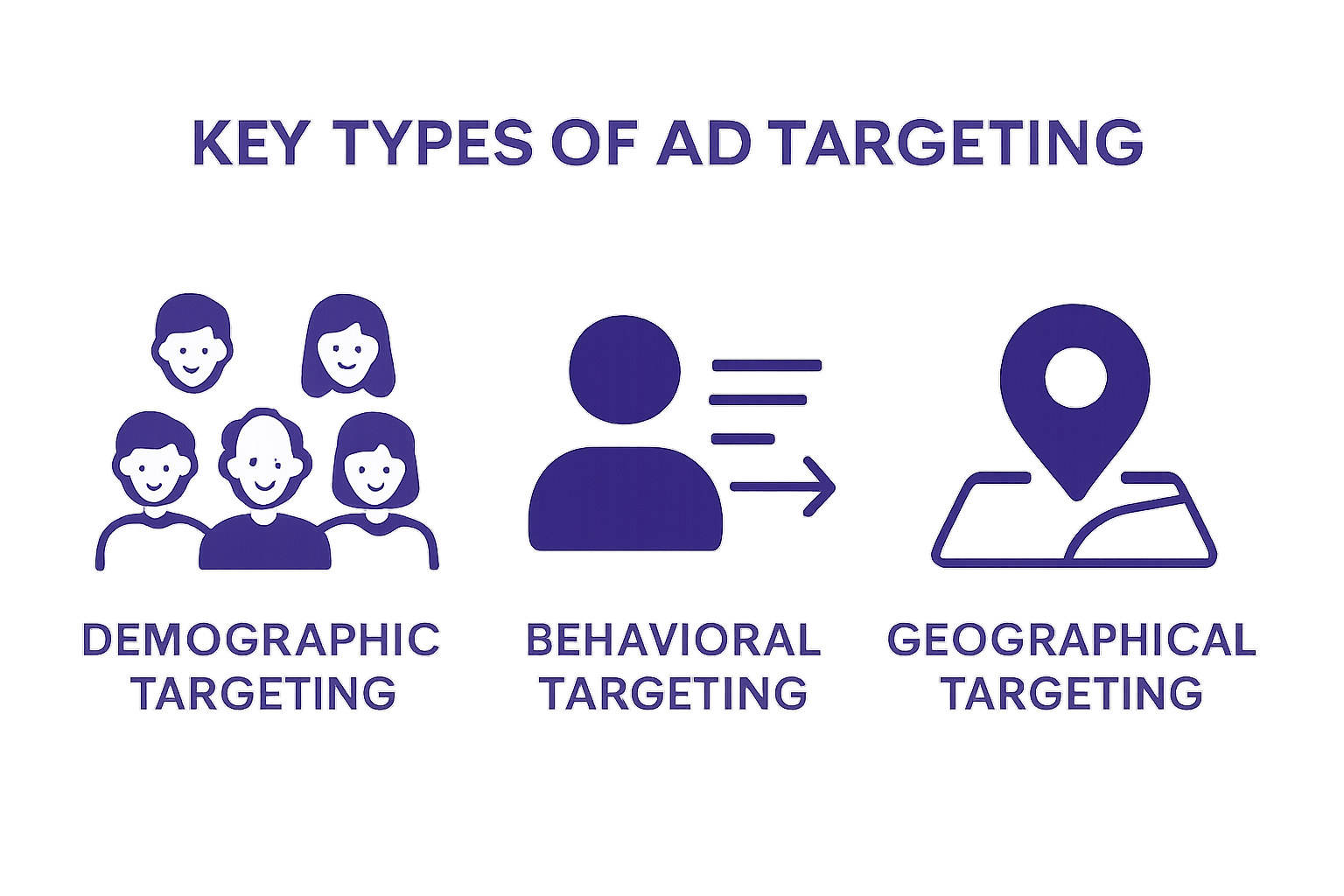
- Demographic Targeting: Segmenting audiences by age, gender, income, education
- Behavioural Targeting: Analysing user actions and online interactions
- Contextual Targeting: Matching advertisements with relevant content environments
- Geographical Targeting: Customising ads based on precise location data
These advanced techniques enable marketers to create hyper-personalised advertising experiences that resonate with specific audience segments, dramatically improving engagement and conversion potential. By leveraging complex algorithmic models, advertisers can predict user preferences and deliver precisely tailored messaging that feels intuitive and relevant to individual users.
Below is a comparison table summarising the main ad targeting techniques described in the article and their defining characteristics.
| Targeting Technique | Description | Key Data Utilised |
|---|---|---|
| Demographic Targeting | Focuses on age, gender, income, education, and other traits | Demographic information |
| Behavioural Targeting | Analyses user actions and online interactions | Browsing history, previous interactions |
| Contextual Targeting | Matches ads with relevant content environments | Content/context data |
| Geographical Targeting | Customises advertisements based on users’ locations | Location data (country, city, region) |
Key Concepts and Metrics in Ad Targeting
Ad targeting relies on a complex ecosystem of metrics and analytical tools that enable marketers to measure and optimise their advertising performance. Discover precise ad targeting performance metrics that can transform your marketing strategy.
Essential Performance Indicators
Understanding key performance metrics allows marketers to evaluate the effectiveness of their ad targeting strategies. These indicators provide crucial insights into campaign performance, user engagement, and return on investment.
Critical performance metrics include:
- Conversion rate
- Click-through rate (CTR)
- Cost per acquisition (CPA)
- Engagement rate
- Return on ad spend (ROAS)
Analytical Frameworks and Measurement Techniques
According to OpenStax’s comprehensive marketing guide, effective ad targeting measurement involves multiple analytical approaches.
Key analytical frameworks encompass:
- Audience Segmentation Analysis: Evaluating performance across different demographic groups
- Behavioural Tracking: Monitoring user interactions and response patterns
- Conversion Path Analysis: Understanding user journey and touchpoints
- Predictive Performance Modelling: Forecasting potential campaign outcomes
These sophisticated measurement techniques enable marketers to move beyond simple impression counting, providing deep insights into the nuanced interactions between advertisements and target audiences. By continuously refining measurement approaches, advertisers can create increasingly precise and effective targeting strategies that deliver exceptional results.
The following table outlines essential performance metrics and analytical frameworks mentioned in the article for measuring ad targeting effectiveness.
| Metric / Framework | Purpose | Example / Focus |
|---|---|---|
| Conversion Rate | Measures proportion of users completing desired actions | Number of in-app purchases or sign-ups |
| Click-Through Rate (CTR) | Assesses ad engagement by ratio of clicks to impressions | How often an advert is clicked |
| Cost per Acquisition (CPA) | Calculates cost to acquire a new customer or action | Ad expenditure per user acquired |
| Return on Ad Spend (ROAS) | Determines revenue generated per pound spent on advertising | Revenue relative to campaign investment |
| Audience Segmentation Analysis | Evaluates performance by distinct audience groups | Engagement or conversion across demographics |
| Predictive Performance Modelling | Forecasts potential outcomes based on data | Predicting future campaign results |
Real-World Examples of Effective Ad Targeting
Ad targeting transforms theoretical marketing concepts into powerful, practical strategies that deliver measurable results across diverse industries. Explore innovative mobile gaming ad targeting strategies that demonstrate the potential of precision marketing.
Healthcare and Clinical Research Targeting
Targeted advertising has proven remarkably effective in specialised sectors like healthcare and clinical research. By leveraging precise demographic and psychological profiling, marketers can connect with highly specific audience segments that traditional advertising methods would struggle to reach.
Notable targeting approaches include:
- Recruiting clinical trial participants
- Promoting health awareness campaigns
- Connecting patients with specific medical services
- Raising awareness about rare medical conditions
Psychological Profiling in Digital Advertising
According to research published in the Proceedings of the National Academy of Sciences, psychological targeting can dramatically enhance advertising effectiveness by tailoring messages to individuals’ unique psychological characteristics.
Key psychological targeting strategies encompass:
- Personality-Based Targeting: Crafting messages that resonate with specific personality traits
- Emotional Trigger Identification: Developing ads that activate specific emotional responses
- Behavioural Pattern Recognition: Predicting user actions based on historical interactions
- Contextual Relevance Mapping: Aligning ad content with user mindset and current context
These sophisticated targeting techniques demonstrate how modern digital advertising moves beyond traditional demographic segmentation, creating deeply personalised communication experiences that significantly improve engagement and conversion potential.
Transform Your Ad Targeting into Effortless Playable Ad Creation
Are you feeling the frustrations of ad targeting complexity? This article highlights the challenge of reaching the right audience with precision, maximising return on ad spend and delivering relevant experiences without throwing money at development. If you want to harness the full value of your ad targeting insight, but struggle with costly and time-consuming playable ad production, there is a smoother path.
Discover more about publisher solutions and see how you can make the most of advanced targeting and ad mechanics without heavy reliance on coding or large teams.

Say goodbye to delays and drained budgets. With PlayableMaker, you can quickly build interactive ads that directly leverage your audience profiles and targeting strategy. No code is required. Start today and create tailored playable ads effortlessly. Visit PlayableMaker to experience how easy and affordable audience-focused ad creation can be.
Frequently Asked Questions
What is ad targeting?
Ad targeting refers to a digital marketing strategy where advertisers deliver personalised advertisements to specific audience segments based on demographic, behavioural, and contextual characteristics.
How does ad targeting improve user engagement?
Ad targeting enhances user engagement by delivering personalised advertisements that resonate with specific audience segments, leading to more meaningful interactions and reduced advertisement fatigue.
What types of data are used in ad targeting?
Ad targeting uses various data types, including demographic information (age, gender), geographic location, online behaviour (browsing history), and device characteristics to create precise audience profiles.
What are the key benefits of implementing ad targeting strategies?
Key benefits of ad targeting include improved conversion rates, enhanced monetisation through relevant ads, and reduced advertising costs by minimising wasted impressions on uninterested audiences.
Recommended
- Understanding Ad Audience Targeting in Mobile Gaming
- What is Ad Optimization? Understanding Its Importance
- Understanding What is Ad Format in Mobile Gaming
- Understanding What is Ad Placement in Mobile Gaming
- How to Effectively Reach Digital Marketing Audiences
- Adwords Optimaliseren voor Zichtbaarheid in Duitsland