
Mobile gaming ads have become a science, not just an annoyance, with developers using clever strategies to balance fun and profit. More than 70 percent of mobile game revenue now comes from advertisements. That sounds overwhelming, right? Yet the real surprise is that when ads are placed with care, they can actually make games more enjoyable rather than distracting.
Table of Contents
- Defining Ad Placement: The Basics Of Advertising In Mobile Gaming
- The Significance Of Ad Placement: Why It Matters For User Acquisition
- How Ad Placement Works: Mechanisms Behind Effective Strategies
- Key Concepts Of Ad Placement: Types, Formats, And Targeting
- Real-World Context: Trends And Examples In Mobile Gaming Ad Placement
Quick Summary
| Takeaway | Explanation |
|---|---|
| Strategic ad placement enhances user engagement | Properly positioned ads increase player interaction and satisfaction without disrupting gameplay. |
| Timing and relevance are crucial | Ads should appear at natural breaks and be relevant to the game’s theme and audience for better acceptance. |
| Rewarded video ads drive player retention | Offering in-game rewards for ad engagement encourages players to watch without feeling interrupted. |
| Data analytics optimise ad effectiveness | Using real-time analytics allows developers to place ads more effectively based on player behaviour and preferences. |
| Ad personalisation increases impact | Tailoring ads to specific demographics and player behaviours enhances engagement and effectiveness. |
Defining Ad Placement: The Basics of Advertising in Mobile Gaming
Ad placement represents a strategic mechanism within mobile gaming where advertisements are strategically positioned to maximise user engagement and generate revenue without disrupting gameplay experience. At its core, ad placement involves carefully selecting locations, timings, and formats of advertisements to create a seamless interaction between game content and marketing messages.
Understanding Ad Placement Fundamentals
In mobile gaming, ad placement is not merely about inserting advertisements randomly but creating a deliberate ecosystem where ads complement the gaming experience. According to Penn State University research, strategic ad positioning can significantly impact player perception and brand recall.
Key considerations in ad placement include:
- Timing: Introducing ads between game levels or during natural pause points
- Relevance: Ensuring advertisements align with game theme and player demographics
- User Experience: Minimising disruption to gameplay momentum
Types of Ad Placement Strategies
Mobile game developers typically employ several ad placement approaches:
- Rewarded Video Ads: Players voluntarily watch advertisements in exchange for in-game rewards like extra lives, virtual currency, or power-ups
- Interstitial Ads: Full-screen advertisements appearing at transition points between game stages
- Banner Ads: Smaller advertisements displayed along game screen margins
The goal is creating a mutually beneficial environment where players receive value, developers generate revenue, and advertisers reach their target audience. [Learn more about playable ad strategies](https://playablemaker.com/the-evolution-of-mobile-game-monetization-where-do-
To help clarify the different types of ad placement strategies used in mobile gaming, the table below summarises their key features, advantages, and typical player experiences.
| Ad Placement Strategy | Description | Player Experience | Main Advantage |
|---|---|---|---|
| Rewarded Video Ads | Optional ads offering in-game rewards | Voluntary, positive, incentive-based | Drives engagement and retention |
| Interstitial Ads | Full-screen ads during game transitions | Brief pause, possible interruption | Generates higher ad revenue |
| Banner Ads | Static/animated ads along screen margins | Low intrusiveness, often goes unnoticed | Maintains continuous gameplay |
| Playable Ads | Interactive ads allowing users to try other games | Immersive, can be engaging or disruptive | Promotes user acquisition |
| Native Ads | Ads aligned with game aesthetics and design | Seamless, less disruptive | Enhances brand recall |
playable-ads-fit) to understand how modern mobile games balance monetisation and user experience.
The Significance of Ad Placement: Why It Matters for User Acquisition
User acquisition in mobile gaming represents a critical metric determining a game’s success, with ad placement emerging as a pivotal strategy for attracting and retaining players. Strategic advertisement positioning directly influences player engagement, revenue generation, and overall game performance.
Economic Impact of Effective Ad Placement
The economic significance of ad placement extends beyond simple revenue generation. According to research published in Management Science, targeted advertising not only increases direct game installs but also stimulates organic user growth, creating a compounding effect for mobile game developers.
Key economic considerations include:
- Revenue Generation: Direct monetary returns from advertisement impressions
- User Acquisition: Attracting new players through strategic ad positioning
- Player Retention: Maintaining user interest through non-intrusive advertising methods
Psychological Dimensions of Ad Engagement
Ad placement transcends mere financial metrics by engaging players psychologically. Successful advertisement integration requires understanding player motivations and creating value-driven interactions. Explore advanced user acquisition strategies to comprehend the nuanced relationship between advertising and player experience.
Effective ad placement strategies focus on:
- Reward Mechanisms: Offering in-game benefits for advertisement engagement
- Contextual Relevance: Ensuring advertisements complement game aesthetics
- Minimal Disruption: Maintaining seamless gameplay experience
Ultimately, superior ad placement transforms advertisements from potential interruptions into engaging opportunities that enhance rather than detract from the mobile gaming experience.
How Ad Placement Works: Mechanisms Behind Effective Strategies
Ad placement mechanisms in mobile gaming represent a sophisticated ecosystem of strategic decision making, technological integration, and user experience optimization. These mechanisms transform advertisements from potential interruptions into engaging, value-driven interactions that benefit players, developers, and advertisers simultaneously.
Technical Infrastructure of Ad Placement
The technical foundation of ad placement relies on advanced algorithmic systems that analyse player behaviour, game dynamics, and contextual relevance. According to Penn State University research, strategic video ad positioning can significantly enhance brand recall and player engagement.
Key technical components include:
- Data Analytics: Real-time player behaviour tracking
- Machine Learning Algorithms: Predictive ad placement optimization
- Contextual Mapping: Matching advertisements to game environments
Psychological Engagement Strategies
Effective ad placement transcends technical implementation by understanding player psychology. Developers must craft advertisement experiences that feel intrinsic to gameplay rather than external disruptions. Explore advanced ad integration techniques to understand nuanced placement strategies.
Psychological engagement principles involve:
- Reward Mechanisms: Incentivising ad interactions
- Emotional Resonance: Creating positive advertisement experiences
- Voluntary Participation: Allowing player control over ad interactions
Ultimately, successful ad placement transforms marketing messages into potential value propositions that enhance rather than interrupt the mobile gaming experience.
The following table outlines the key technical and psychological mechanisms behind effective ad placement in mobile gaming, offering a side-by-side comparison to clarify their respective roles.
| Mechanism | Key Elements | Contribution to Ad Placement |
|---|---|---|
| Technical Infrastructure | Data analytics, machine learning, contextual mapping | Optimises ad location and relevance |
| Psychological Strategy | Reward mechanisms, emotional resonance, voluntary | Enhances player acceptance and engagement |
| Real-time Analytics | Continuous player behaviour tracking | Adjusts ad placement dynamically |
| Contextual Mapping | Matches ad content to in-game context | Ensures ads feel part of the gaming environment |
| Incentivisation | Offers in-game benefits for ad interaction | Motivates players to engage with advertisements |
Key Concepts of Ad Placement: Types, Formats, and Targeting
Ad placement in mobile gaming encompasses a complex landscape of strategic approaches designed to balance user experience, revenue generation, and advertiser objectives. Understanding the intricate mechanisms of ad types, formats, and targeting strategies is crucial for creating effective monetisation frameworks.
Ad Format Taxonomy
Mobile game advertisements can be categorised into distinct formats, each serving unique engagement objectives. According to academic research from ACM, these formats are strategically designed to minimise user friction while maximising advertising effectiveness.
Primary ad formats include:
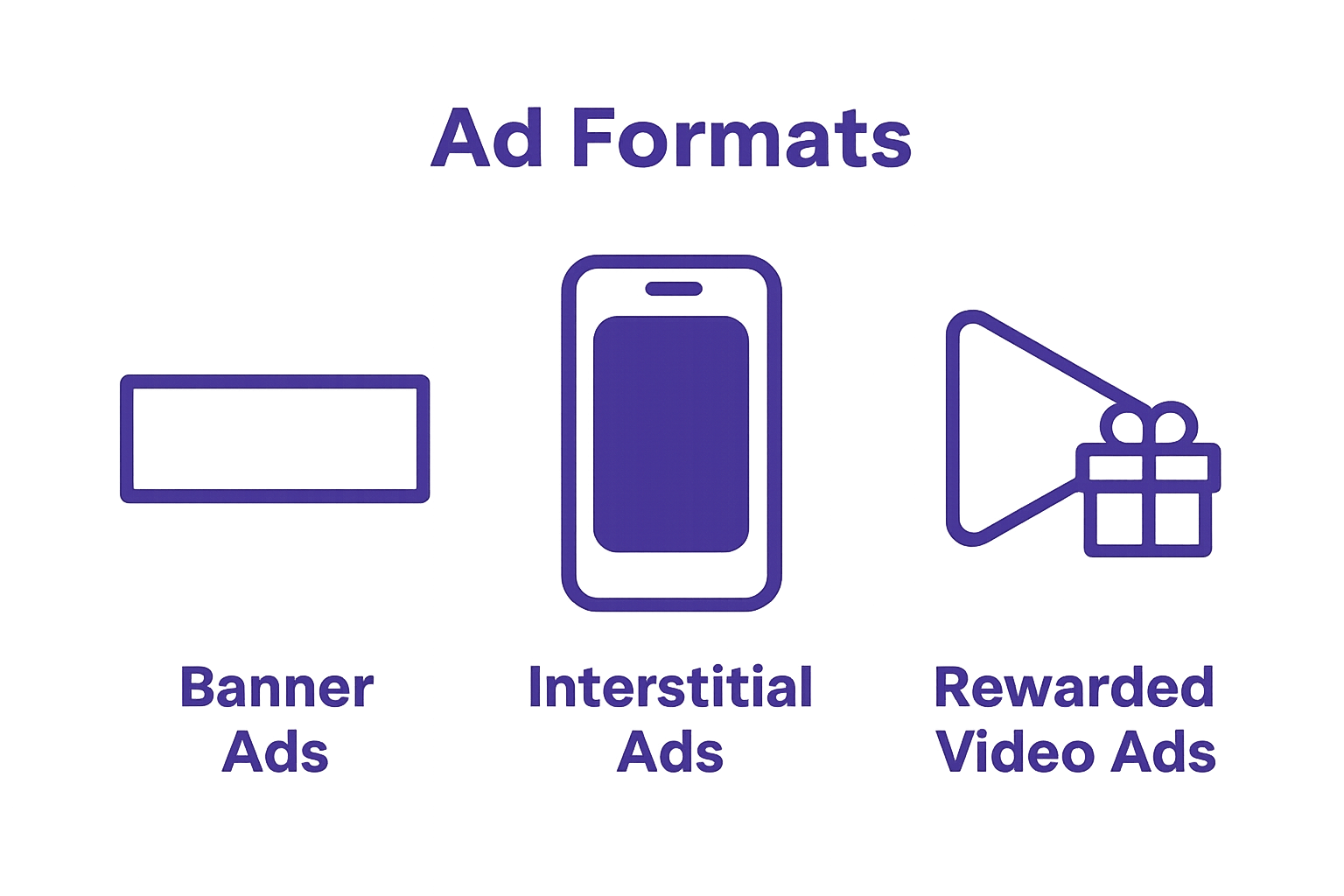
- Banner Ads: Static or animated advertisements occupying screen margins
- Interstitial Ads: Full-screen advertisements appearing during gameplay transitions
- Rewarded Video Ads: Optional video advertisements offering in-game incentives
Targeting and Personalisation Mechanisms
Effective ad placement transcends generic broadcasting by leveraging sophisticated targeting technologies. Discover advanced ad customisation techniques to comprehend the nuanced approach to user-specific advertising.
Targeting strategies encompass:
- Demographic Segmentation: Matching ads to player age, gender, location
- Behavioural Targeting: Analysing player interactions and preferences
- Contextual Relevance: Aligning advertisements with game theme and style
Ultimately, sophisticated ad placement transforms marketing messages from potential interruptions into personalised, value-driven interactions that enhance the overall gaming experience.
Real-World Context: Trends and Examples in Mobile Gaming Ad Placement
Mobile gaming ad placement continues to evolve, transforming from intrusive marketing channels into sophisticated, user-centric interaction experiences. Contemporary strategies prioritise player engagement and value creation over traditional advertisement interruption models.
Emerging Industry Trends
The mobile gaming advertising landscape is experiencing significant transformation. According to research from the American Press Institute, newer ad formats designed specifically for mobile screens demonstrate substantially higher effectiveness compared to traditional advertising approaches.
Significant industry trends include:
- Personalisation: Hyper-targeted advertisements based on player behaviour
- Interactive Experiences: Ads that offer gameplay or direct engagement
- Reward-Based Integrations: Incentivising advertisement interactions
Practical Implementation Strategies
Successful ad placement requires nuanced understanding of player psychology and technological capabilities. Explore the latest mobile game monetisation strategies to understand contemporary implementation techniques.
Practical implementation approaches involve:
- Contextual Relevance: Matching advertisements to game themes
- Minimal Disruption: Seamlessly integrating marketing messages
- User Control: Providing opt-in and voluntary engagement mechanisms
Ultimately, contemporary ad placement represents a sophisticated ecosystem where marketing messages become potential value propositions rather than mere interruptions.

Transform Your Ad Placement Strategy with PlayableMaker
Have you struggled with inserting ads in your mobile game without breaking the user experience or your budget? The article highlighted how critical it is to achieve the right balance between engaging ad placements and seamless gameplay. Navigating challenges like timing and relevance, and using the best ad formats, can often demand substantial time and technical skills. If you feel held back by the complexity of creating interactive or rewarded ads, now is the time to act. Discover actionable insights and publishing strategies in our Publishing Archives and see what is possible for your projects.
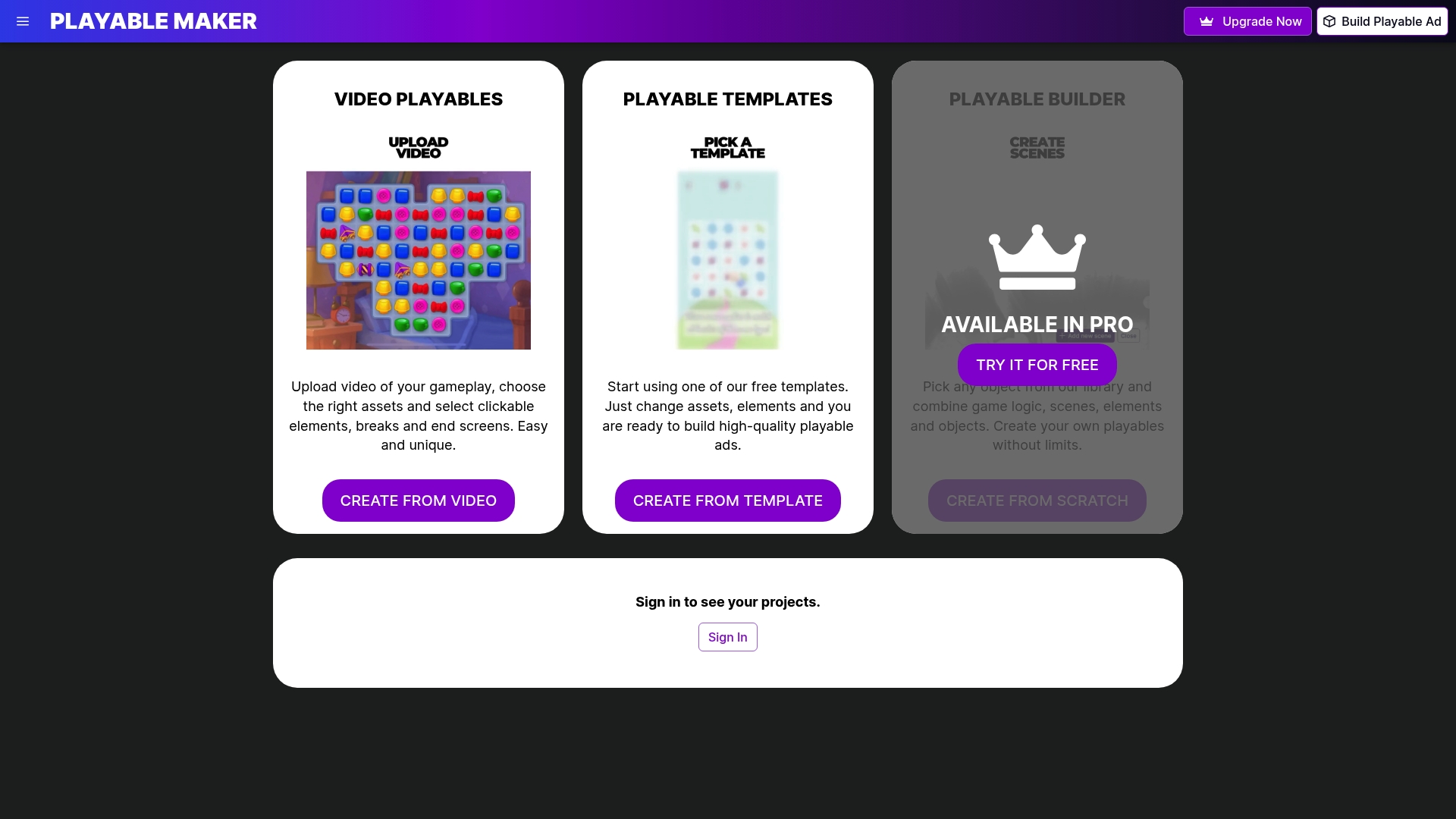
Build compelling playable ads quickly and without the need for code or costly resources. Visit PlayableMaker where you can start creating impactful ad experiences today. Take control of your ad placements, save your team’s resources and see what your game can achieve in user acquisition and engagement. Start your transformation with us now.
Frequently Asked Questions
What is ad placement in mobile gaming?
Ad placement in mobile gaming refers to the strategic positioning of advertisements within games to enhance user engagement and generate revenue without disrupting the gameplay experience.
What types of ad placement strategies are used in mobile games?
Common ad placement strategies in mobile games include rewarded video ads, interstitial ads, and banner ads, each serving different user engagement and monetisation objectives.
How does ad placement impact player experience?
Effective ad placement minimises disruption to gameplay while enhancing player engagement by offering relevant and non-intrusive advertisements that blend seamlessly with game content.
What factors should be considered for effective ad placement?
Key factors for effective ad placement include timing, relevance to the game theme, and user experience, ensuring ads align with player demographics and provide value without interrupting gameplay.
Recommended
- Understanding What is Ad Format in Mobile Gaming – playablemaker.com
- The Evolution of Mobile Game Monetization: Where Do Playable Ads Fit? – playablemaker.com
- What Is an Ad Network? Understanding Ad Networks in Mobile Gaming – playablemaker.com
- Playablemaker – Blog about playable ads