
Ad campaigns are everywhere, vying for your attention and promising business growth. Yet, automated bidding and budget optimization can improve ad performance dramatically, with some strategies raising campaign efficiency by over 30 percent. Most people think ad optimisation is just tweaking images or catchy slogans, but in truth, the sharpest gains come from the maths and technology working quietly in the background.
Table of Contents
- Defining Ad Optimization: Understanding The Basics
- The Significance Of Ad Optimization In Mobile Gaming
- Mechanisms Behind Ad Optimization: How It Works
- Key Concepts In Ad Optimization: Metrics And Strategies
- Real-World Applications Of Ad Optimization In Marketing
Quick Summary
| Takeaway | Explanation |
|---|---|
| Ad optimization is data-driven | Marketers use analytics and insights to enhance ad campaigns’ performance effectively. |
| Continuous monitoring improves campaigns | Regularly reviewing performance metrics allows for real-time adjustments, optimising engagement and conversions. |
| Audience segmentation is crucial | Targeting specific groups enhances ad relevance, leading to improved precision in marketing efforts. |
| Algorithmic strategies boost effectiveness | Advanced algorithms adjust ad parameters dynamically, utilising data to maximise user interaction and ROI. |
| Mobile gaming relies on optimal advertising | Effective ad integration in games maintains player engagement while generating revenue sustainably. |
Defining Ad Optimization: Understanding the Basics
Ad optimization represents a sophisticated strategic approach that transforms how digital marketers enhance advertisement performance through data-driven refinement. At its core, ad optimization involves systematically analysing, adjusting, and improving advertising campaigns to maximise engagement, conversion rates, and return on investment.
The Fundamental Concept of Ad Optimization
Advertising optimization is not merely about changing visual elements but implementing a comprehensive strategy that leverages data analytics, audience insights, and technological capabilities. Learn more about advanced ad targeting techniques to understand how sophisticated marketers refine their approach.
Key aspects of ad optimization include:
- Continuous performance monitoring
- Real-time campaign adjustments
- Advanced audience segmentation
- Strategic budget allocation
According to research from Stanford Graduate School of Business, automated bidding and budget optimization techniques can significantly improve advertising performance by making data-driven decisions.
Why Ad Optimization Matters
In the competitive digital advertising landscape, businesses cannot afford to deploy static, unchanging campaigns. Ad optimization provides a dynamic framework that allows marketers to:
- Reduce wasteful ad spending
- Improve audience targeting precision
- Enhance overall campaign effectiveness
- Increase return on advertising investment
By understanding user behaviour, testing multiple variables, and rapidly adapting strategies, marketers can create more resonant and impactful advertising experiences that connect genuinely with their target audience.
The Significance of Ad Optimization in Mobile Gaming
Mobile gaming represents a dynamic ecosystem where ad optimization plays a critical role in balancing user experience and revenue generation. Game developers and publishers increasingly recognise that strategic ad placement and targeting can dramatically influence player engagement and monetisation potential.
Impact on Player Retention and Revenue
In the competitive mobile gaming market, ad optimization is not just a technical strategy but a fundamental approach to sustainable game economics. Discover insights on effective ad placement strategies to understand how nuanced ad integration can transform player interactions.
Key economic considerations include:
- Minimising player frustration through contextually relevant ads
- Maintaining game flow and immersion
- Creating non-disruptive monetisation opportunities
- Generating consistent revenue streams
According to research published in the ACM Digital Library, data-driven ad optimization strategies can simultaneously improve user experience and developer revenue by increasing ad targeting effectiveness while reducing player disruption.
Strategic Considerations for Mobile Game Developers
Successful ad optimization requires a holistic understanding of player psychology and game design. Developers must carefully integrate advertisements that feel like a natural extension of the gaming experience rather than an intrusive interruption.
Effective ad optimization strategies encompass:
- Precise audience segmentation
- Dynamic ad placement algorithms
- Personalised ad content matching
- Continuous performance monitoring and adjustment
By implementing sophisticated ad optimization techniques, mobile game developers can create a win-win scenario that respects player experience while generating sustainable revenue, ultimately contributing to the long-term success of their gaming applications.

Mechanisms Behind Ad Optimization: How It Works
Ad optimization operates through sophisticated technological frameworks that leverage data analytics, machine learning algorithms, and real-time performance tracking to continuously refine advertising strategies. These mechanisms transform raw user interaction data into actionable insights that drive more effective ad campaigns.
Data Collection and Analysis Techniques
The foundation of ad optimization lies in comprehensive data gathering across multiple touchpoints. Explore advanced audience targeting methods to understand how granular data collection powers optimization strategies.
Key data collection mechanisms include:
- User behavioural tracking
- Demographic segmentation
- Engagement pattern recognition
- Performance metric assessment
According to research from the MIT thesis on digital advertising mechanisms, advertisers can effectively interact with platforms by understanding limited information environments and designing procurement strategies that maximise both platform revenue and advertiser objectives.
Algorithmic Optimization Processes
Modern ad optimization relies on advanced algorithmic techniques that dynamically adjust advertising parameters in real-time. These algorithms process vast amounts of data to predict and enhance ad performance through several critical approaches:
- Machine learning model training
- Predictive audience matching
- Automated bidding strategies
- Continuous performance calibration
By employing complex mathematical models and artificial intelligence, these algorithmic processes can instantly modify ad targeting, placement, and content to maximise engagement and conversion rates. The goal is to create a fluid, adaptive system that learns and improves with each user interaction, ensuring that advertisements become progressively more relevant and effective over time.
Key Concepts in Ad Optimization: Metrics and Strategies
Ad optimization encompasses a complex ecosystem of strategic measurements and analytical approaches designed to maximise advertising performance and efficiency. Understanding these key metrics and strategies is crucial for marketers seeking to transform digital advertising from a cost centre to a precision-driven revenue generator.
Critical Performance Metrics
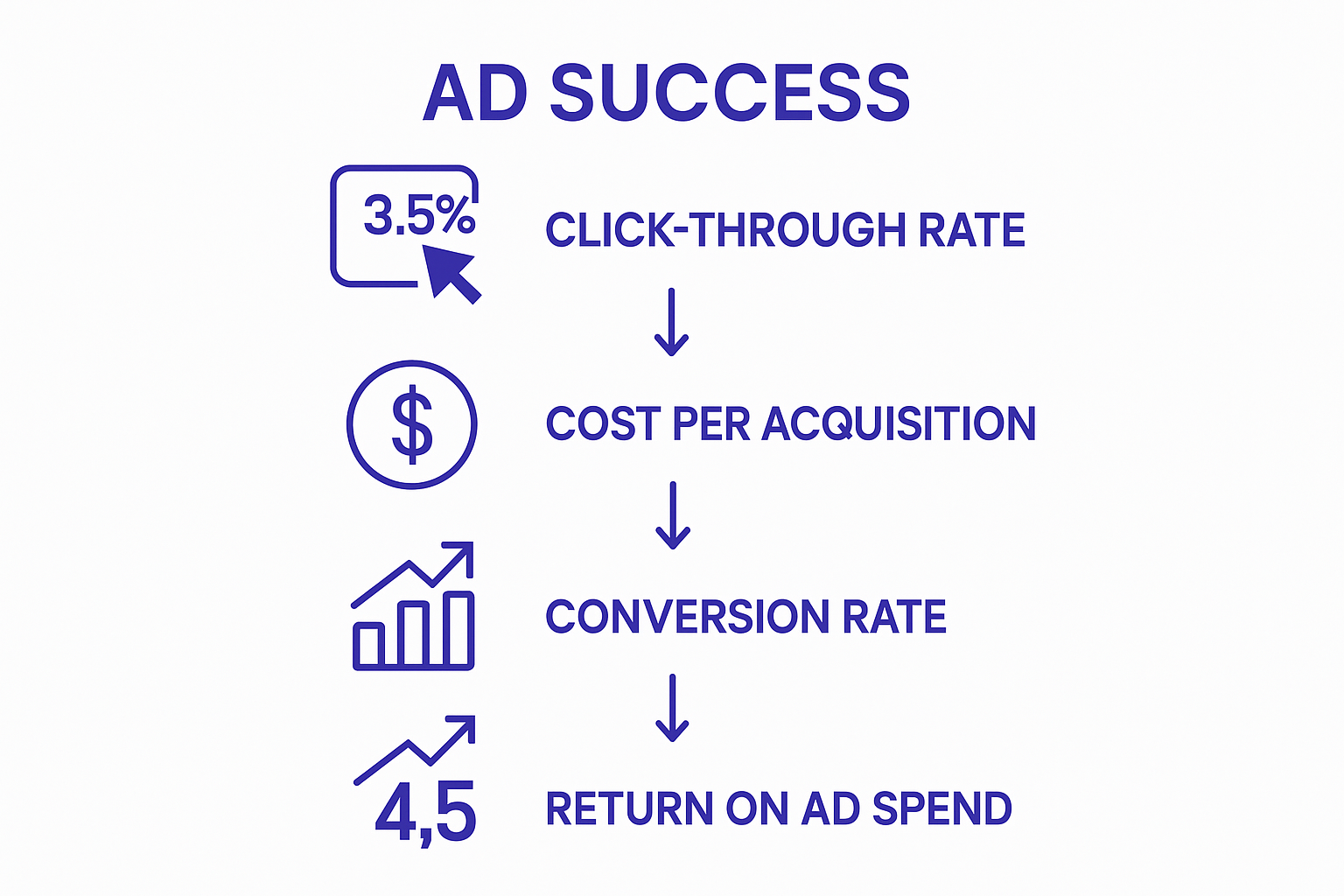
Performance metrics serve as the foundational language of ad optimization, providing quantifiable insights into campaign effectiveness. Discover innovative approaches to enhancing ad engagement to understand how strategic measurement drives advertising success.
Essential performance metrics include:
- Click-Through Rate (CTR)
- Cost Per Acquisition (CPA)
- Conversion Rate
- Return on Ad Spend (ROAS)
According to research from OpenStax on marketing metrics, these metrics provide marketers with comprehensive insights into campaign performance, enabling data-driven decision-making and strategic refinement.
Strategic Optimization Approaches
Successful ad optimization requires a multifaceted approach that goes beyond simple numerical analysis. Marketers must develop sophisticated strategies that integrate technical capabilities with creative insights:
- Audience segmentation and targeting
- Dynamic content personalisation
- Continuous A/B testing
- Real-time performance monitoring
By adopting these strategic approaches, advertisers can create adaptive campaigns that respond dynamically to user behaviour, market trends, and performance data. The ultimate goal is to develop a responsive advertising ecosystem that continuously learns, adjusts, and improves, transforming each advertising interaction into an opportunity for enhanced engagement and conversion.
For a concise comparison, the following table summarises the main ad optimisation strategies mentioned in the article, highlighting their defining features and key benefits for advertisers.
| Strategy | Defining Feature | Key Benefit |
|---|---|---|
| Continuous Monitoring | Real-time assessment of performance | Enables timely adjustments for optimal results |
| Algorithmic Bidding | Automated, data-driven parameter changes | Improves efficiency and maximises campaign ROI |
| Audience Segmentation | Targeting by user characteristics | Boosts precision and ad relevance |
| Dynamic Content Personalisation | Customised ad creative for each user | Enhances engagement and conversion rates |
| A/B Testing | Comparing variations in controlled tests | Identifies highest-performing ad elements |
Real-World Applications of Ad Optimization in Marketing
Ad optimization has transitioned from a theoretical concept to a practical necessity across diverse industries, enabling businesses to transform digital advertising from a scattershot approach to a precision-driven strategy. By leveraging advanced analytics and machine learning, companies can now create highly targeted, dynamically responsive advertising campaigns.
Industry-Specific Optimization Strategies
Different sectors have developed unique approaches to implementing ad optimization techniques. Explore advanced ad placement techniques to understand how targeted strategies can revolutionise marketing performance.
Key industry optimization applications include:
- E-commerce personalised product recommendations
- Travel sector dynamic pricing advertisements
- Gaming platforms targeted user acquisition campaigns
- Retail predictive consumer behaviour advertising
According to research from Stanford Graduate School of Business, advanced algorithmic approaches can significantly improve campaign performance when deployed strategically across digital platforms.
Technological Enablers of Ad Optimization
Modern ad optimization relies on sophisticated technological infrastructure that enables real-time data processing and intelligent decision-making:
- Machine learning predictive models
- Advanced audience segmentation algorithms
- Cross-platform tracking and attribution systems
- Automated bidding and budget allocation technologies
By integrating these technological capabilities, marketers can create adaptive advertising ecosystems that continuously learn, adjust, and improve. The result is a more efficient, responsive approach to digital marketing that maximises return on investment while delivering increasingly personalised user experiences.
Ready to Optimise Your Ad Strategy for Real Results?
For many marketers and developers, endlessly tweaking ads can feel like a guessing game. The problem often lies in the complexity of data-driven refinement, constant campaign adjustments, and the drain on both budget and resources. When ad optimisation is so often defined by wasted spend and missed engagement goals, you need tools that let you focus on what matters most—results. If you are seeking actionable ways to improve campaign performance, audience segmentation or return on investment, you do not want to compromise on efficiency or creativity. Curious how others are turning these challenges into wins? Visit our Publishing Resources to see real solutions in action.

Take control of your digital advertising today. With PlayableMaker, you can build interactive ads quickly, easily and without any code—freeing up your time and keeping costs low. No more complex project scopes or overburdened teams. Your path to high-performing playable ads starts here. Start building and optimising your ads now at PlayableMaker. If you have questions or want troubleshooting tips, our Help Centre is always available. Do not miss this chance to simplify and supercharge your ad optimisation journey.
Frequently Asked Questions
What is ad optimization?
Ad optimization is the strategic process of enhancing advertising performance through data-driven analysis, adjustments, and improvements to maximise engagement, conversion rates, and return on investment.
Why is ad optimization important for digital marketing?
Ad optimization is crucial as it allows businesses to reduce wasteful spending, improve audience targeting, enhance campaign effectiveness, and ultimately increase the return on advertising investment.
How does ad optimization work?
Ad optimization works by leveraging data analytics, machine learning algorithms, and real-time performance tracking to continuously refine advertising strategies based on user interactions and preferences.
What metrics are commonly used in ad optimization?
Key metrics in ad optimization include Click-Through Rate (CTR), Cost Per Acquisition (CPA), Conversion Rate, and Return on Ad Spend (ROAS), which help evaluate the effectiveness of advertising campaigns.
To give a clear overview of how ad optimisation works, the following table outlines the critical performance metrics discussed and the specific insight or value each provides to digital marketers.
| Metric | What It Measures | Why It’s Important |
|---|---|---|
| Click-Through Rate (CTR) | Percentage of ad viewers who click | Indicates ad relevance and creative effectiveness |
| Cost Per Acquisition (CPA) | Cost to acquire a customer or action | Evaluates campaign efficiency and spend effectiveness |
| Conversion Rate | Percentage of users completing goals | Measures ad performance in driving desired actions |
| Return on Ad Spend (ROAS) | Revenue generated per pound spent | Quantifies the overall financial success of campaigns |
Recommended
- Understanding Ad Audience Targeting in Mobile Gaming
- Understanding What is Ad Placement in Mobile Gaming
- Understanding What is Ad Format in Mobile Gaming
- Understanding What is Ad Monetization in Mobile Gaming
- Optimizing Landing Pages