
Most advice about measuring digital ads in mobile gaming only scratches the surface of what drives true success for British developers. With billions spent on mobile advertising globally every year, understanding Google Ad performance is more than just a numbers game. The right data and strategy can mean the difference between steady growth and wasted budgets. This guide uncovers the performance metrics and creative tactics that help British game studios turn every advertising pound into real player engagement and revenue.
Table of Contents
- Defining Google Ad Performance in Gaming
- Key Metrics for Measuring Success
- Types of Google Ads for Mobile Games
- Creative Strategy for High-Impact Playables
- Optimising Budgets and Reducing Costs
- Common Pitfalls and How to Avoid Them
Key Takeaways
| Point | Details |
|---|---|
| Impact of Advertising | Every £100 spent on Google Ads can lead to approximately 37 paid installs and 3 organic installs, underscoring the importance of both paid and organic user acquisition. |
| Quality of Ad Experience | High-quality ad interactions can triple player engagement, reinforcing the need for targeted and engaging advertisements in mobile gaming. |
| Essential Metrics for Success | Key performance indicators such as Retention Rate, Lifetime Value, and Cost per Acquisition are vital for evaluating and optimising marketing strategies. |
| Avoiding Common Pitfalls | Marketers must minimise intrusive ad placements and excessive frequency to maintain user trust and enhance player retention. |
Defining Google Ad Performance in Gaming
In the dynamic world of mobile gaming, understanding Google Ad performance requires a sophisticated approach to measuring return on investment (ROI) and user acquisition strategies. Google Ad performance metrics help developers and marketers assess the effectiveness of their advertising campaigns by tracking key indicators that reveal how successfully ads attract and convert potential players.
Research demonstrates the critical nature of ad performance in mobile gaming. A recent large-scale study revealed that paid advertising contributes significantly to game growth, with every £100 spent on ads generating not just paid installs but also stimulating organic user acquisition. Specifically, this research showed that for every advertising investment, developers could expect approximately 37 paid installs and an additional 3 organic installs, highlighting the complementary relationship between paid and organic user growth.
The quality of ad experiences plays a pivotal role in user engagement and retention. According to a global report by Deloitte and Google AdMob, high-quality ad interactions can transform user behaviour dramatically. Heavy mobile gamers are up to three times more likely to extend their gameplay sessions and make in-app purchases following positive ad experiences. This underscores the importance of creating targeted, engaging advertisements that resonate with the intended gaming audience rather than simply bombarding users with generic marketing content.
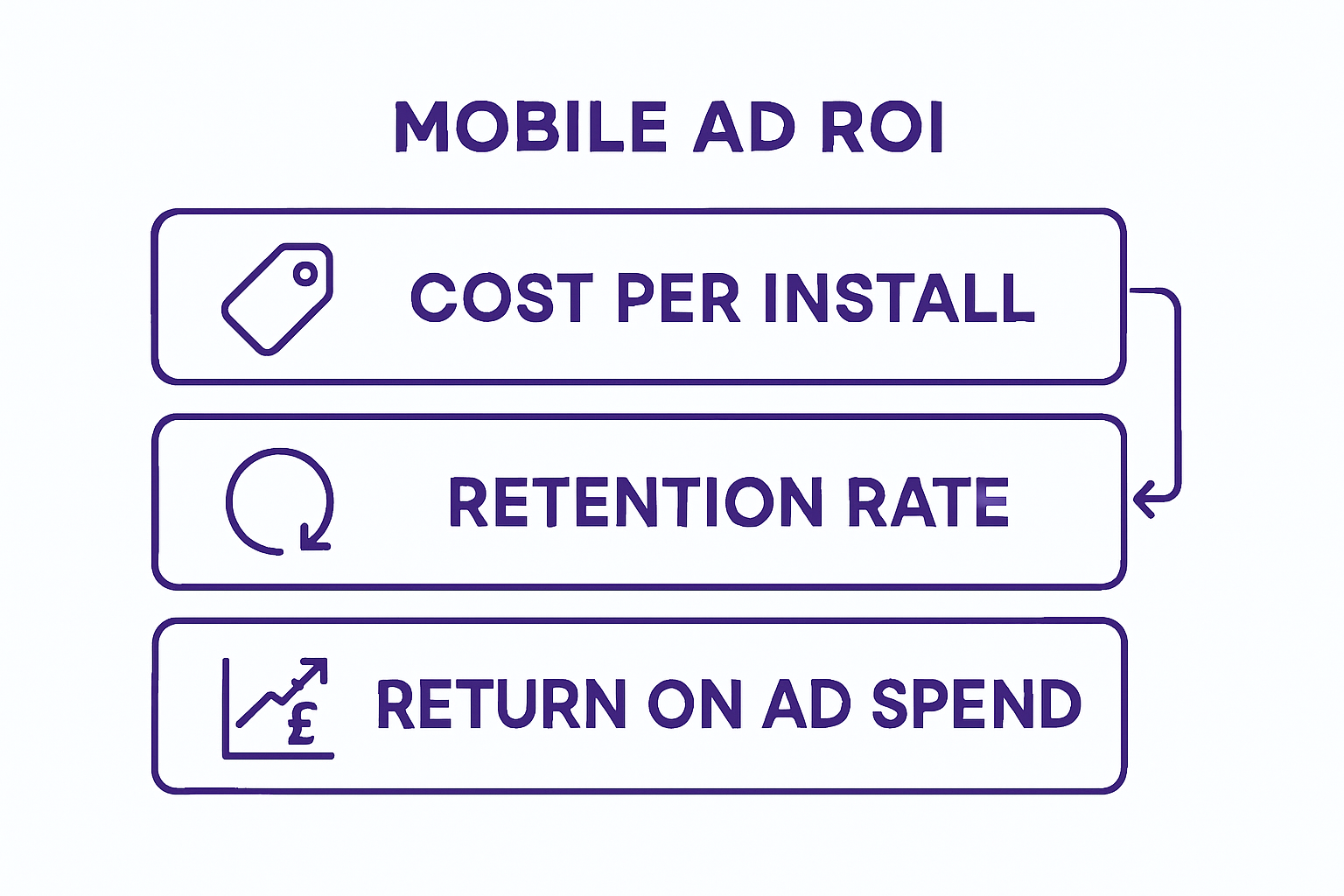
Key performance indicators for Google Ads in mobile gaming typically include metrics such as:
- Install Rate: Percentage of users who download the game after viewing an ad
- Cost per Install (CPI): Total advertising spend divided by number of game installations
- Retention Rate: Proportion of users who continue playing after initial installation
- Return on Ad Spend (ROAS): Revenue generated from new users compared to advertising expenditure
Successful mobile game marketers understand that ad performance metrics are not just numbers, but strategic insights that guide future marketing decisions and game development approaches.
Key Metrics for Measuring Success
Mobile game developers require sophisticated approaches to tracking performance metrics that go beyond simple installation numbers. Types of performance metrics provide crucial insights into user behaviour, engagement, and long-term game sustainability.
Understanding player lifecycle becomes paramount, and research introduces advanced analytical techniques like the Mean Cumulative Function (MCF), which enables developers to estimate expected values across critical dimensions such as game sessions, purchases, total playtime, and player lifetime value. This innovative method allows for timely analytics even before all users have completed their gaming journey, offering a comprehensive view of player retention and monetisation potential.
Google’s advertising ecosystem incorporates Quality Score, a sophisticated metric that influences ad rank and cost per click. Understanding engagement rates becomes crucial, as this score considers multiple factors including click-through rate, ad relevance, and landing page experience. These intricate calculations determine not just the visibility of advertisements but their potential effectiveness in attracting quality players.
Key performance metrics that mobile game marketers should consistently track include:
- Retention Rate: Percentage of players returning after initial installation
- Lifetime Value (LTV): Total revenue generated by an average player throughout their engagement
- Cost per Acquisition (CPA): Total marketing spend required to acquire a single player
- Conversion Rate: Proportion of ad viewers who actually download and play the game
- Engagement Metrics: Average session duration, frequency of play, and in-game interactions
Successful mobile game marketing demands a holistic approach, continuously analysing these metrics to refine strategies and maximise return on investment.
Types of Google Ads for Mobile Games
Mobile game developers have multiple strategic options when approaching Google Ad formats, each designed to maximise user acquisition and engagement. Mobile game ad best practices suggest leveraging diverse advertising approaches to capture potential players’ attention effectively.
In-game advertising has evolved into a sophisticated ecosystem with multiple sophisticated approaches. Modern mobile game advertisements can be categorised into several distinct types, including static ads, dynamic advertisements, and interactive placements that seamlessly integrate within the gaming experience. These formats range from brief interstitial displays to full-screen video experiences and rewarded video advertisements that provide direct value to players.
The primary Google Ad formats specifically tailored for mobile gaming include:
- Interstitial Ads: Full-screen advertisements appearing at natural transition points within gameplay
- Rewarded Video Ads: Optional video advertisements offering in-game rewards for voluntary viewing
- Banner Ads: Smaller, less intrusive advertisements displayed along game margins
- Native Ads: Contextually integrated advertisements matching the game’s visual aesthetic
- Playable Ads: Interactive advertisement formats allowing users to preview gameplay mechanics
Two primary ad formats dominate the mobile gaming landscape: video-based and interactive advertisements. These formats provide developers with flexible strategies to engage potential players, balancing user experience with marketing objectives. Successful implementation requires careful consideration of player preferences, game design, and monetisation goals.

Creative Strategy for High-Impact Playables
Developing high-impact playable advertisements requires a nuanced approach that balances user engagement with technical performance. How to make playable ads that genuinely capture player interest demands strategic creativity and technical precision.
Research from Deloitte and Google AdMob highlights the critical importance of creating non-disruptive playable experiences. The study reveals that disruptive ad features can potentially double the likelihood of users abandoning the advertisement, emphasising the need for seamless, engaging interactive experiences that feel like natural extensions of gameplay.
User perception studies have identified several crucial considerations for developing effective playable advertisements, including:
- Performance Optimisation: Minimising memory and CPU overhead
- Data Efficiency: Reducing unnecessary network traffic consumption
- Battery Conservation: Preventing excessive battery drain during ad interactions
- Seamless Integration: Creating ads that feel contextually relevant
- Interactive Design: Ensuring compelling, short-form gameplay demonstrations
Successful playable ad strategies focus on maximising user acquisition by crafting miniature gameplay experiences that provide genuine value, intrigue, and a compelling preview of the full gaming experience. The key is transforming advertisements from interruptions into enticing interactive moments that players genuinely want to explore.
Optimising Budgets and Reducing Costs
Mobile game marketers must develop sophisticated strategies for budget optimisation that go beyond traditional advertising approaches. Conversion tracking techniques provide critical insights into campaign performance, enabling precise financial management and strategic resource allocation.
Innovative research on traffic patterns reveals groundbreaking methods for understanding digital advertising efficiency. By analysing daily traffic distributions, developers can identify nuanced patterns that potentially increase revenue by over 50% through meticulously optimised ad placements. These traffic-fingerprint approaches allow marketers to move beyond generic spending models and implement data-driven budget strategies.
Key strategies for reducing advertising costs and maximising return on investment include:
- Granular Performance Tracking: Monitoring individual ad performance metrics
- Audience Segmentation: Targeting specific player demographics with precision
- Time-Based Optimization: Identifying peak engagement windows
- Automated Bid Management: Using algorithmic approaches to control spending
- Creative Iteration: Continuously testing and refining advertisement designs
Successful budget management in mobile game advertising requires a holistic approach that balances creativity, technical analysis, and strategic financial planning. The goal is not merely reducing costs, but maximising the efficiency of every advertising pound spent.
Common Pitfalls and How to Avoid Them
Mobile game advertising success hinges on understanding and navigating potential strategic mistakes that can undermine user experience and campaign effectiveness. Investigating ad performance challenges reveals critical insights into maintaining user engagement and trust.
Deloitte and Google AdMob research highlights the profound risks associated with disruptive advertising practices. Advertisements featuring obscure close buttons or forced redirects can dramatically erode user trust, potentially increasing player churn rates and damaging long-term game reputation. The fundamental principle is creating non-intrusive, high-quality ad experiences that seamlessly integrate with gameplay.
Key pitfalls mobile game marketers must strategically avoid include:
- Intrusive Ad Placement: Interrupting gameplay at critical moments
- Excessive Ad Frequency: Overwhelming users with constant advertisements
- Resource-Intensive Ads: Consuming excessive device memory and battery
- Irrelevant Targeting: Displaying ads misaligned with player interests
- Complex Ad Interactions: Creating difficult-to-navigate advertisement experiences
User perception studies underscore the importance of minimising resource consumption, with particular emphasis on managing memory usage, CPU overhead, and battery drain during ad interactions. Successful mobile game marketers recognise that maintaining a delicate balance between monetisation and user experience is paramount to sustainable growth.
Unlock Your Mobile Game’s True Potential with Easy Playable Ads
Struggling to maximise your Google Ad performance while respecting your budget constraints is a common challenge for mobile game developers. As highlighted in the article, achieving strong return on ad spend and creating engaging, non-disruptive playable ads can often demand substantial development time and resources. Pain points like balancing user retention, managing costs, and designing interactive ads that truly resonate with players require smart solutions that do not compromise creativity or efficiency.
At PlayableMaker, we understand these pressures. Our no-code platform empowers you to build playable and interactive ads fast, without draining your team’s time or company resources. By simplifying playable ad creation, you can deliver compelling mini game experiences that increase installs and retention while optimising your ad budget. To deepen your understanding of optimising ad campaigns, check our Publishing Archives for expert insights and helpful strategies.
Ready to transform your ad performance today Do not wait to boost engagement and ROI with streamlined, budget-friendly playable ads. Visit PlayableMaker and explore our Uncategorized Archives for more tips that will elevate your mobile game marketing strategy.
Frequently Asked Questions
What are the key metrics for measuring Google Ad performance in mobile gaming?
The key metrics include Install Rate, Cost per Install (CPI), Retention Rate, and Return on Ad Spend (ROAS). These metrics help in understanding user acquisition and the profitability of advertising campaigns.
How can I optimise my mobile game marketing budget?
To optimise your mobile game marketing budget, focus on granular performance tracking, audience segmentation, time-based optimisation to identify peak engagement windows, and automated bid management for effective spending control.
What types of Google Ads are best suited for mobile gaming?
The best types of Google Ads for mobile gaming include Interstitial Ads, Rewarded Video Ads, Banner Ads, Native Ads, and Playable Ads, as these formats effectively capture and engage potential players.
How can I increase user engagement through advertisements?
To enhance user engagement, create non-intrusive, high-quality ad experiences that seamlessly integrate with gameplay. Focus on optimising the performance and relevance of ads to foster a positive player experience.
Recommended
- 8 Key Ad Performance Metrics for Mobile Gaming Success – playablemaker.com 8 Key Ad Performance Metrics for Mobile Gaming Success
- Facebook Ad Performance: Complete Guide for Mobile Gaming – playablemaker.com Facebook Ad Performance: Complete Guide for Mobile Gaming
- Advertising Performance Metrics: Complete Guide – playablemaker.com Advertising Performance Metrics: Complete Guide
- What is Ad Optimization? Understanding Its Importance – playablemaker.com What is Ad Optimization? Understanding Its Importance