
Engagement rate often gets all the attention when people talk about mobile gaming success. It is no wonder really when some hit games see engagement rates topping 40 percent, far above the average across industries. That sounds impressive on its own. Yet it is the true story behind those numbers that changes everything. Because a high engagement rate does not just mean people play more. It reveals what actually keeps players obsessed and why one game becomes an addiction while ten others fall flat.
Table of Contents
- Defining Engagement Rate: What It Means
- The Importance of Engagement Rate in Mobile Gaming
- Understanding How Engagement Rate Is Calculated
- Key Factors Influencing Engagement Rate
- Real-World Applications of Engagement Rate in Marketing
Quick Summary
| Takeaway | Explanation |
|---|---|
| Engagement Rate Measures User Interaction | This metric indicates how deeply users engage with a game beyond mere downloads. |
| High Engagement Suggests Compelling Gameplay | A high engagement rate reflects a game’s ability to capture user interest and emotional investment. |
| Calculate Engagement Rate Smartly | Use a formula dividing total meaningful interactions by potential interactions to derive a percentage. |
| Game Design Impacts Engagement | A well-designed game with intuitive interfaces and engaging narratives drives higher user interaction rates. |
| Engagement Rate Influences Revenue | Strong engagement rates can convert players into paying customers, crucial for monetisation strategies. |
Defining Engagement Rate: What It Means
Engagement rate represents a crucial metric in digital interactions, particularly within gaming environments. At its core, engagement rate quantifies how actively users interact with content, measuring the depth and quality of user involvement beyond simple view or download statistics. This metric provides insights into user behaviour, indicating not just whether someone accessed a game or advertisement, but how meaningful and compelling that interaction was.
The Core Components of Engagement Rate
In gaming contexts, engagement rate typically encompasses multiple interaction dimensions. Digital analytics experts define these interactions through several key parameters:
- Time Spent: How long users remain actively involved in gameplay
- Interaction Frequency: Number of specific actions taken within the game
- Retention Metrics: Repeated returns and sustained interest in the gaming experience
These components help developers and marketers understand user investment beyond surface-level metrics.
Below is a table summarising the core components that constitute engagement rate in mobile gaming environments, making it easier to compare their significance and roles.
| Component | Description |
|---|---|
| Time Spent | Duration users are actively engaged in gameplay |
| Interaction Frequency | Number of specific actions taken during gameplay |
| Retention Metrics | Measures of repeated returns and sustained interest |
| Progression Through Levels | Advancement within the game’s structure and challenges |
| Social Interactions | Participation in multiplayer modes or sharing achievements |
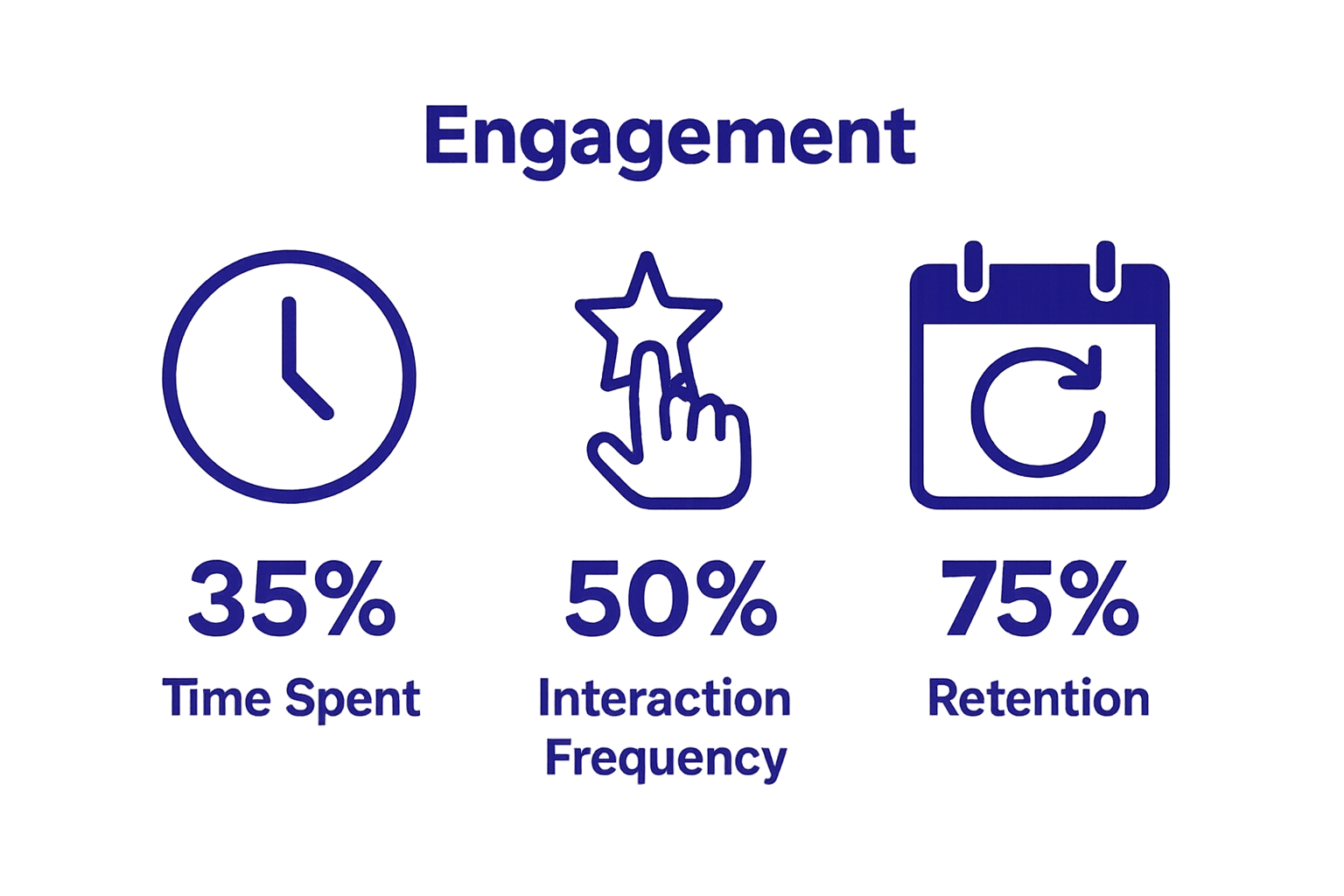 For instance, a high engagement rate suggests users find the game compelling enough to invest significant time and emotional energy.
Calculating Engagement in Gaming Environments
Calculating engagement rate involves complex algorithmic approaches that track user interactions. The fundamental formula typically involves dividing total user interactions by total potential interactions, then multiplying by 100 to generate a percentage. Interactions might include:
- Completing game levels
- Making in-game purchases
- Sharing game achievements
- Participating in multiplayer modes
Understanding these nuanced interactions helps game developers refine user experiences and create more compelling digital environments that maintain player interest over extended periods. By tracking engagement rates, studios can identify precisely what motivates players and design more targeted, immersive gaming experiences.
The Importance of Engagement Rate in Mobile Gaming
Engagement rate serves as a critical performance indicator that transcends traditional metrics in mobile gaming. While download numbers and initial installations provide a baseline, engagement rate reveals the true health and potential of a mobile game. It acts as a comprehensive barometer measuring user satisfaction, retention potential, and overall game design effectiveness.
Strategic Value for Game Developers
Research on mobile game analytics demonstrates that engagement rate directly correlates with a game’s long-term success. Game developers utilise this metric to understand player behaviour, identify potential friction points, and continuously refine game mechanics. High engagement rates signal that players find the game:
- Intrinsically motivating
- Challenging yet achievable
- Emotionally rewarding
- Socially interactive
Moreover, engagement rates help developers allocate resources more effectively, focusing on features and design elements that genuinely resonate with their target audience.
Economic and Marketing Implications
From a monetisation perspective, engagement rate becomes a powerful predictor of potential revenue streams. Mobile games with consistently high engagement rates are more likely to convert players into paying customers. Learn more about user retention strategies that complement engagement measurement.
Publishers and investors increasingly use engagement rate as a key performance indicator when assessing a game’s market potential. A robust engagement rate suggests strong player loyalty, reduced churn, and higher lifetime customer value.
 This metric helps stakeholders make data-driven decisions about game development, marketing investments, and potential monetisation strategies.
Ultimately, engagement rate transforms from a simple numerical metric into a comprehensive narrative about player experience, game design quality, and potential commercial success in the competitive mobile gaming ecosystem.
Understanding How Engagement Rate is Calculated
Calculating engagement rate in mobile gaming requires a sophisticated approach that goes beyond simplistic numerical measurements. This metric demands a comprehensive analysis of multiple interactive dimensions, transforming raw data into meaningful insights about player behaviour and game performance.
Core Calculation Methodologies
Scientific research on gaming interactions reveals that engagement rate calculations typically involve complex algorithmic approaches. The fundamental calculation involves dividing total meaningful interactions by potential total interactions, then multiplying by 100 to generate a percentage. Key interaction metrics include:
- Number of game sessions per user
- Average session duration
- Frequency of in-game actions
- Progression through game levels
- Social interactions within the game
These metrics are not merely aggregated but weighted according to their significance in demonstrating genuine player investment. A single long, complex game session might carry more weight than multiple brief interactions.
Advanced Engagement Measurement Techniques
Modern engagement rate calculations incorporate sophisticated tracking mechanisms that capture nuanced user behaviours. Developers utilise advanced analytics tools to track granular interactions, creating a multidimensional view of player engagement.
Crucial considerations in these calculations include:
- Distinguishing between active and passive interactions
- Tracking user retention across different time intervals
- Analysing progression patterns
- Evaluating social and competitive interactions
Learn more about conversion strategies that complement engagement measurement techniques. By understanding these intricate calculation methods, game developers can transform raw data into actionable insights, ultimately creating more compelling and engaging gaming experiences.
Key Factors Influencing Engagement Rate
Engagement rate in mobile gaming is not a static metric but a dynamic ecosystem influenced by multiple interconnected factors. Understanding these elements provides game developers and marketers with strategic insights into player behaviour and game design effectiveness.
Game Design and User Experience
Academic research in interactive entertainment highlights that game design fundamentally drives engagement. The intricate balance between challenge, reward, and user experience determines whether players remain invested. Key design elements that significantly impact engagement include:
- Intuitive user interface
- Balanced difficulty progression
- Compelling narrative structures
- Responsive game mechanics
- Aesthetic and visual appeal
Games that seamlessly integrate these elements create an immersive environment that naturally encourages prolonged player interaction and emotional investment.
Psychological and Motivational Triggers
Engagement transcends technical implementation and delves into complex psychological mechanisms. Players are motivated by intrinsic and extrinsic rewards that stimulate continued participation. Psychological drivers include:
- Achievement and progression systems
- Social recognition
- Competitive elements
- Continuous learning and skill improvement
- Sense of autonomy and personal agency
Explore performance metrics that enhance gaming success to understand how these psychological triggers translate into measurable engagement. By recognising and strategically incorporating these motivational elements, developers can craft experiences that resonate deeply with player psychology.
Ultimately, engagement rate is a nuanced reflection of how well a game meets players’ psychological needs, balancing challenge, reward, and personal fulfilment in a dynamic interactive environment.
This table outlines key factors influencing engagement rate in mobile games, allowing for quick reference and comparison of their respective impacts.
| Factor | Influence on Engagement Rate |
|---|---|
| Game Design | Drives user satisfaction through interface, narrative, and visuals |
| Challenge & Reward | Balances difficulty to maintain motivation and achievement |
| Social Features | Encourages interaction and competition among players |
| Progression Systems | Offers incentives for continuous play and skill development |
| Psychological Triggers | Leverages intrinsic and extrinsic motivators |
| User Experience | Ensures ease of use and accessibility |
Real-World Applications of Engagement Rate in Marketing
Engagement rate has evolved from a peripheral metric to a critical strategic tool in modern digital marketing, particularly within interactive media and gaming ecosystems. Marketing professionals now leverage this sophisticated measurement to understand user behaviour, optimise campaign performance, and drive more meaningful customer interactions.
Targeted Campaign Optimisation
Marketing research studies demonstrate that engagement rate provides nuanced insights beyond traditional conversion metrics. Marketers utilise this data to refine targeting strategies, creating more personalised and resonant communication channels. Key application areas include:
- Segmenting audience demographics
- Identifying high-potential customer groups
- Tailoring content to specific user preferences
- Predicting potential user lifetime value
- Adjusting marketing spend dynamically
These sophisticated approaches transform engagement rate from a simple numerical indicator into a comprehensive strategic planning tool that enables precision marketing.
Performance Measurement and ROI Analysis
Engagement rate serves as a sophisticated barometer for measuring marketing effectiveness across various digital platforms. By tracking detailed interaction patterns, marketing teams can:
- Quantify campaign performance beyond surface metrics
- Understand subtle user behaviour nuances
- Calculate more accurate return on investment
- Develop predictive models for future campaigns
- Benchmark performance against industry standards
Learn more about marketing funnel strategies that complement engagement rate analysis. The ability to translate complex user interactions into actionable insights represents a significant advancement in data-driven marketing methodologies, enabling more intelligent and responsive communication strategies.
Transform Your Engagement Rate Insights into Powerful Playable Ads
Understanding engagement rate is essential if you want your games to keep players truly invested. You have discovered how in-depth analytics, user retention, and interaction frequency spell the difference between ordinary and extraordinary digital experiences. Yet, turning those engagement insights into real-world impact often gets lost in complicated development cycles and expensive creative costs.
Ready to bridge the gap between strategy and results? With PlayableMaker, you can build standout playable ads without coding knowledge or heavy costs. Use the data and strategies from your engagement rate analysis to design interactive creatives that convert. Do not let your team be held back by limited resources or technical barriers. Head to PlayableMaker’s main platform and see how fast, budget-friendly ad creation can help you drive retention and growth. Turn your new understanding of engagement rate into immediate action today.
Frequently Asked Questions
What is engagement rate in gaming?
Engagement rate in gaming is a metric that quantifies how actively users interact with a game, measuring the depth and quality of user involvement beyond simple downloads or views. It provides insights into user behaviour and indicates the meaningfulness of interactions.
How is engagement rate calculated in mobile gaming?
Engagement rate is calculated by dividing the total meaningful interactions (such as game sessions and in-game purchases) by the potential total interactions, then multiplying by 100 to obtain a percentage. This helps developers understand player investment.
What factors influence engagement rate in mobile games?
Key factors influencing engagement rate include game design, user experience, psychological triggers (like achievement systems), difficulty progression, and narrative structures. These elements are essential for encouraging prolonged player interaction and satisfaction.
Why is engagement rate important for game developers?
Engagement rate is crucial for game developers as it indicates player satisfaction and retention potential. High engagement rates suggest that players find the game compelling, which in turn predicts long-term success and can influence marketing and monetisation strategies.
Recommended
- What is User Engagement? Understanding Its Importance – playablemaker.com What is User Engagement? Understanding Its Importance
- Understanding Conversion Rate in Advertising: A Complete Guide – playablemaker.com Understanding Conversion Rate in Advertising: A Complete Guide
- What is User Retention? Understanding Its Importance – playablemaker.com What is User Retention? Understanding Its Importance
- 7 Types of Performance Metrics for Mobile Gaming Success – playablemaker.com 7 Types of Performance Metrics for Mobile Gaming Success
- How to Increase Website Engagement in 2025: Proven Strategies