
Playable ads are changing the way mobile games catch your attention. Precision targeting can boost ad engagement rates by up to 67 percent, according to Cambridge University research. It sounds like throwing data and clever design together is enough to guarantee success. Yet the real difference comes from choices made long before your ad ever goes live. Curious how strategic groundwork can turn simple adverts into powerful user magnets?
Table of Contents
- Step 1: Define Your Target Audience And Goals
- Step 2: Choose The Right Tools And Platforms
- Step 3: Design Engaging Game Elements
- Step 4: Develop Interactive Storylines
- Step 5: Test Your Playable Ads For Performance
- Step 6: Launch And Monitor Campaign Effectiveness
Quick Summary
| Key Point | Explanation |
|---|---|
| 1. Define target audience and goals | Understand your audience’s preferences and set clear objectives to increase ad engagement and conversions. |
| 2. Choose suitable tools and platforms | Select platforms with user-friendly features for creating playable ads that suit your game’s genre and marketing needs. |
| 3. Design engaging game elements | Create intuitive gameplay experiences that reflect your core game mechanics, fostering immediate user enjoyment and retention. |
| 4. Develop compelling interactive storylines | Craft narratives that create emotional engagement; the story should draw users into your game’s universe quickly. |
| 5. Conduct rigorous performance testing | Implement continuous testing to refine ads based on user interaction metrics for optimal conversion and engagement rates. |
Step 1: Define Your Target Audience and Goals
Defining your target audience and goals is the strategic foundation for creating playable ads that genuinely connect and convert. This critical first step determines the entire trajectory of your advertising approach, ensuring your interactive ad resonates with precisely the right mobile gaming users.
Successful playable ad development begins with deep audience segmentation.
 For mobile gaming marketers, this means understanding not just demographic data like age and location, but psychological gaming preferences and behavioural patterns. Consider granular details such as preferred game genres, average session lengths, spending habits, and interaction styles within mobile games.
Research from Cambridge University’s Digital Marketing Insights suggests that precision targeting increases ad engagement rates by up to 67%. To achieve this, develop comprehensive user personas that go beyond surface-level characteristics. Map out detailed player profiles including motivational drivers, skill levels, and specific gaming ecosystem interactions.
Establishing clear goals is equally crucial. Your objectives might range from user acquisition and brand awareness to direct game downloads or in-app purchases. Each goal requires a nuanced approach in designing your playable ad’s interactive mechanics, difficulty curve, and reward structures. Align your ad’s interactive experience directly with your primary marketing objective.
For mobile game marketers, typical goals often include:
- Attracting players with specific skill levels
- Reducing user acquisition costs
- Increasing first-time user retention
- Generating high-quality game install leads
To validate your audience definition and goals, conduct preliminary small-scale tests. Track metrics like interaction duration, completion rates, and subsequent conversion actions. These insights will help refine your ad targeting strategy, ensuring your playable ad becomes a precision instrument for user engagement rather than a generic marketing attempt.
Remember, a well-defined target audience and crystal-clear goals transform playable ads from simple promotional tools into powerful user acquisition engines.
Step 2: Choose the Right Tools and Platforms
Selecting the appropriate tools and platforms for creating playable ads is a pivotal decision that directly impacts your marketing effectiveness. This step transforms your strategic vision into a tangible interactive experience that captures and retains user attention in the competitive mobile gaming landscape.
The modern mobile gaming advertising ecosystem offers a diverse range of no-code and development platforms designed to streamline playable ad creation. Your primary goal is to find solutions that balance technical flexibility, user experience design, and cost-effectiveness. Look for platforms that provide intuitive drag-and-drop interfaces, comprehensive asset libraries, and robust analytics tracking capabilities.
According to research from Cambridge University’s Digital Marketing Insights, platforms that enable rapid prototyping and iterative design significantly improve ad performance. When evaluating tools, prioritize those offering seamless integration with major ad networks and supporting multiple file formats for maximum compatibility.
Consider exploring image and video generation tools specifically tailored for playable ads that can accelerate your content creation process. Key platform selection criteria should include:
- Compatibility with multiple mobile game genres
- Advanced interactive element customization
- Real-time performance analytics
- Cost-effective pricing models
- Easy export options for various ad networks
Evaluate potential platforms through comprehensive testing phases. Request demo versions, participate in free trials, and conduct small-scale experiments to assess each tool’s alignment with your specific marketing objectives. Pay close attention to user interface intuitiveness, rendering quality, and the platform’s ability to generate engaging interactive experiences that mirror your game’s core mechanics.
The following table summarises the key criteria you should consider when selecting platforms and tools for creating playable ads, making it easier to compare options effectively.
| Platform/Tool Criterion | Why It Matters | Example Features/Indicators |
|---|---|---|
| Technical Flexibility | Ensures the tool matches your ad vision | Customisation options, drag-and-drop |
| User Experience Design | Affects player satisfaction and results | Intuitive interface, smooth workflow |
| Asset Library | Accelerates creation and prototyping | Built-in graphics, templates |
| Analytics Tracking | Enables performance measurement | Real-time reports, engagement metrics |
| Ad Network Integration | Eases cross-channel campaign management | Export options for various platforms |
| Cost-effectiveness | Keeps your development budget in check | Transparent pricing, free trials |
| Multi-format Compatibility | Broadens ad reach across devices | Supports HTML5, video, images |
Successful platform selection is not just about technical capabilities but about finding a solution that seamlessly translates your creative vision into compelling, high-conversion playable advertisements. The right tools will transform your marketing strategy from generic promotions to immersive, interactive user acquisition experiences.
Step 3: Design Engaging Game Elements
Designing engaging game elements transforms your playable ad from a mere promotional tool into an interactive experience that captures and retains user attention. This critical step requires a strategic blend of creativity, psychological understanding, and technical execution that makes your ad feel less like an advertisement and more like an enjoyable mini-game.
The core philosophy of successful playable ad design is creating immediate, frictionless engagement. Your interactive elements must communicate your game’s core mechanics within seconds, providing users with a compelling preview that feels both intuitive and exciting. Think of your playable ad as a microcosm of your game’s most enjoyable moments, distilled into a brief, addictive interaction.
According to research from Cambridge University’s Digital Marketing Insights, interactive ads that mirror the core gameplay mechanics increase user retention by up to 40%. This means your design should authentically represent your game’s unique selling points, whether it’s strategic decision-making, puzzle-solving, or skill-based challenges.
Explore game mechanics that transform ads into fun experiences by focusing on these critical design principles. Crucial elements to incorporate include:
- Clear, instantaneous gameplay instructions
- Minimal learning curve
- Immediate reward mechanisms
- Visually appealing and recognizable game aesthetics
- Smooth, responsive interactive controls
Consider implementing a progressive difficulty curve that allows users to experience small victories quickly. Start with an ultra-simple challenge that demonstrates your game’s fundamental mechanics, then gradually introduce slightly more complex interactions. This approach keeps users engaged by providing a sense of rapid progression and mastery.
Verify your design’s effectiveness by conducting multiple user testing rounds. Track metrics like interaction duration, completion rates, and emotional responses. A successful playable ad game element should feel less like an interruption and more like an unexpected moment of entertainment that leaves users wanting more.
Step 4: Develop Interactive Storylines
Developing interactive storylines transforms your playable ad from a simple promotional tool into a captivating narrative experience that draws users into your game’s universe. This crucial step requires crafting a micro-narrative that communicates your game’s core emotional appeal and gameplay mechanics within an incredibly short timeframe.
The art of interactive storytelling lies in creating immediate emotional resonance. Your storyline must establish context, introduce conflict, and provide a sense of potential resolution within mere seconds. Think of your playable ad as a cinematic trailer compressed into an interactive moment where users become the protagonist of a brief but compelling narrative arc.
According to research from Cambridge University’s Digital Marketing Insights, interactive narratives that trigger emotional engagement can increase user retention by up to 55%. This means your storyline should not just demonstrate gameplay, but create an immediate emotional connection that makes users feel invested in the outcome.
Explore the nuanced approach to storytelling in interactive advertisements by focusing on these narrative design principles. Key storytelling elements to incorporate include:
- A clear narrative hook within the first two seconds
- Minimal but compelling character motivation
- An achievable micro-challenge that represents larger game dynamics
- Subtle narrative progression through gameplay interactions
- Emotional payoff that mirrors your game’s core experience
Consider constructing your interactive storyline like a narrative puzzle. Each interaction should reveal a small piece of your game’s broader world, creating curiosity and momentum. Use visual and interactive cues that hint at deeper narrative possibilities, encouraging users to imagine what might happen next if they download and play the full game.
Verify your storyline’s effectiveness through rigorous user testing. Track metrics like interaction duration, emotional engagement signals, and conversion rates. A successful interactive storyline will feel less like an advertisement and more like an unexpected, intriguing narrative fragment that leaves users wanting to explore further.
Step 5: Test Your Playable Ads for Performance
Testing playable ads is the critical quality assurance phase that transforms theoretical design into measurable marketing performance. This step goes beyond simple evaluation, representing a strategic process of continuous refinement that separates successful interactive advertisements from forgettable promotional content.
Performance testing is not a singular event but an ongoing iterative process. Your goal is to create a systematic approach that reveals precise insights about user interaction, emotional engagement, and conversion potential. Think of each test iteration as peeling back layers of user psychology, uncovering what truly motivates your potential players to take action.
According to research from Cambridge University’s Digital Marketing Insights, advertising variations that undergo comprehensive multi-variant testing can improve conversion rates by up to 45%. This means developing a rigorous testing methodology that examines multiple dimensions of your playable ad’s performance.
Learn about advanced ad performance optimization strategies by implementing these critical testing parameters. Essential performance metrics to track include:
- User interaction duration
- Completion rate of interactive challenge
- Click-through rate to game download
- User emotional response indicators
- Retention rate from ad interaction
Develop a disciplined testing protocol that creates controlled experimental conditions. This involves generating multiple ad variants with subtle differences in game mechanics, visual design, narrative approach, and interactive elements. Track each variant’s performance meticulously, looking beyond surface-level metrics to understand the underlying psychological triggers that drive user engagement.
Verify your testing effectiveness by establishing clear benchmark goals and conducting statistically significant trials. A successful testing approach will provide granular insights that allow you to incrementally improve your playable ad’s performance, transforming initial creative concepts into finely tuned user acquisition machines.

Step 6: Launch and Monitor Campaign Effectiveness
Launching and monitoring your playable ad campaign marks the culmination of your strategic development process, transforming theoretical design into real-world marketing performance. This phase represents more than simple deployment; it is a dynamic, responsive approach to understanding how your interactive ad resonates with your target audience.
Campaign effectiveness monitoring is a continuous, data-driven dialogue with your user base. Your goal shifts from creative development to strategic optimization, tracking granular performance metrics that reveal the deeper psychological triggers driving user engagement. Think of this stage as a real-time feedback loop where every interaction provides valuable insights for future ad iterations.
According to research from Cambridge University’s Digital Marketing Insights, mobile advertising campaigns that implement active monitoring strategies can improve conversion rates by up to 35% within the first month of deployment. This underscores the critical importance of developing a robust, responsive tracking mechanism.
Explore advanced techniques for monitoring mobile marketing performance by implementing these strategic monitoring practices. Key performance indicators to track meticulously include:
- User acquisition cost
- Interaction duration
- Conversion rate
- Replay and share rates
- First-time user retention
Deploy advanced analytics tools that provide real-time insights into user behavior. Pay special attention to micro-interactions within your playable ad, understanding not just whether users complete the interactive challenge, but how they navigate through the experience. Look for patterns in user engagement that might indicate emotional resonance or potential friction points in your design.
To provide a clear overview of the vital metrics for monitoring your playable ad campaign, this table lists the key performance indicators alongside their respective purposes.
| Key Metric | Purpose |
|---|---|
| User acquisition cost | Measure efficiency of spend for new players |
| Interaction duration | Gauge ad engagement quality |
| Conversion rate | Assess effectiveness at driving game installs |
| Replay and share rates | Understand ad virality and re-engagement |
| First-time user retention | Track retention from initial engagement |
| Micro-interaction analysis | Identify points of user interest or friction |
| Benchmark attainment | Evaluate success against predefined objectives |
Verify campaign effectiveness by establishing clear benchmark goals and maintaining a flexible, adaptive approach. A successful launch and monitoring strategy transforms your playable ad from a static marketing asset into a dynamic, continuously improving user acquisition tool that learns and evolves with each interaction.
Ready to Create Playable Ads That Truly Engage?
You know the frustration of spending weeks building playable ads that never quite hit the mark. The article showed how vital it is to define your audience, set clear campaign goals and design compelling game elements. Fast iteration and robust performance testing are key yet most creators face delays because development is complicated, costly and often technical support is hard to find. If you are looking for practical ways to fix these challenges right now, our Help section is filled with answers and tips tailored for those new to interactive ad creation.
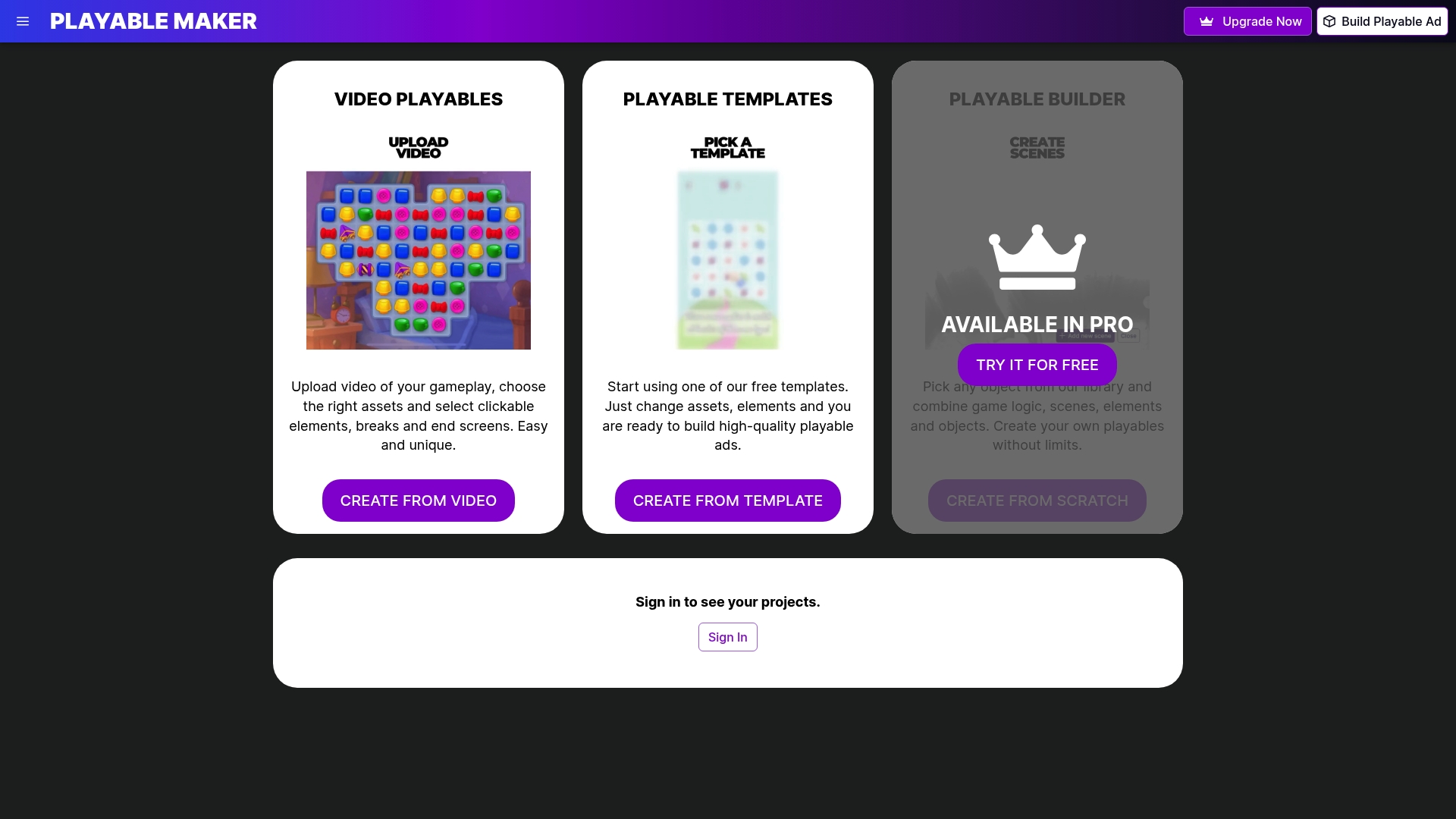
Join PlayableMaker today and start building captivating, interactive ads with no code and no wasted time. Experience a platform made for marketers who want results fast. Take the next step—explore our Publishing tools and launch playable ads that boost engagement without straining your resources. Act now to harness every competitive advantage for your next campaign.
Frequently Asked Questions
How can I define my target audience for playable ads?
To define your target audience for playable ads, consider demographic factors such as age and location, along with psychological gaming preferences and behavioural patterns. This includes understanding preferred game genres, spending habits, and user interaction styles within mobile games.
What tools are recommended for creating playable ads?
It’s advisable to select no-code and development platforms that offer features like intuitive interfaces, asset libraries, and robust analytics tracking capabilities. Look for tools that integrate with major ad networks and support various file formats for maximum compatibility.
What key elements should be included in the design of playable ads?
Engaging game elements in playable ads should provide clear gameplay instructions, ensure a minimal learning curve, and offer immediate rewards. Visually appealing aesthetics along with smooth, responsive controls are crucial to capture user interest and provide an enjoyable experience.
How do I test the performance of my playable ads?
Testing should be an ongoing iterative process where you track crucial performance metrics such as user interaction duration, completion rates, click-through rates, and emotional response indicators. Multiple ad variants should be tested to uncover insights about user psychology and engagement triggers.
Recommended
- Playable Ads Creation Accessibility: How Playable Maker Levels the Playing Field – playablemaker.com Playable Ads Creation Accessibility: How Playable Maker Levels the Playing Field
- PlayableMaker and Moloco: Revolutionizing Playable Ads for Maximum ROI – playablemaker.com PlayableMaker and Moloco: Revolutionizing Playable Ads for Maximum ROI
- Players love engaging ads—until they don’t. Repetition kills interest fast. – playablemaker.com Players love engaging ads—until they don’t. Repetition kills interest fast.
- The Unexpected Benefits of Playable Ads for Non-Gaming Industries – playablemaker.com The Unexpected Benefits of Playable Ads for Non-Gaming Industries
- How to Create Shareable Content That Boosts Engagement