Did you know that over 70 percent of mobile gamers encounter ads while playing games? As mobile gaming continues to attract millions each day, understanding how ads fit into these virtual worlds can reshape both player experience and business success. Shifting from simple product placements to real-time interactive content, in-game ads have become an integral, creative force that drives engagement and keeps games thriving.
Table of Contents
- Defining Ads In Game And Core Concepts
- Types Of In-Game Ads Explained
- How In-Game Ads Work In Mobile Games
- User Experience And Monetization Factors
- Best Practices And Common Pitfalls
Key Takeaways
| Point | Details |
|---|---|
| Ad Format Diversity | In-game advertising features various formats, including static, dynamic, interstitial, and advergames, each offering unique engagement opportunities. |
| User Experience Focus | Successful monetization strategies prioritize player engagement and enjoyment while integrating meaningful advertising to avoid disruption. |
| Performance Metrics Importance | Developers should analyze key ad performance metrics to optimize ad strategies and ensure they enhance rather than detract from the gaming experience. |
| Best Practices for Implementation | Effective ad placement should occur during natural gameplay breaks and be contextually relevant to maintain immersion and minimize user frustration. |
Defining Ads in Game and Core Concepts
In the rapidly evolving world of mobile gaming, in-game advertising (IGA) represents a sophisticated marketing strategy that seamlessly integrates brand messaging within digital gaming environments. According to research from understanding what is ad format, these advertisements can manifest in multiple innovative forms, transforming traditional advertising approaches.
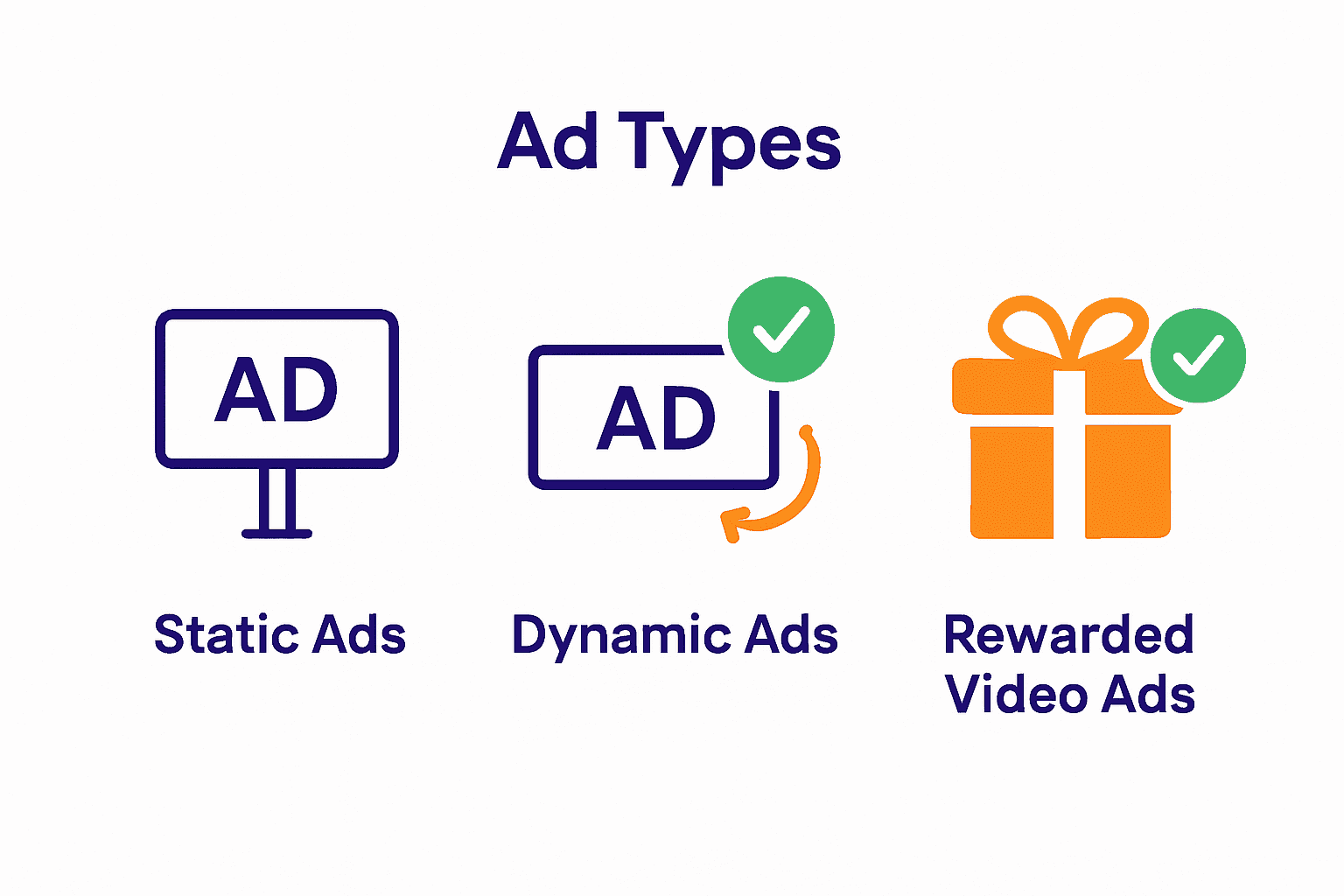
At its core, in-game advertising encompasses two primary approaches. Static advertisements are fixed visual elements integrated directly into game environments, such as billboards, posters, or branded product placements. Conversely, dynamic advertisements adapt in real-time, changing based on contextual factors like player location, time of day, or specific game interactions. This dynamic approach allows marketers unprecedented flexibility in targeting and engagement.
A unique subset of in-game advertising is the advergame, a video game specifically designed around promoting a particular product or service. Unlike traditional in-game ads, advergames transform the entire gaming experience into a marketing vehicle. These interactive experiences create deeper brand connections by making marketing inherently entertaining and participatory. Through strategic ad placement and creative integration, mobile game developers and marketers can transform advertising from an interruption into an engaging, value-added component of the gaming experience.
The landscape of in-game advertising continues to evolve, offering increasingly sophisticated methods for brands to connect with engaged audiences. By understanding ad placement strategies, marketers can craft immersive experiences that resonate with players while generating meaningful brand interactions.
Types of In-Game Ads Explained
The mobile gaming advertising landscape offers a diverse range of ad formats designed to engage players without disrupting their gaming experience. According to research from creative ad formats for mobile marketers, these advertisements can be strategically categorized to maximize user interaction and brand visibility.
Here’s a comparison of the primary types of in-game advertisements:
| Ad Type | Description | Key Advantages | Placement Examples |
|---|---|---|---|
| Static Advertisements | Fixed visuals integrated in development | Consistent exposure Non-intrusive |
Billboards Posters Branded items |
| Dynamic Advertisements | Real-time, updatable ad content | Targeted Flexible messaging |
In-game screens Rotating banners |
| Interstitial Ads | Ads shown during gameplay breaks | High visibility Natural pauses |
Between levels Loading screens |
| Advergames | Games centered around a brand or product | Deep engagement Brand immersion |
Entire game experience |
| Rewarded Video Ads | Videos offering in-game incentives | High user engagement User choice |
Voluntary ad view for rewards |
Traditional in-game ad formats include static advertisements, which are fixed visual elements embedded within game environments like virtual billboards or branded objects. As highlighted by Amazon’s advertising research, these ads create passive brand exposure during gameplay. Interstitial ads represent another prevalent format, appearing during natural breaks in gameplay—such as level transitions or loading screens—providing a non-intrusive advertising moment that captures player attention without breaking immersion.
More advanced formats include dynamic in-game advertisements that adapt in real-time based on player context, and sponsored content or events that integrate brand experiences directly into game narratives. These sophisticated approaches transform advertisements from mere visual interruptions into engaging, interactive components of the gaming experience. By understanding ad monetization strategies, developers can create seamless brand integrations that feel natural and value-adding to players.

The evolution of in-game advertising continues to push creative boundaries, offering marketers increasingly nuanced methods to connect with engaged gaming audiences. As technology advances, these ad formats will likely become even more personalized, contextually relevant, and fundamentally integrated into the gaming experience.
How In-Game Ads Work in Mobile Games
In-game advertising represents a sophisticated mechanism for integrating brand messaging directly into the mobile gaming experience. According to ad placement strategy research, these advertisements are strategically embedded to create seamless interactions between gameplay and marketing content.
Two primary implementation methods define how in-game ads function. Static advertisements are hardcoded during game development, permanently integrated into the game environment like virtual billboards or branded game objects. Conversely, dynamic advertisements offer real-time flexibility, allowing marketers to update ad content remotely without requiring game developers to modify the core game code. This approach enables precise targeting and immediate content adjustments based on player demographics, location, or current trends.
The technical infrastructure behind in-game ads involves sophisticated ad networks that facilitate connections between game developers, advertisers, and players. These networks manage critical processes like ad delivery, tracking user interactions, and generating performance metrics. By understanding how ad impressions work, marketers can optimize their strategies to maximize engagement and revenue generation while maintaining a positive user experience.
Ultimately, successful in-game advertising balances intrusive marketing with user enjoyment. The most effective approaches create value for players, offering rewards, enhanced gameplay features, or entertainment that feels complementary rather than disruptive. As mobile gaming continues to evolve, so too will the sophisticated techniques for integrating meaningful, contextually relevant advertising experiences.
User Experience and Monetization Factors
Monetizing mobile games through advertising requires a delicate balance between generating revenue and maintaining an exceptional player experience. The evolution of mobile game monetization reveals that successful strategies prioritize player engagement over aggressive marketing tactics.
Rewarded video advertisements have emerged as a particularly effective approach to balancing user experience and revenue generation. Research demonstrates that these ads can significantly influence user behavior while providing tangible value to players. By offering in-game rewards like extra lives, currency, or special items in exchange for watching advertisements, developers create a mutually beneficial ecosystem where players feel compensated for their attention.
To optimize monetization, developers must carefully analyze ad performance metrics. Key indicators like engagement rate, completion rate, and user retention provide crucial insights into how advertisements impact the overall gaming experience. By understanding key ad performance metrics, developers can fine-tune their advertising strategies to minimize user frustration and maximize revenue potential.
Privacy and user trust remain paramount in modern mobile game advertising. Emerging technologies, including blockchain-based frameworks, are exploring innovative ways to create more transparent and user-centric advertising experiences. The goal is not just to generate revenue, but to create an advertising ecosystem that respects user preferences, provides genuine value, and maintains the immersive quality of mobile gaming.
Best Practices and Common Pitfalls
Successful in-game advertising requires a nuanced approach that balances marketing objectives with user experience. Ad placement strategy insights reveal that the most effective implementations seamlessly integrate advertisements without disrupting gameplay immersion.
Strategic ad placement is critical to avoiding common pitfalls. Developers should consider these key best practices: – Place ads during natural gameplay breaks – Ensure ads are contextually relevant to the game’s theme – Limit frequency of ad interruptions – Provide clear opt-out or reward mechanisms for users. The most significant mistake is treating advertisements as an afterthought rather than an integral part of the user experience. Intrusive or poorly timed ads can lead to player frustration and potential game abandonment.
Technology offers innovative solutions for mitigating advertising challenges. Dynamic ad targeting allows for more personalized and less disruptive ad experiences, adapting content based on player preferences, demographics, and in-game behavior. By leveraging key ad performance metrics, developers can continuously refine their approach, ensuring that advertisements add value rather than detract from the gaming experience.
Ultimately, the most successful in-game advertising strategies prioritize player enjoyment above all. This means creating ads that feel like a natural extension of the game world, offering genuine value or entertainment. Developers who view advertisements as a collaborative opportunity rather than a necessary evil will be most successful in maintaining player engagement and generating sustainable revenue.
Transform Your In-Game Ads with Easy, No-Code Playable Solutions
The article reveals the complexity of integrating ads into mobile games and the challenge of balancing effective marketing with an engaging player experience. If you are frustrated by costly, time-consuming playable ad development or worried about intrusive ad formats disrupting your gameplay, you are not alone. Concepts like dynamic advertisements, rewarded video ads, and ad placement strategy highlight how vital it is to create ads that feel natural yet deliver measurable results.
At PlayableMaker, we understand these struggles and have created a no-code platform designed to make playable ad creation fast, simple, and budget-friendly. Whether you aim to craft dynamic ads or immersive advergames without exhausting your development team, our intuitive tools empower you to develop interactive ads that captivate players and boost monetization. Dive deeper into ad strategies by visiting our Help Archives and start building ads that work for you today.
Ready to revolutionise your in-game advertising approach and elevate user engagement now Visit PlayableMaker to get started instantly and bring your creative ad ideas to life without delay.
Frequently Asked Questions
What are the different types of in-game advertisements?
In-game advertisements include static advertisements, dynamic advertisements, interstitial ads, advergames, and rewarded video ads. Each type has its own advantages and is designed to engage users in unique ways.
How do in-game ads work in mobile games?
In-game ads are integrated into mobile games via static or dynamic methods. Static ads are hardcoded into the game, while dynamic ads can be updated in real-time based on player context, making them more adaptable and targeted.
What are rewarded video ads, and how do they benefit players?
Rewarded video ads offer players in-game incentives, such as extra lives or currency, in exchange for watching advertisements. This creates a mutually beneficial experience where players feel compensated for their attention.
What are the best practices for implementing in-game ads?
Effective in-game advertising involves strategic ad placement during natural gameplay breaks, ensuring contextual relevance, limiting ad frequency, and providing clear mechanisms for user rewards or opt-out options.
Recommended
- Understanding What is Ad Placement in Mobile Gaming – playablemaker.com Understanding What is Ad Placement in Mobile Gaming
- What Two Main Ad Formats Can Be Used in Mobile Gaming? – playablemaker.com What Two Main Ad Formats Can Be Used in Mobile Gaming?
- Understanding What is Ad Monetization in Mobile Gaming – playablemaker.com Understanding What is Ad Monetization in Mobile Gaming
- What Is an Ad Network? Understanding Ad Networks in Mobile Gaming – playablemaker.com What Is an Ad Network? Understanding Ad Networks in Mobile Gaming