
Branded content is turning heads across marketing and digital platforms, with brands now spending over £16 billion a year on content marketing campaigns globally. That might sound like just another advertising trend at first glance. But unlike standard ads, branded content is quietly reshaping how consumers connect and trust the brands they love – and most people do not even realise it is happening.
Table of Contents
- Defining Branded Content: What It Is And Its Elements
- The Importance Of Branded Content In Mobile Gaming
- How Branded Content Engages Audiences Effectively
- Key Concepts In Branded Content Creation And Strategy
Quick Summary
| Takeaway | Explanation |
|---|---|
| Branded content focuses on storytelling. | Engaging narratives drive audience connection and can subtly promote the brand. |
| Authenticity is crucial in branded content. | Content should resonate genuinely with the audience’s values and interests for stronger impact. |
| Minimisation of direct promotion is essential. | Effective branded content avoids overt marketing to maintain audience engagement without disruption. |
| Understanding audience psychology enhances engagement. | Insight into what motivates audiences leads to better narrative design and deeper connections. |
| High production quality is non-negotiable. | Well-crafted content with high standards fosters greater credibility and audience trust. |
Defining Branded Content: What It Is and Its Elements
Branded content represents a strategic marketing approach where organisations create compelling narrative experiences that subtly integrate brand messaging without traditional advertising interruption. According to the USC Annenberg Center for Public Relations, branded content is “paid content created and delivered outside traditional advertising channels, using consumer-familiar formats, with the intent of promoting a brand through controlled storytelling”.
Core Characteristics of Branded Content
Branded content distinguishes itself through several fundamental elements that separate it from conventional advertising. Unlike direct promotional materials, branded content focuses on providing genuine value, entertainment, or educational insights while maintaining a subtle brand association.
This table summarises the core characteristics of effective branded content as mentioned in the article, highlighting the features that distinguish it from conventional advertising.
| Characteristic | Description |
|---|---|
| Narrative-driven storytelling | Engages audiences through compelling stories that provide entertainment or information |
| Authenticity | Content aligns genuinely with the audience’s values, interests, and experiences |
| Minimal explicit promotion | Limits direct product or service promotion to avoid disrupting the audience’s experience |
| High production quality | Ensures content is professionally crafted for credibility and trust |
| Audience resonance | Connects with the target audience on emotional and psychological levels |
| Substantive value | Delivers genuine value, whether through education, insight, or entertainment |
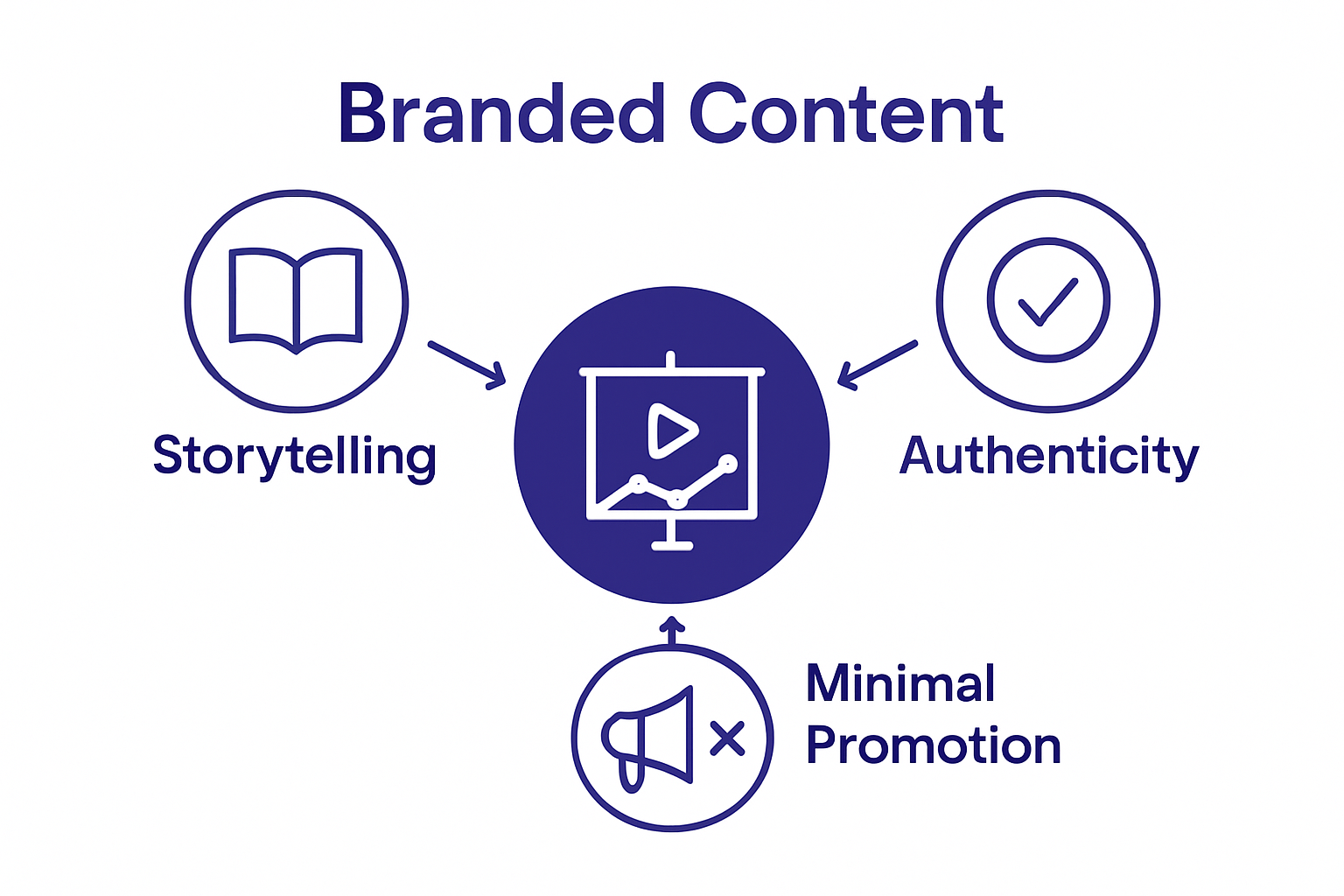
Key characteristics include:
- Narrative-driven storytelling that prioritises audience engagement
- Authentic content that resonates with target audience interests
- Minimal explicit product promotion
- High-quality, substantive information or entertainment
Strategic Purpose and Psychological Approach
The primary objective of branded content is creating meaningful connections with audiences by transcending traditional sales pitches. By developing content that audiences voluntarily consume, brands can establish trust, credibility, and emotional resonance. Research from Frontiers in Communication highlights how branded content blends media, advertising, and storytelling across multiple platforms.
This approach leverages psychological principles of engagement, recognising that consumers prefer informative and entertaining experiences over direct advertising. Brands achieve this by crafting narratives that align with audience values, interests, and aspirations.
For marketers seeking deeper insights into interactive content strategies, explore our comprehensive guide on interactive content to understand how modern brands create compelling audience experiences.
The Importance of Branded Content in Mobile Gaming
Branded content in mobile gaming represents a sophisticated marketing strategy that transforms traditional advertising paradigms by integrating brand narratives seamlessly into interactive digital experiences. Unlike intrusive advertisements, this approach creates meaningful engagement that resonates with players on psychological and emotional levels.
Player Experience and Brand Perception
Research published in the International Journal of Information Management highlights the critical relationship between gameful experiences and advertisement reception. Branded content in mobile gaming must achieve a delicate balance between entertainment and promotional messaging, ensuring players perceive the content as valuable rather than disruptive.
Key advantages of branded content in mobile gaming include:
- Enhanced player engagement through contextually relevant narratives
- Reduced advertisement fatigue
- Increased brand recall and positive brand associations
- Organic integration of marketing messages

Strategic Implementation and Psychological Dynamics
Successful branded content leverages players’ intrinsic motivations, transforming marketing from an interruption to an integral part of the gaming experience. By understanding player psychology, brands can create content that feels less like an advertisement and more like an extension of the game’s narrative universe.
The strategic approach involves carefully crafting content that:
- Aligns with game mechanics and player expectations
- Provides genuine entertainment or utility
For mobile game developers and marketers seeking advanced insights into interactive content strategies, discover our comprehensive guide on mobile gaming trends to understand how cutting-edge brands are revolutionising player engagement.
How Branded Content Engages Audiences Effectively
Branded content represents a sophisticated communication strategy that transcends traditional advertising by creating meaningful connections with audiences through compelling narratives and authentic experiences. The core objective is generating engagement that feels organic, personal, and valuable to consumers.
Psychological Triggers of Audience Engagement
Effective branded content leverages deep psychological principles to capture audience attention. By understanding human cognitive and emotional mechanisms, brands can craft content that resonates on multiple levels. Research examining consumer persuasion reveals that audience engagement fundamentally depends on creating genuine, relatable experiences.
Key psychological engagement triggers include:
- Emotional resonance with audience experiences
- Storytelling that feels authentic and personal
- Content that provides tangible value or insight
- Narrative structures that invite curiosity and participation
Strategic Content Design for Maximum Impact
Designing branded content requires a nuanced approach that balances promotional objectives with audience interests. Successful strategies focus on creating content that audiences would consume voluntarily, transforming marketing from an interruption to a welcomed experience.
Effective branded content typically demonstrates:
- Clear understanding of target audience motivations
- Seamless integration of brand messaging
- High production quality and creative execution
Discover advanced techniques for interactive storytelling to understand how modern brands are revolutionising audience engagement through innovative narrative approaches.
Key Concepts in Branded Content Creation and Strategy
Branded content strategy represents a sophisticated approach to marketing that transcends traditional advertising by creating meaningful, value-driven narratives that resonate deeply with target audiences. The fundamental goal is to develop content that audiences actively seek out and engage with voluntarily.
Foundational Strategic Elements
Research in the Hatyai Academic Journal underscores the critical importance of emotional and entertainment value in branded content. Successful strategies are built on understanding audience psychology, crafting narratives that connect on both intellectual and emotional levels.
Core strategic elements include:
- Deep audience persona development
- Authentic storytelling approaches
- Precise emotional targeting
- Seamless brand integration
- Measurable engagement metrics
Content Creation Principles
Effective branded content requires a delicate balance between promotional objectives and audience value. Creators must navigate the fine line between informative storytelling and overt marketing, ensuring that the content feels genuinely useful and engaging.
Key creation principles encompass:
- Prioritising audience experience over direct selling
- Creating narratives with inherent value
- Maintaining brand consistency
- Leveraging multimedia and interactive formats
Explore innovative techniques for making advertisements more engaging to understand how game mechanics can transform content creation strategies and audience interaction.
Make Branded Content Truly Engaging with Effortless Playable Ads
Are you ready to unlock the power of branded content without high costs or technical hurdles? Many brands struggle to create genuine connections because interactive experiences often demand heavy developer resources and complicated tools. If you found the article’s points on audience engagement and authentic storytelling inspiring, it’s time to see how publishing interactive branded content can be simple, quick and budget-friendly.
Discover best practices for publishing branded experiences
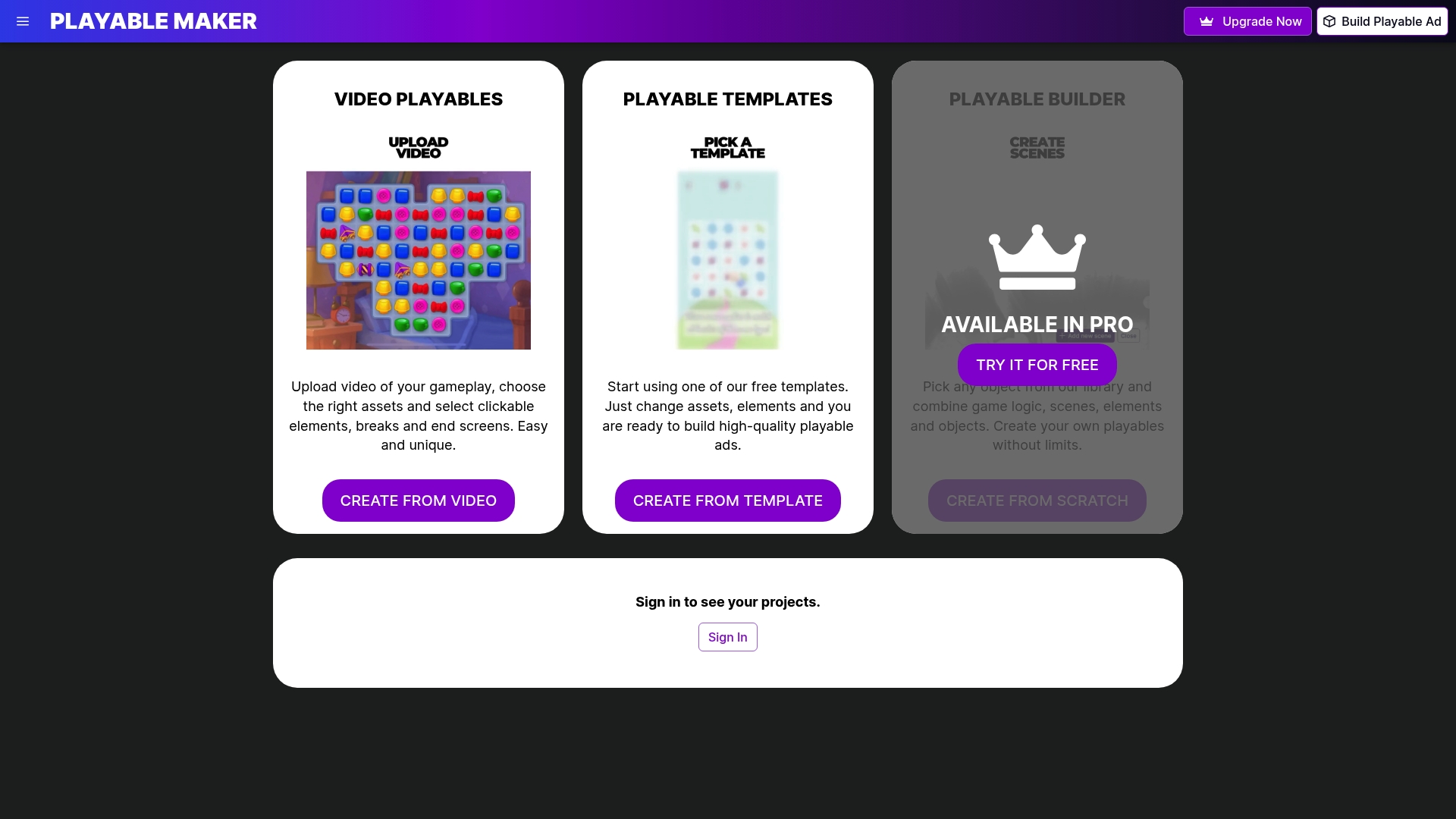
Start building playable ads in minutes using PlayableMaker’s no-code platform. Give your audience value-driven narratives and watch brand loyalty grow. Now is the perfect moment to reimagine your branded content strategy and take advantage of our easy-to-use solution. Visit PlayableMaker to experience a smarter approach to interactive content.
Frequently Asked Questions
What is branded content?
Branded content is a marketing strategy that creates engaging narratives integrating brand messaging subtly, providing value, entertainment, or educational insights without traditional advertising interruption.
How does branded content differ from traditional advertising?
Branded content focuses on storytelling and audience engagement rather than direct product promotion. It aims to build emotional connections with the audience, while traditional advertising emphasises immediate sales.
The following table compares branded content and traditional advertising, helping clarify their differing approaches as discussed in the article.
| Aspect | Branded Content | Traditional Advertising |
|---|---|---|
| Central Focus | Storytelling and audience engagement | Direct product promotion |
| Promotional Approach | Subtle, minimal explicit promotion | Overt, sales-driven messaging |
| Primary Objective | Building emotional connections and trust | Driving immediate sales |
| Content Experience | Voluntarily consumed, integrated into valuable content | Often seen as disruptive or intrusive |
| Typical Format | Narrative formats, entertainment, education | Banners, pop-ups, commercial breaks |
| Audience Perception | Organic, personal, and authentic | Often considered interruptive |
| Key Success Factor | Resonance with values and interests | High visibility and repetition |
What are the key elements of effective branded content?
Effective branded content typically includes narrative-driven storytelling, authenticity, minimal explicit promotion, and high-quality information or entertainment that resonates with the target audience’s interests.
How can branded content enhance audience engagement?
Branded content can enhance audience engagement by leveraging psychological principles, creating relatable experiences, and providing content that audiences voluntarily consume, which fosters trust and emotional resonance.
Recommended
- What is Interactive Content? Understanding Its Impact
- What is Ad Targeting? Understanding Its Importance and Mechanics
- Understanding What is Ad Placement in Mobile Gaming
- The Intersection of AR/VR and Ads
- User-Generated Content