User acquisition shapes the fate of every mobile game, pulling in fresh players from around the world and deciding which titles thrive or vanish. Surprisingly, over 70 percent of mobile apps lose all their users within the first three days after install. Yet this number barely scratches the surface. The real secret sits in how developers transform quick downloads into loyal, engaged communities ready to keep coming back for more.
Table of Contents
- Defining User Acquisition: A Fundamental Concept
- The Importance of User Acquisition in Mobile Gaming
- The Mechanisms of User Acquisition: How It Works
- Key Metrics and Concepts in User Acquisition
- Trends and Best Practices for Effective User Acquisition
Quick Summary
| Takeaway | Explanation |
|---|---|
| User acquisition drives mobile gaming success. | Attracting and retaining players is essential for economic growth in mobile gaming. |
| Targeted advertising increases engagement. | Precision-focused campaigns reach specific demographics, resulting in higher player interaction. |
| Performance metrics measure acquisition effectiveness. | Metrics like Cost Per Install (CPI) and Retention Rate indicate how well strategies are working. |
| Diversification in marketing channels broadens reach. | Using multiple platforms ensures game developers can attract a wider audience of potential players. |
| Personalisation enhances player experiences. | Tailored messaging based on user behaviour fosters deeper engagement and loyalty among players. |
Defining User Acquisition: A Fundamental Concept
User acquisition represents a critical strategy in mobile gaming that determines how developers and publishers attract, engage, and retain new players for their digital experiences. At its core, user acquisition is the systematic process of identifying, targeting, and converting potential gamers into active users who not only download an application but also become engaged participants within the gaming ecosystem.
The Fundamental Mechanics of User Acquisition
In mobile gaming, user acquisition goes beyond simple download metrics. It encompasses a comprehensive approach to attracting players through multiple strategic channels. Exploring detailed acquisition strategies reveals that successful approaches combine data-driven targeting, compelling marketing materials, and precise audience segmentation.
Key components of effective user acquisition include:
- Targeted Advertising: Precision-focused campaigns across digital platforms
- Channel Diversification: Utilising multiple marketing channels for broader reach
- Performance Tracking: Continuous measurement of acquisition metrics and campaign effectiveness
Economic and Strategic Significance
According to research on mobile gaming platforms, user acquisition represents more than a marketing function. It is a critical economic driver that enables game developers to generate revenue, sustain platform growth, and create immersive digital experiences. The free-to-play model has transformed user acquisition strategies, allowing developers to attract players without upfront costs while creating monetisation opportunities through in-game purchases and engagement.
Successful user acquisition requires understanding player psychology, demographic preferences, and emerging technological trends. By developing sophisticated targeting mechanisms and creating compelling value propositions, mobile game developers can transform casual interest into sustained player engagement.
The Importance of User Acquisition in Mobile Gaming
User acquisition serves as the lifeblood of mobile gaming success, transforming potential players into active participants within digital gaming ecosystems. By strategically attracting and engaging new users, developers create sustainable economic models that drive innovation and growth across the mobile gaming landscape.
Economic Sustainability and Revenue Generation
In the competitive mobile gaming market, user acquisition represents more than a marketing strategy. Exploring mobile gaming industry insights reveals that effective user acquisition directly correlates with revenue potential and long-term platform sustainability. Mobile game developers must invest significant resources in attracting high-quality users who demonstrate long-term engagement potential.
Key economic benefits of strategic user acquisition include:
- Revenue Diversification: Creating multiple monetisation channels through player engagement
- Market Expansion: Accessing new demographic segments and geographic markets
- Competitive Positioning: Establishing brand presence in a saturated gaming environment
Strategic Performance Metrics
According to research on mobile gaming platforms, successful user acquisition extends beyond initial download numbers. Developers must focus on quality metrics that measure user retention, in-game spending patterns, and overall lifetime value. These sophisticated performance indicators help organisations understand the true effectiveness of their acquisition strategies.
Advanced user acquisition approaches integrate data analytics, targeted marketing, and personalised user experiences. By understanding player preferences and behaviours, mobile game developers can create more precise, cost-effective acquisition strategies that transform casual interest into sustained engagement.
The Mechanisms of User Acquisition: How It Works
User acquisition in mobile gaming operates through a complex network of strategic approaches that transform potential players into engaged users. These mechanisms blend sophisticated digital marketing techniques, psychological targeting, and data-driven performance analysis to create comprehensive user attraction strategies.
Digital Marketing Channels and Targeting
Exploring user acquisition techniques reveals multiple interconnected channels that developers utilise to reach potential players. Modern user acquisition relies on precision targeting across various digital platforms, enabling game developers to connect with specific demographic segments most likely to engage with their gaming experiences.
Key digital marketing channels include:
- Social Media Advertising: Targeted campaigns on platforms like Facebook, Instagram, and TikTok
- Search Engine Marketing: Paid search advertisements targeting gaming-related keywords
- Influencer Partnerships: Collaborations with gaming content creators and streamers
Performance Tracking and Analytical Mechanisms
For a clear overview, the following table summarises the main digital marketing channels utilised in user acquisition for mobile games and the typical strategies associated with each.
| Marketing Channel | Examples | Typical Strategies |
|---|---|---|
| Social Media Advertising | Facebook, Instagram, TikTok | Targeted paid campaigns, audience filters |
| Search Engine Marketing | Google Ads, Bing Ads | Paid search ads on gaming keywords |
| Influencer Partnerships | Collaborations with content creators & streamers | Sponsored content, reviews, live streams |
According to research on mobile gaming platforms, successful user acquisition demands sophisticated performance tracking mechanisms. Developers employ advanced analytical tools that measure critical metrics such as cost per install, user retention rates, and lifetime player value. These sophisticated tracking systems enable continuous refinement of acquisition strategies, ensuring maximum efficiency and return on marketing investments.
The intricate process of user acquisition transforms raw digital marketing efforts into structured, measurable approaches. By integrating data analytics, psychological targeting, and multi-channel marketing strategies, mobile game developers can create precise, cost-effective methods for attracting and retaining players in an increasingly competitive digital gaming landscape.
Key Metrics and Concepts in User Acquisition
User acquisition metrics provide game developers with critical insights into the performance and potential of their mobile gaming strategies. These sophisticated measurements transform raw data into actionable intelligence, enabling precise decision-making and strategic refinement across digital platforms.
Core Performance Indicators
Understanding user acquisition strategies reveals a complex ecosystem of performance metrics that go beyond simple download numbers. Game developers must comprehensively analyse multiple indicators to assess the true effectiveness of their user acquisition efforts.
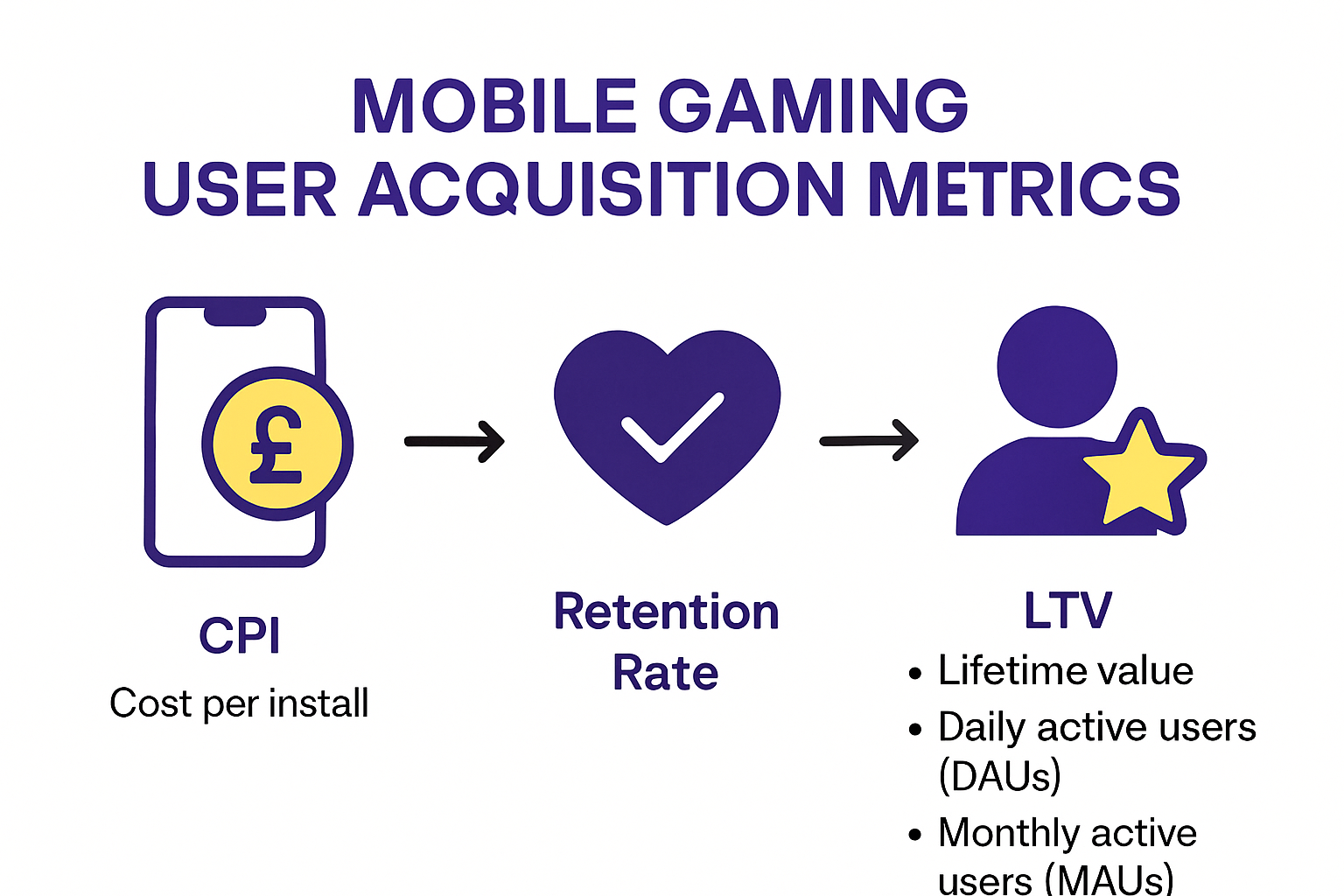
Key performance metrics include:
- Cost Per Install (CPI): The financial investment required to acquire a single user
- Retention Rate: Percentage of users who continue engaging with the game after initial download
- Lifetime Value (LTV): Projected revenue generated by an individual user throughout their engagement
Advanced Analytical Frameworks
According to research on mobile gaming platforms, sophisticated user acquisition demands a nuanced understanding of player behaviour.
To clarify the main performance metrics essential for user acquisition strategies, the following table outlines key metrics mentioned in the article and summarises their definitions and significance for mobile game developers.
| Metric | Definition | Significance |
|---|---|---|
| Cost Per Install (CPI) | The financial investment required to acquire a single user | Helps measure marketing efficiency |
| Retention Rate | Percentage of users who continue engaging with the game after initial download | Assesses user engagement and satisfaction |
| Lifetime Value (LTV) | Projected revenue generated by an individual user throughout their engagement | Indicates potential long-term profitability |
| Daily Active Users (DAU) | Number of unique users engaging with the game each day | Tracks user activity and game popularity |
| Monthly Active Users (MAU) | Number of unique users engaging with the game each month | Measures sustained user interest over time |
Developers utilise advanced analytical frameworks that track critical metrics such as Daily Active Users (DAUs), Monthly Active Users (MAUs), and session engagement patterns. These comprehensive measurement tools enable game creators to understand not just how many users they attract, but the quality and depth of user interaction.
The intricate world of user acquisition metrics transforms numerical data into strategic insights. By meticulously tracking and interpreting these performance indicators, mobile game developers can create more targeted, efficient, and economically sustainable user acquisition strategies that adapt dynamically to changing digital landscapes.
Trends and Best Practices for Effective User Acquisition
The landscape of mobile game user acquisition continues to evolve, demanding sophisticated strategies that blend technological innovation, psychological insights, and data-driven approaches. Developers must navigate an increasingly complex digital ecosystem to attract and retain players effectively.
Strategic Targeting and Personalization
Exploring advanced user acquisition techniques reveals the critical importance of precision targeting and personalized user experiences. Modern user acquisition strategies go beyond generic marketing, focusing on creating tailored engagement approaches that resonate with specific demographic segments.
Key strategic approaches include:

- Demographic Segmentation: Crafting targeted campaigns for precise audience groups
- Behavioural Targeting: Leveraging user data to create personalised marketing experiences
- Cross-Platform Integration: Developing consistent messaging across multiple digital channels
Emerging Technological Innovations
According to research on mobile gaming platforms, successful user acquisition increasingly depends on understanding and implementing cutting-edge technological solutions. Developers must prioritize privacy considerations, create transparent data practices, and develop user-centric approaches that build trust and engagement.
The future of user acquisition demands a holistic approach that combines technological sophistication with deep understanding of user psychology. By integrating advanced analytics, personalisation technologies, and ethical data practices, mobile game developers can create more effective, sustainable strategies for attracting and retaining players in an increasingly competitive digital marketplace.
Accelerate User Acquisition with Effortless Playable Ads
Every game developer knows attracting and retaining high-quality users can be overwhelming. As highlighted in the article, building engaging user journeys through targeted advertising and data-driven strategies is essential for growth. Yet, traditional methods demand extensive resources, expensive tools and valuable developer hours. What if you could launch compelling playable ads quickly and affordably, without code and without straining your budget? Discover how modern solutions can change your acquisition story instantly.

Choose a faster path. With PlayableMaker, you can build interactive ads that boost installs and engagement, all without touching complex code or breaking the bank. Say goodbye to long waits and high costs. See for yourself how easy it can be to reach your ideal players and transform your user acquisition targets. Visit the PlayableMaker home page and start building your next playable ad experience today.
Frequently Asked Questions
What is user acquisition in mobile gaming?
User acquisition in mobile gaming refers to the strategies and processes developers use to attract, engage, and retain new players, turning them from potential gamers into active users within their games.
Why is user acquisition important for mobile game developers?
User acquisition is crucial for mobile game developers as it drives revenue potential, sustains platform growth, and helps create immersive digital experiences, especially in a competitive market where engagement is key to success.
What are some effective strategies for user acquisition in mobile gaming?
Effective strategies for user acquisition include targeted advertising, utilizing multiple marketing channels, and employing performance tracking to measure the success of campaigns and user engagement.
What key metrics should developers focus on for user acquisition?
Developers should focus on metrics such as Cost Per Install (CPI), retention rates, and Lifetime Value (LTV) of users, as these indicators provide insights into the effectiveness and economic sustainability of their user acquisition strategies.
Recommended
- Global Smartphone Ownership – The Big Picture – playablemaker.com
- The History of User Acquisition and Playable Ads: Strategies, Benefits, and Best Practices – playablemaker.com
- How AI is Revolutionizing Mobile Game Marketing – playablemaker.com
- The Evolution of Mobile Game Monetization: Where Do Playable Ads Fit? – playablemaker.com
Article generated by BabyLoveGrowth