
Audience segmentation is changing the way mobile game developers connect with players. More than just splitting people into age groups and locations, this approach lets teams create tailored experiences for every type of gamer. Surprisingly, effective segmentation can lower marketing costs by up to 50 percent while increasing player retention. So while most see it as just another marketing tactic, it is actually unlocking a whole new level of personalisation that keeps players coming back for more.
Table of Contents
- Defining Audience Segmentation And Its Purpose
- The Importance Of Audience Segmentation In Mobile Gaming
- How Audience Segmentation Enhances Marketing Strategies
- Key Concepts And Techniques In Audience Segmentation
- Real-World Examples Of Successful Audience Segmentation
Quick Summary
| Takeaway | Explanation |
|---|---|
| Audience segmentation personalises gaming experiences | By categorising players, developers can tailor gameplay to individual preferences and motivations, enhancing user satisfaction. |
| Segmentation boosts targeted marketing effectiveness | Precision targeting through segmentation allows for more relevant campaigns, increasing player acquisition and retention while reducing costs. |
| Advanced analytical techniques are essential for segmentation | Employing machine learning and robust data collection methods enables the creation of dynamic player groups, driving better engagement. |
| Personalised rewards improve player retention | Implementing customised progression systems and rewards based on player behaviour elevates the gaming experience and encourages continued play. |
| Understand distinct player archetypes for better engagement | Recognising differences, such as casual versus competitive players, helps developers design experiences that align closely with user expectations. |
Defining Audience Segmentation and Its Purpose
Audience segmentation represents a strategic approach in mobile gaming marketing that transforms how developers and publishers understand and engage with their user base. At its core, this technique involves dividing potential players into distinct groups based on specific characteristics, preferences, and behaviours.
The Fundamental Concept of Segmentation
Audience segmentation goes beyond simple demographic categorisation. Research from strategic marketing studies reveals that effective segmentation allows organisations to identify nuanced groups within larger populations, enabling more targeted and personalised marketing strategies.
In mobile gaming, this means understanding players not just as a monolithic group, but as individuals with unique motivations, playing styles, and engagement patterns. The segmentation process typically considers multiple dimensions:
- Player skill level
- Age and demographic background
- Spending habits
- Gaming preferences and genre interests
- Time spent playing
Strategic Value for Game Developers
By implementing precise audience segmentation, mobile game developers can craft more resonant experiences. This approach allows for creating tailored marketing campaigns, game design modifications, and monetisation strategies that speak directly to specific player segments.
Learn more about ad audience targeting in mobile gaming to understand how these segmentation strategies translate into practical marketing approaches. Developers who master this technique can significantly improve user acquisition, retention, and overall game performance.
Ultimately, audience segmentation transforms raw user data into actionable insights, enabling game creators to build more engaging, personalised gaming experiences that resonate with distinct player groups.
The Importance of Audience Segmentation in Mobile Gaming
Audience segmentation has become a critical strategy for mobile game developers seeking to maximise player engagement and revenue generation. By understanding the nuanced differences between player groups, game creators can develop more targeted and compelling experiences.
This table compares the outcomes and advantages of audience segmentation for both player experience and marketing effectiveness.
| Area | Benefit of Audience Segmentation | Example from Content |
|---|---|---|
| Player Experience | Custom difficulty, personalised rewards, and targeted content creation | Custom difficulty scaling, personalised reward mechanisms |
| Marketing & User Acquisition | Reduced marketing costs, higher conversion rates, targeted campaigns | Lower marketing costs by up to 50 percent |
| Game Design | Modified gameplay for player archetypes, tailored progression systems | Adjusting for casual vs. competitive players |
| Monetisation | Individualised offers and spending-based strategies | Targeted in-game content, individualised monetisation |
| Retention | Improved engagement and longer player lifecycles | Enhanced player retention |
Enhancing Player Experience Through Personalisation
Research from mobile gaming studies demonstrates that segmentation allows for sophisticated personalisation techniques. Game developers can create dynamic experiences that adapt to individual player characteristics, such as skill level, playing style, and motivational drivers.
Effective segmentation enables several key improvements:

- Custom difficulty scaling
- Personalised reward mechanisms
- Targeted in-game content
- Tailored progression systems
- Individualised monetisation approaches
Strategic Marketing and User Acquisition
Audience segmentation transforms marketing strategies from broad, generic approaches to precision-targeted campaigns. Explore advanced user acquisition strategies to understand how segmentation can dramatically improve player recruitment and retention.
By categorising players into specific groups, developers can craft marketing messages that resonate deeply with each segment’s unique preferences and motivations. This approach significantly reduces marketing expenditure while simultaneously improving conversion rates and player lifetime value.
Ultimately, audience segmentation is not just a marketing technique but a comprehensive strategy for creating more engaging, responsive, and successful mobile gaming experiences.
How Audience Segmentation Enhances Marketing Strategies
Audience segmentation has revolutionised marketing strategies in the mobile gaming industry, transforming how developers approach user acquisition and engagement. By breaking down potential players into distinct groups, marketing teams can develop more precise and effective campaign approaches.
Precision Targeting and Campaign Efficiency
Research on marketing techniques demonstrates that marketers using audience segmentation can dramatically improve content relevance and user acquisition costs. This approach allows for highly targeted messaging that speaks directly to specific player motivations and preferences.
Key advantages of segmentation-driven marketing include:
- Reduced marketing expenditure
- Higher conversion rates
- More personalised communication
- Improved user engagement metrics
- Enhanced understanding of player behaviours
Optimising Ad Creatives and Messaging
Learn more about advanced ad targeting techniques to understand how segmentation transforms digital advertising. By categorising players based on their unique characteristics, developers can craft ad creatives that resonate more deeply with specific audience segments.
This strategic approach enables marketing teams to move beyond generic advertising, creating nuanced campaigns that speak directly to players’ individual gaming preferences, skill levels, and motivational drivers. The result is a more efficient marketing process that maximises return on advertising investment while delivering more meaningful player experiences.
Key Concepts and Techniques in Audience Segmentation
Audience segmentation in mobile gaming is a sophisticated process that requires strategic approaches and advanced analytical techniques. Understanding these core methodologies enables developers to create more targeted and effective player experiences.
Segmentation Dimensions and Classification Methods
Research in user behaviour analytics reveals multiple sophisticated dimensions for categorising players beyond traditional demographic data. Mobile game developers can leverage complex segmentation approaches that consider psychological, behavioural, and engagement-based characteristics.
Primary segmentation dimensions include:
To clarify the primary segmentation categories used in mobile gaming, the following table outlines each key dimension alongside a brief explanation.
| Segmentation Dimension | Explanation |
|---|---|
| Behavioural patterns | Analyses in-game actions, engagement frequency, and activity levels. |
| Spending potential | Groups players based on their purchase behaviours and in-game spending. |
| Skill progression | Tracks how players advance in skill or mastery over time. |
| Gaming motivations | Considers players’ intrinsic reasons for engaging with games. |
| Platform preferences | Distinguishes users by their preferred device or operating system. |
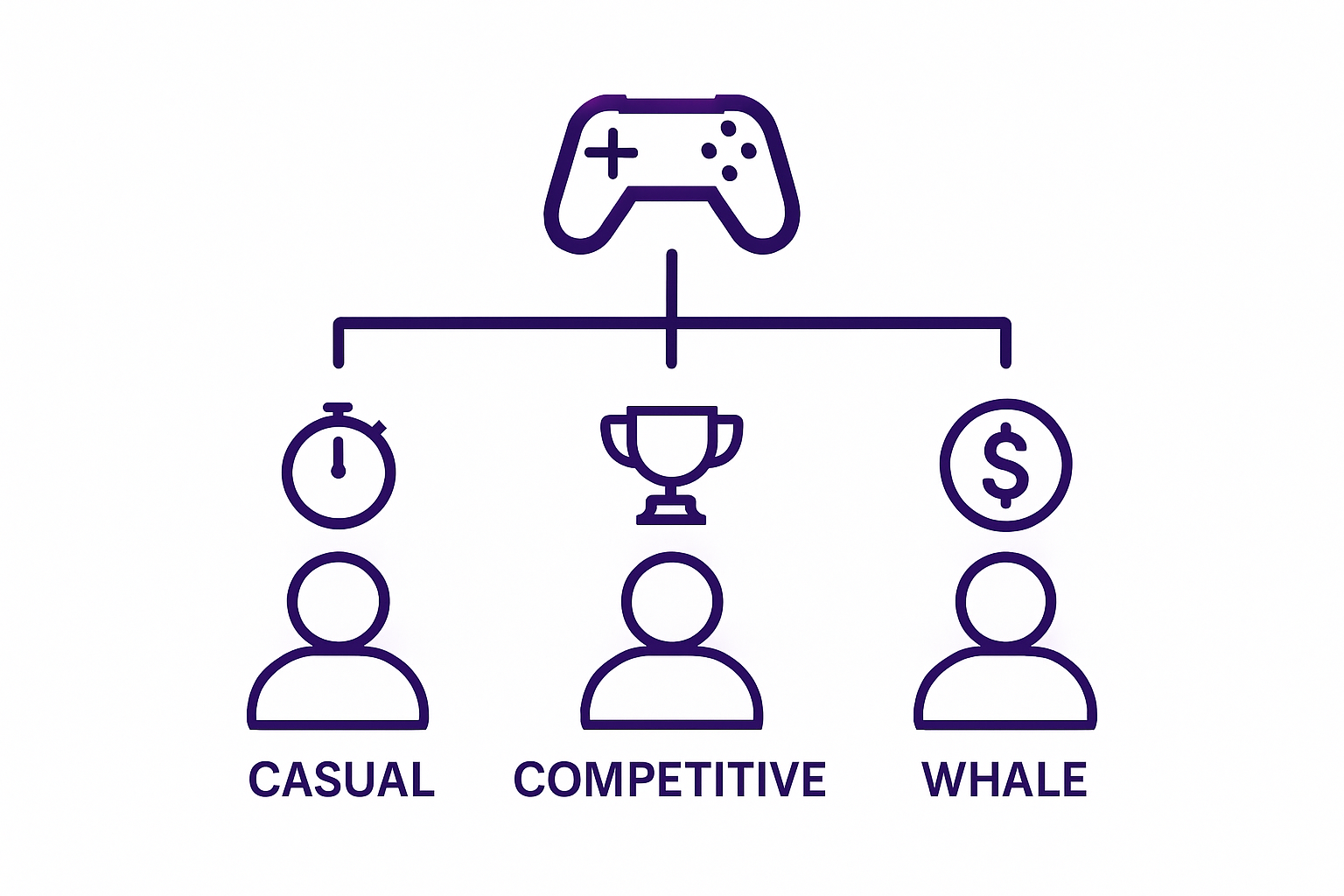
- Behavioural patterns
- Spending potential
- Skill progression
- Gaming motivations
- Platform preferences
Data Collection and Analysis Techniques
Explore advanced user acquisition strategies to understand how data transforms segmentation processes. Effective segmentation relies on robust data collection methods, including player interactions, in-game metrics, engagement patterns, and comprehensive analytics platforms.
Key analytical techniques involve machine learning algorithms that can dynamically cluster players based on complex, multidimensional data points. These sophisticated approaches allow developers to create highly granular and responsive player segments that evolve with changing user behaviours and preferences.
By implementing advanced segmentation techniques, mobile game developers can create more personalised, engaging experiences that speak directly to players’ unique motivations and gameplay styles.
Real-World Examples of Successful Audience Segmentation
Audience segmentation transforms theoretical concepts into practical marketing strategies through sophisticated, data-driven approaches. Successful mobile game developers have demonstrated remarkable achievements by implementing nuanced segmentation techniques that unlock deeper player understanding.
Strategic Segmentation in Mobile Gaming
Research on mobile game user behaviour highlights how precise player categorisation can dramatically improve engagement and monetisation strategies. Successful mobile game companies have leveraged segmentation to create targeted experiences that resonate with specific player archetypes.
Notable segmentation strategies include:
- Identifying casual versus competitive players
- Recognising different spending thresholds
- Understanding cross-platform gaming preferences
- Mapping player skill progression
- Analysing time investment patterns
Case Studies in Targeted Player Experiences
Explore gamification strategies in marketing to understand how segmentation drives player engagement. For instance, strategy games have successfully created different progression paths for players who prefer narrative exploration versus those seeking competitive challenges.
Mobile game developers like Supercell have masterfully employed audience segmentation by designing game mechanics that adapt to players’ skill levels and motivational drivers. By creating personalised reward systems and dynamically adjusting difficulty, these companies transform generic gaming experiences into individually tailored journeys.
Through sophisticated audience segmentation, mobile game developers can craft experiences that feel uniquely designed for each player, dramatically improving retention, satisfaction, and long-term engagement.
Bridge the Gap Between Player Insights and Playable Ad Creation
Audience segmentation in gaming reveals how different players engage, spend and enjoy game experiences. You have invested time in understanding that no two audiences are the same. Yet, when it comes to building ads that truly resonate with these carefully crafted segments, you may feel stuck. Traditional ad building methods drain your development resources, slow down delivery and make it hard to act on real-time segmentation insights.
Elevate your marketing by translating audience segmentation directly into tailored playable ads—without development bottlenecks. Try PlayableMaker, the no-code solution that transforms your segments into interactive ads, fast and within budget. Discover how you can quickly build, test and launch engaging ads that speak to each audience you identify. Get started today and turn your segmentation strategy into real growth by visiting PlayableMaker’s platform.
Frequently Asked Questions
What is audience segmentation in gaming?
Audience segmentation in gaming is the process of dividing potential players into distinct groups based on characteristics, preferences, and behaviours that influence their gaming experience.
Why is audience segmentation important for mobile game developers?
Audience segmentation is crucial for mobile game developers as it allows for more targeted marketing strategies and personalised player experiences, improving user acquisition, retention, and overall game performance.
How does audience segmentation enhance player experience?
Audience segmentation enhances player experience by creating tailored marketing campaigns and game features that resonate with specific player groups based on their skill levels, play styles, and motivations.
What techniques are used for audience segmentation in mobile gaming?
Techniques for audience segmentation in mobile gaming include analysing player behavioural patterns, spending potential, skill progression, and gaming motivations through advanced data collection and analysis methods.
Recommended
- Understanding Ad Audience Targeting in Mobile Gaming – playablemaker.com Understanding Ad Audience Targeting in Mobile Gaming
- What is Ad Targeting? Understanding Its Importance and Mechanics – playablemaker.com What is Ad Targeting? Understanding Its Importance and Mechanics
- Mastering Mobile Game User Acquisition Strategies in 2025 – playablemaker.com Mastering Mobile Game User Acquisition Strategies in 2025
- Master YouTube Ads Targeting for Mobile Games in 2025 – playablemaker.com Master YouTube Ads Targeting for Mobile Games in 2025
- How to Effectively Reach Digital Marketing Audiences