
Mobile users are bombarded with adverts every time they unlock their screens. Research shows that consumer ad fatigue can drastically reduce advertising effectiveness, limiting how well brands connect with people. Most assume simply showing more ads means better results. But the real story is that too much repetition actually pushes users away and makes your marketing invisible. If you thought more exposure meant more engagement, the reality is quite the opposite.
Table of Contents
- Defining Ad Fatigue And Its Causes
- The Importance Of Addressing Ad Fatigue
- The Mechanisms Behind Ad Fatigue In Advertising
- Recognising The Signs Of Ad Fatigue
- Strategies To Combat Ad Fatigue In Mobile Campaigns
Quick Summary
| Takeaway | Explanation |
|---|---|
| Recognise the Signs of Ad Fatigue | Monitor performance metrics like click-through rates to identify early signs of user disengagement. |
| Implement Creative Variation | Diversify ad content to maintain user interest and prevent cognitive exhaustion from repetitive messages. |
| Manage Ad Frequency Strategically | Employ intelligent algorithms to tailor ad exposure to user engagement levels, reducing annoyance from overexposure. |
| Understand Psychological Mechanisms | Acknowledge cognitive processes like disinterest that lead to disengagement, and adapt strategies accordingly. |
| Address Economic Consequences | Recognising ad fatigue is crucial to avoid increased costs and loss of customer trust and engagement. |
Defining Ad Fatigue and Its Causes
Ad fatigue represents a critical challenge in mobile marketing where target audiences become progressively less responsive to repeated advertising messages. Research from Aston University demonstrates that consumer fatigue can significantly impair cognitive processing of advertisements, reducing their overall effectiveness.
The Psychological Mechanism Behind Ad Fatigue
At its core, ad fatigue emerges from fundamental human psychological responses to repetitive stimuli. When consumers encounter the same advertisement multiple times, their initial engagement gradually transforms into disinterest and potential annoyance. This psychological mechanism operates through several key cognitive processes:
- Diminishing novelty response
- Reduced emotional engagement
- Increased cognitive resistance to marketing messages
The human brain is wired to seek novelty and quickly habituate to recurring stimuli. In mobile marketing, this means that an initially compelling advertisement can become background noise after repeated exposures. Users develop a form of mental filtering, where they unconsciously tune out messages that no longer provide fresh or compelling information.
Factors Contributing to Ad Fatigue in Mobile Marketing
Multiple interconnected factors contribute to the development of ad fatigue in mobile environments. The limited screen real estate and constant bombardment of digital content make mobile platforms particularly susceptible to user exhaustion.
Below is a table outlining the key factors that contribute to ad fatigue in mobile marketing, helping readers see how different aspects lead to user disengagement.
| Contributing Factor | Description |
|---|---|
| Frequency of Ad Displays | Excessive ad repetition increases familiarity and cognitive weariness |
| Lack of Content Variation | Repetitive creative assets make ads predictable and easy to ignore |
| Irrelevant Targeting | Poor audience matching leads to perceived irrelevance |
| Intrusive Ad Placement | Ads interrupt core user activities, resulting in frustration |
| Limited Screen Real Estate | Small screen space magnifies the impact of ad overload |
Key contributing factors include:
- Frequency of ad displays
- Lack of content variation
- Irrelevant targeting
- Intrusive ad placement
Understanding these dynamics is crucial for marketers seeking to maintain user engagement. By exploring ad frequency strategies, marketers can develop more nuanced approaches that respect user experience while maintaining advertising effectiveness.
The Importance of Addressing Ad Fatigue
Research examining mobile advertising wearout reveals substantial economic and engagement consequences when advertisers fail to manage ad fatigue effectively. Addressing this challenge is not merely a strategic preference but a critical necessity for maintaining campaign performance and user relationships.
Economic Impact of Unmitigated Ad Fatigue
Ignoring ad fatigue can lead to significant financial repercussions for mobile marketing campaigns. When advertisements become repetitive and unengaging, their effectiveness dramatically declines, resulting in wasted marketing budgets and reduced return on investment. The economic implications extend beyond immediate campaign performance, potentially damaging long-term brand perception and user trust.
Key economic consequences include:
- Increased cost per acquisition
- Reduced conversion rates
- Diminished user engagement
- Potential brand reputation damage
User Experience and Retention Considerations
Beyond financial metrics, ad fatigue directly impacts user experience and retention rates. Constantly bombarding users with repetitive or irrelevant advertisements can transform a potentially positive interaction into a frustrating encounter. Mobile users, particularly in gaming environments, have increasingly sophisticated expectations for personalised and non-intrusive advertising experiences.

By understanding audience targeting strategies, marketers can develop more nuanced approaches that respect user preferences while maintaining advertising effectiveness. This approach not only mitigates ad fatigue but also cultivates a more positive relationship between brands and their potential customers.
Strategic management of ad fatigue represents a sophisticated approach to mobile marketing that balances commercial objectives with user experience considerations. Successful implementation requires continuous monitoring, creative variation, and a deep understanding of audience engagement dynamics.
The Mechanisms Behind Ad Fatigue in Advertising
Research from Decision Support Systems reveals complex cognitive and neurological processes underlying advertising exhaustion. Understanding these intricate mechanisms provides critical insights into how users psychologically disengage from repeated marketing messages.
Cognitive Processing and Neurological Response
Ad fatigue emerges from sophisticated neurological mechanisms involving multiple cognitive systems. When consumers encounter repetitive advertisements, their brain initiates a protective filtering process designed to conserve mental resources. This neurological response transforms marketing stimuli from engaging content into background noise, effectively reducing information processing capacity.
Key neurological response characteristics include:
- Automatic attention reduction
- Decreased emotional reactivity
- Rapid pattern recognition and suppression
- Neurological habituation mechanisms
The human brain fundamentally operates as an efficiency mechanism, constantly evaluating incoming stimuli for novelty and potential threat or reward. In advertising contexts, this translates to an increasingly sophisticated screening process that rapidly categorizes repetitive messages as non essential information.
Psychological Mechanisms of Disengagement
Psychological disengagement represents a complex interaction between cognitive processing and emotional response. Users do not simply ignore advertisements but actively develop sophisticated mental strategies to minimise cognitive load. Exploring ad optimization techniques becomes crucial in understanding how to counteract these intrinsic psychological defence mechanisms.
The psychological disengagement process involves multiple interconnected stages:
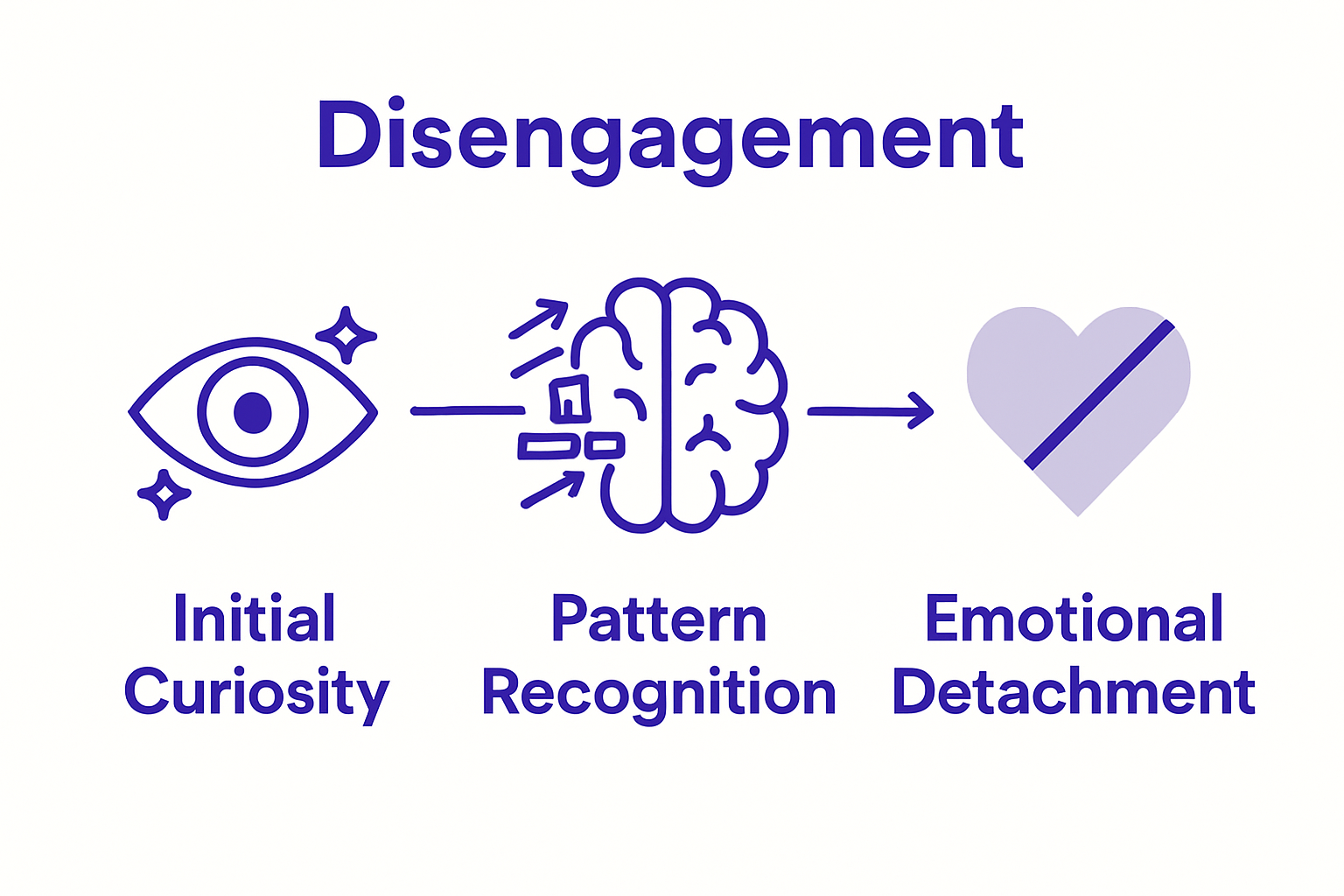
- Initial curiosity
- Pattern recognition
- Emotional detachment
- Complete cognitive filtering
Marketers must recognise that ad fatigue is not a linear process but a dynamic, multilayered psychological phenomenon. Successful advertising strategies require continuous adaptation, creative variation, and a deep understanding of user cognitive processing patterns.
Recognising the Signs of Ad Fatigue
A novel research framework for detecting creative advertising fatigue reveals that identifying early warning signs is crucial for maintaining marketing effectiveness. Recognising ad fatigue requires a nuanced understanding of performance metrics and user engagement signals.
Performance Metric Indicators
Marketing professionals can detect ad fatigue through systematic analysis of key performance indicators. These metrics provide quantitative evidence of declining user interaction and advertisement effectiveness. Subtle shifts in data can signal the onset of advertising exhaustion before significant revenue impacts occur.
Critical performance indicators include:
This table presents the primary performance metric indicators that signal the onset and progression of ad fatigue, offering a quick reference to help diagnose advertising effectiveness issues.
| Performance Indicator | What It Reveals |
|---|---|
| Click-Through Rate (CTR) | Declining rates suggest decreasing user interest |
| Conversion Percentage | Lower figures indicate ads are less persuasive |
| Cost Per Acquisition (CPA) | Rising costs highlight inefficiency due to reduced impact |
| Engagement Duration | Shorter periods reflect users losing attention quickly |
| User Interaction Ratio | Negative trends signal active disengagement |
- Decreasing click-through rates
- Reduced conversion percentages
- Increased cost per acquisition
- Declining engagement duration
- Negative user interaction ratios
Each metric serves as a diagnostic tool, revealing the progressive stages of user disengagement. Understanding these indicators allows marketers to implement proactive intervention strategies before ad performance significantly deteriorates.
Behavioural and Psychological Signals
Beyond numerical metrics, ad fatigue manifests through observable user behavioural patterns. These psychological signals represent more nuanced indicators of advertising exhaustion. Players love engaging ads until repetition undermines their interest, making psychological recognition paramount.
Key behavioural signs of ad fatigue encompass:
- Increased ad skipping frequency
- Reduced emotional responsiveness
- Visible user irritation
- Passive scrolling behaviour
- Explicit negative feedback
Successful marketers cultivate a holistic understanding that combines quantitative metrics with qualitative user experience observations. Recognising ad fatigue requires continuous monitoring, adaptive strategies, and a deep comprehension of user engagement dynamics.
Strategies to Combat Ad Fatigue in Mobile Campaigns
Research from Decision Support Systems suggests that proactive strategies are essential in mitigating advertising exhaustion. Successful mobile marketing requires a sophisticated, multi-dimensional approach to maintaining user engagement and preventing cognitive disengagement.
Creative Variation and Content Diversification
Creative variation represents the primary defence against ad fatigue. Marketing professionals must continuously develop diverse advertisement experiences that maintain user interest while communicating core messaging. This approach demands ongoing innovation and strategic content design that goes beyond superficial aesthetic changes.
Key creative diversification strategies include:
- Rotating visual design elements
- Developing contextually adaptive narratives
- Implementing dynamic content generation
- Creating personalised advertisement experiences
- Utilising interactive ad formats
Successful content diversification requires deep understanding of user psychology and continuous performance analysis. Marketers must view each advertisement as a unique storytelling opportunity rather than a repetitive communication mechanism.
Intelligent Frequency Management
Strategic advertisement frequency management plays a crucial role in preventing user exhaustion. Exploring mobile ad best practices becomes essential in developing nuanced exposure strategies that balance marketing objectives with user experience considerations.
Advanced frequency management techniques encompass:
- Implementing intelligent exposure algorithms
- Developing user-specific display intervals
- Monitoring individual user engagement thresholds
- Creating adaptive display mechanisms
- Utilising machine learning prediction models
Intelligent frequency management transforms advertisement delivery from a static process into a dynamic, responsive interaction that respects user cognitive boundaries while maintaining marketing effectiveness.
Tired of Ad Fatigue Ruining Your Mobile Campaign Results?
Mobile marketers know how quickly audiences tune out repetitive ads. Your campaigns are losing impact and you are facing higher costs simply because traditional ad designs no longer keep users engaged. Repetitive creatives, weak variation, and overexposure drain your ROI and make your efforts feel invisible. You want to design compelling experiences that sidestep the ad fatigue discussed above, yet building interactive or playable ads is expensive, slow, and developer-dependent. Why settle for the status quo when a smarter solution is available?

Experience a better way with PlayableMaker. Our no-code platform empowers you to build fresh, interactive ads quickly and without draining your budget. Interested in smarter publishing and content optimisation? Learn more in our Publishing category. Do not let ad fatigue erode your performance any longer. Create captivating playable ads with ease—start now at PlayableMaker.
Frequently Asked Questions
What is ad fatigue in mobile marketing?
Ad fatigue refers to the declining effectiveness of advertisements among target audiences due to repeated exposure to the same message. As consumers see the same ad multiple times, their engagement levels drop, leading to disinterest or annoyance.
What are the causes of ad fatigue?
Ad fatigue is primarily caused by factors such as excessive frequency of ad displays, lack of content variation, irrelevant targeting, and intrusive ad placements that overwhelm users in mobile environments.
How can marketers recognise the signs of ad fatigue?
Marketers can identify ad fatigue by monitoring key performance indicators, such as decreasing click-through rates, reduced conversion rates, and increased cost per acquisition. Behavioural signs like increased ad skipping and negative user feedback also indicate fatigue.
What strategies can be used to combat ad fatigue?
Strategies to mitigate ad fatigue include creative variation and content diversification, such as rotating visual elements and implementing dynamic content, as well as intelligent frequency management that ensures ads are delivered at optimal intervals to users.
Recommended
- Understanding What is Ad Frequency in Mobile Marketing – playablemaker.com Understanding What is Ad Frequency in Mobile Marketing
- 8 Key Ad Performance Metrics for Mobile Gaming Success – playablemaker.com 8 Key Ad Performance Metrics for Mobile Gaming Success
- 8 Mobile Ad Best Practices for Successful Campaigns – playablemaker.com 8 Mobile Ad Best Practices for Successful Campaigns
- Understanding What is Ad Format in Mobile Gaming – playablemaker.com Understanding What is Ad Format in Mobile Gaming
- 10 Digital Marketing Mistakes to Avoid for Success|BM
- Understanding Mobile Marketing Strategies and Their Impact – Zoo Digital