
Over 70 percent of internet users say they are more likely to engage with ads that feel relevant to their interests, making personalized advertising a powerful force in digital marketing. For british businesses and app developers, understanding how tailored ads work can mean the difference between being noticed or ignored in a crowded online space. By uncovering how data-driven strategies shape user experiences, this guide reveals what sets effective personalized ads apart and why consumers respond so strongly to well-crafted digital messages.
Table of Contents
- Defining Personalized Ads And Key Concepts
- Types Of Personalized Advertising In Mobile Gaming
- How Personalized Ad Targeting Works
- Data Privacy, Consent, And Regulatory Compliance
- Common Challenges And Best Practices
Key Takeaways
| Point | Details |
|---|---|
| Understanding Personalization | Personalised advertising enhances marketing efficiency by targeting individual consumer interests, transitioning from generic mass marketing to tailored communications. |
| Dynamic Personalization in Gaming | Mobile gaming utilises dynamic personalisation to select optimal virtual goods for players, maximising engagement and revenue through tailored strategies. |
| Privacy Compliance | Adhering to data privacy regulations is essential; marketers must obtain explicit consent, practice data minimization, and communicate transparently about data usage. |
| Addressing Challenges | To improve personalised ad effectiveness, marketers should ensure contextual relevance and balance targeting techniques with user privacy and respect. |
Defining Personalized Ads and Key Concepts
Personalized advertising represents a sophisticated digital marketing approach that transforms how businesses communicate with potential consumers. According to IOSR Journals, this strategy increases marketing efficiency by precisely targeting individual consumer interests and enabling more effective communication.
At its core, personalized marketing involves using advanced data analysis and digital technologies to craft individualized messages tailored to specific consumer characteristics. Wikipedia defines this approach as “one-to-one marketing,” which leverages comprehensive data insights to deliver highly relevant advertising experiences. The fundamental goal is moving beyond generic mass marketing towards creating meaningful, contextually relevant interactions.
Key characteristics of personalized ads include:
- Utilising granular consumer data points
- Dynamically adjusting messaging based on individual preferences
- Leveraging real-time behavioral insights
- Creating highly targeted communication strategies
By understanding ad audience targeting, marketers can develop more nuanced approaches that resonate directly with specific consumer segments. This precision not only improves engagement rates but also enhances overall marketing return on investment by ensuring that advertising resources are deployed more strategically and efficiently.
Types of Personalized Advertising in Mobile Gaming
Personalized advertising in mobile gaming has evolved into a sophisticated ecosystem of targeted strategies designed to enhance user engagement and optimize revenue generation. EWA Direct highlights that targeted advertising strategies for virtual goods on social media platforms aim to increase consumers’ willingness to purchase in-game items by developing precise targeting mechanisms.
Dynamic personalization represents a cutting-edge approach in mobile game advertising. According to ArXiv, this technique involves selecting optimal assortments of virtual goods for individual players to maximize both engagement and revenue potential. This method goes beyond traditional demographic targeting by analyzing individual player behaviors, preferences, and in-game interactions.
Key types of personalized advertising in mobile gaming include:
- Behavioural Targeting: Ads based on specific user actions and gameplay patterns
- Demographic Targeting: Segmentation using age, gender, location, and other user characteristics
- Contextual Targeting: Delivering ads relevant to the specific game genre or gameplay moment
- Retargeting: Showing ads to users who have previously interacted with the game or related content
For mobile game marketers seeking to refine their approach, understanding audience targeting in mobile gaming becomes crucial. By implementing these nuanced personalization strategies, developers can create more compelling, relevant advertising experiences that not only capture user attention but also significantly improve conversion rates and overall game monetization.
How Personalized Ad Targeting Works
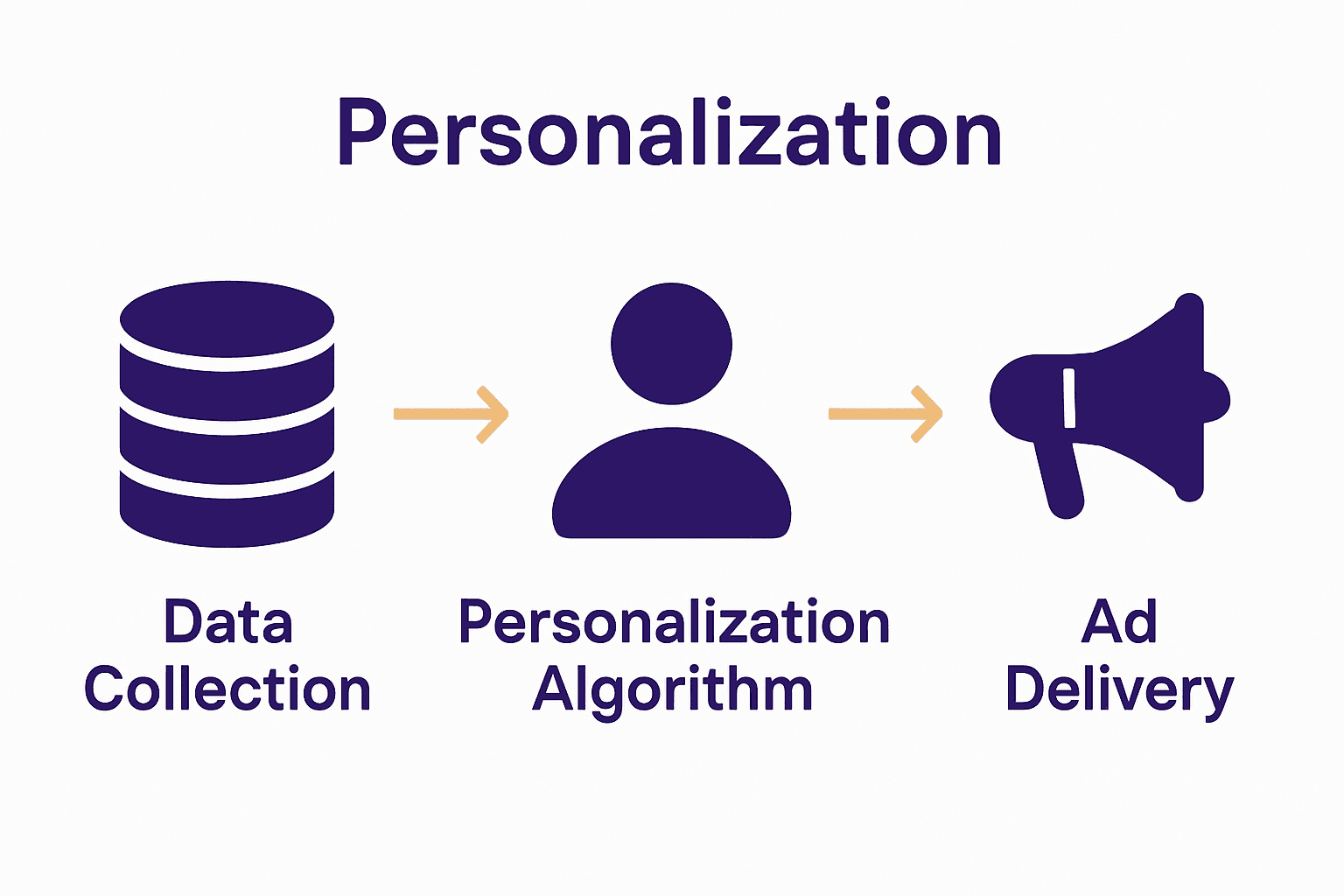
Personalized ad targeting is a sophisticated digital ecosystem that transforms raw user data into precisely crafted advertising experiences. ArXiv highlights how advanced frameworks leverage user profiles and real-time interactions to enhance ad relevance and retrieval efficiency, creating a dynamic system that continuously adapts to individual user behaviors.
Data collection forms the foundational layer of personalized ad targeting. Modern platforms aggregate information from multiple sources, including browsing history, demographic details, engagement patterns, and explicit user preferences. According to ArXiv, this approach enables product recommendations at scale by leveraging comprehensive user purchase histories, which dramatically improves click-through and conversion rates.
The personalized ad targeting process typically involves several critical stages:
- Data Aggregation: Collecting user information from multiple touchpoints
- Profile Construction: Building detailed user personas
- Algorithmic Matching: Using machine learning to connect user profiles with relevant advertisements
- Real-Time Optimization: Continuously refining targeting based on user interactions
For mobile game marketers looking to implement sophisticated targeting strategies, understanding ad targeting mechanics becomes essential. By embracing these advanced techniques, developers can create more intelligent, responsive advertising ecosystems that not only capture user attention but also deliver genuinely relevant content that resonates with individual player preferences.
Data Privacy, Consent, and Regulatory Compliance
Data privacy has become a critical consideration in personalized advertising, with increasing regulatory scrutiny and user awareness demanding sophisticated approaches to user consent and information protection. ArXiv highlights emerging technologies like randomized algorithms that facilitate precise measurement of differentially-private recommendations, addressing core user privacy concerns in targeted advertising.
Behavioral retargeting, a common personalization technique, now operates within a complex regulatory landscape. Wikipedia notes that regulations like the EU’s ePrivacy Directive mandate explicit opt-in consent for tracking technologies such as cookies, fundamentally transforming how advertisers collect and utilize user data. This shift requires marketers to develop more transparent, user-centric data collection strategies that prioritize individual privacy rights.
Key principles of privacy-compliant personalized advertising include:
- Explicit Consent: Obtaining clear, informed user permission
- Data Minimization: Collecting only necessary user information
- Transparent Practices: Clearly communicating data usage policies
- User Control: Providing easy opt-out and data management options
For mobile game marketers seeking to navigate these complex requirements, understanding detailed targeting guidelines becomes crucial. By implementing robust privacy protections and respecting user autonomy, developers can build trust, ensure regulatory compliance, and create more ethical personalized advertising experiences that users actually appreciate.
Common Challenges and Best Practices
Personalized advertising presents a complex landscape of opportunities and potential pitfalls for marketers. AJPO Journals demonstrates that personalized email campaigns can significantly impact consumers’ purchase intent by delivering relevant content based on past interactions, highlighting the potential for targeted messaging when executed effectively.
However, the effectiveness of personalized ads is not without challenges. TuEngr reveals a critical insight: despite evidence of effectiveness, consumers may actively avoid or simply fail to notice personalized advertisements, indicating a need for more nuanced and sophisticated targeting strategies that genuinely resonate with user preferences.
Key best practices for overcoming personalized advertising challenges include:
- Contextual Relevance: Ensuring ads align precisely with user interests
- Subtle Personalization: Avoiding overly intrusive or aggressive targeting
- Continuous Learning: Adapting strategies based on user feedback and interaction
- Transparent Communication: Clearly explaining the value of personalized content
For mobile game marketers seeking to refine their approach, understanding Facebook targeted ads for mobile gaming becomes crucial. By balancing sophisticated targeting techniques with user respect and privacy considerations, developers can create advertising experiences that feel helpful rather than invasive, ultimately driving engagement and conversion rates.
Simplify Your Journey to Effective Personalized Ads with PlayableMaker
The challenge of creating personalised ads that truly connect with your audience is clear from the article. Many marketers struggle with costly development, complex processes and the need for finely targeted, engaging content that respects privacy and drives real results. Key goals include achieving rapid, budget-friendly production of ads that leverage detailed targeting while maintaining user trust.
At PlayableMaker, we understand these pain points and have crafted a no-code platform designed to make playable ad creation easy, fast and affordable. Our solution empowers you to build interactive, engaging ads without draining your resources, perfectly aligning with the article’s emphasis on dynamic, personalised ad experiences. For detailed advice and publishing tips, check out our Publishing Archives. Need guidance on getting started or troubleshooting your new campaigns Visit our Help Archives.
Get ahead in 2024 by transforming your ad strategy today. Start building smarter personalised ads effortlessly with PlayableMaker at https://app.playablemaker.com and experience the difference making your marketing truly personal can bring.
Frequently Asked Questions
What are personalized ads?
Personalized ads are tailored advertisements that use data analysis and digital technologies to create messages specifically designed for individual consumer characteristics and preferences, enhancing marketing effectiveness.
How does personalized ad targeting work?
Personalized ad targeting works by collecting user data from various sources, constructing detailed user profiles, and using algorithms to match these profiles with relevant advertisements, optimising the ad delivery in real-time based on user interactions.
What are the key types of personalized advertising in mobile gaming?
The key types of personalized advertising in mobile gaming include behavioural targeting, demographic targeting, contextual targeting, and retargeting, each aiming to optimise user engagement and revenue generation.
What are the challenges of personalized advertising?
Challenges of personalized advertising include consumer avoidance or unawareness of ads, the need for nuanced targeting strategies, and adherence to privacy regulations, necessitating a balance between effective marketing and user respect.
Recommended
- Detailed Targeting Facebook Ads: Essential Guide – playablemaker.com Detailed Targeting Facebook Ads: Essential Guide
- Playable Ads In Ecommerce – playablemaker.com Playable Ads In Ecommerce
- Understanding Facebook Targeted Ads for Mobile Gaming – playablemaker.com Understanding Facebook Targeted Ads for Mobile Gaming
- From Zero to Wow: The Power of Playable Ad Templates to Skyrocket Engagement – playablemaker.com From Zero to Wow: The Power of Playable Ad Templates to Skyrocket Engagement