
Every developer dreams of watching their mobile game go viral, racking up downloads in all corners of the globe. Yet only a tiny fraction break through, and the process is far more scientific than most expect. Over 80 percent of mobile games fail to secure a stable player base within their first month. The secret often lies not in flashy graphics or complex gameplay, but in a razor-sharp user acquisition strategy built on smart analytics and relentless optimisation.
Table of Contents
- Step 1: Define Your Target Audience
- Step 2: Analyse Your Competitors
- Step 3: Craft Your Unique Value Proposition
- Step 4: Select Effective Advertising Channels
- Step 5: Implement Tracking And Analytics
- Step 6: Optimise And Iterate Based On Data
Quick Summary
| Key Point | Explanation |
|---|---|
| 1. Define your target audience clearly | Understand motivations and demographics for effective player acquisition and retention. |
| 2. Conduct thorough competitor analysis | Identify and evaluate your competitors’ strengths, weaknesses, and strategies to differentiate your game. |
| 3. Craft a compelling unique value proposition | Communicate what makes your game unique, focusing on emotional triggers and player needs. |
| 4. Diversify advertising channels strategically | Use a mix of paid and organic channels to reach your target audience effectively. |
| 5. Implement robust tracking and analytics | Use analytics to measure performance, guiding decision-making and optimisation efforts. |
Step 1: Define Your Target Audience
Defining your target audience represents the foundational strategy for successful mobile game user acquisition. This critical initial phase determines how effectively you’ll attract and retain players who will genuinely connect with your game’s experience and mechanics.
Begin by developing comprehensive player personas that go beyond basic demographics. Understand the psychological motivations driving potential players to engage with mobile games. Consider factors like age ranges, gaming preferences, time availability, spending habits, and preferred gaming platforms. For instance, a strategy game targeting professional adults aged 25-40 will require a dramatically different approach compared to a casual puzzle game aimed at teenagers.
Utilize advanced market research techniques to gather nuanced insights. Learn more about ad audience targeting by analyzing existing player data, conducting surveys, and examining competitor player bases. Digital analytics platforms can provide granular details about player behaviors, helping you construct precise audience segments.
Your research should encompass multiple dimensions beyond surface level characteristics. Explore player motivations such as competitive drive, social interaction desires, skill progression interests, and entertainment preferences. A player seeking challenging strategic gameplay will have different engagement triggers compared to someone looking for casual, stress-relieving experiences.
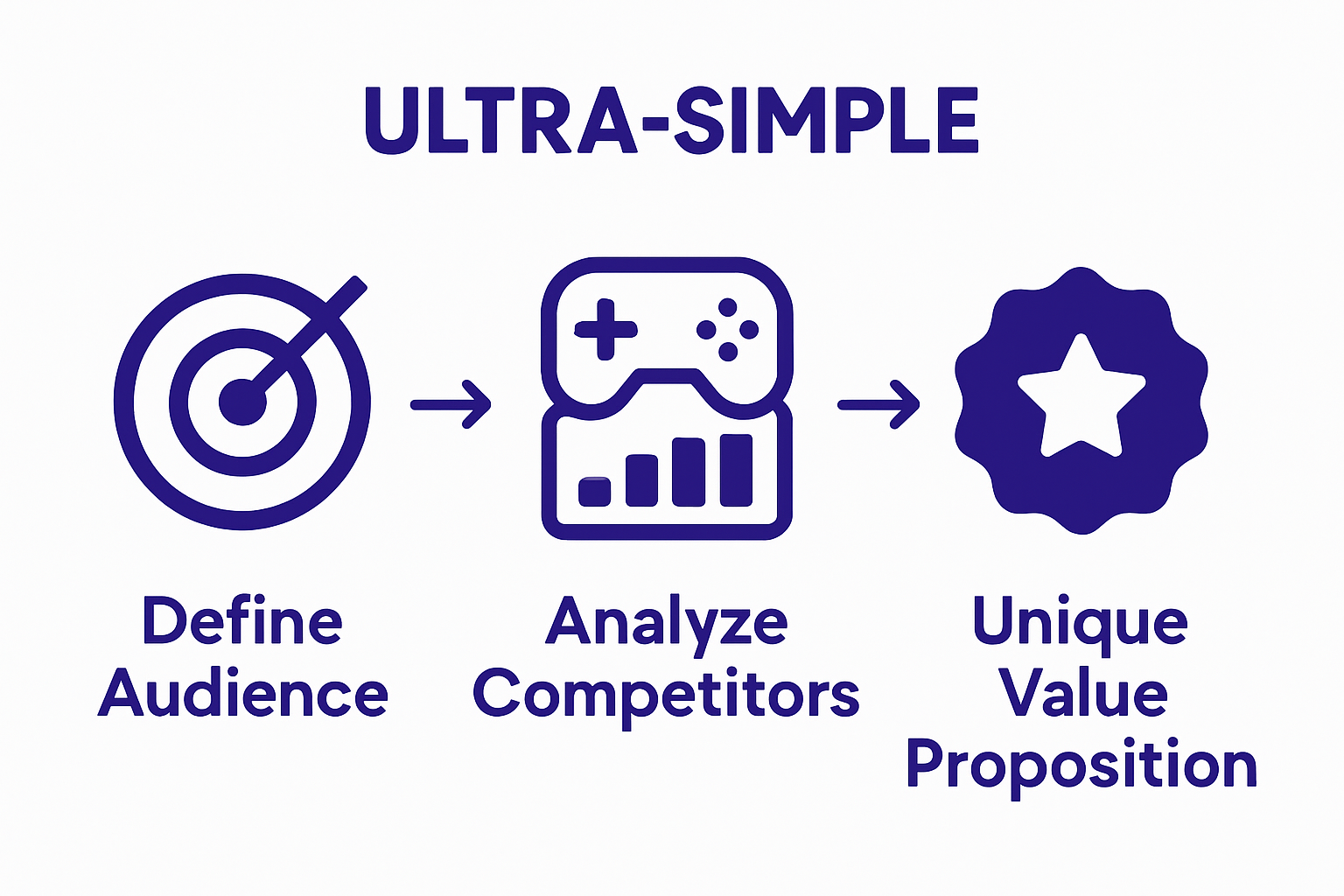
Develop segmentation strategies that allow for precise targeting. Group potential players into distinct categories based on shared characteristics and behavioral patterns. These segments might include hardcore gamers, casual players, competitive enthusiasts, social gamers, and achievement-oriented individuals. Each segment requires tailored marketing messages and acquisition approaches.
Validate your target audience definition through iterative testing. Create small-scale marketing campaigns targeting each identified segment and measure response rates, engagement metrics, and conversion performance. This empirical approach allows you to refine your understanding and adjust acquisition strategies dynamically.
Remember that target audience definition is not a one-time exercise but an ongoing process of continuous learning and adaptation. As mobile gaming landscapes evolve, remain flexible and responsive to emerging player trends and technological shifts.
Step 2: Analyse Your Competitors
Competitive analysis serves as the strategic cornerstone for understanding your mobile game’s positioning in a crowded marketplace. This step transforms raw market intelligence into actionable insights that will sharpen your user acquisition approach.
Begin by comprehensively mapping your direct and indirect competitors. Identify games within your genre and gameplay style that compete for the same target audience. Use app store rankings, genre-specific charts, and gaming community forums to create an initial competitive landscape. Explore advanced ad targeting techniques to understand how competitors are reaching similar player segments.
Deep dive into each competitor’s user acquisition strategies by examining their marketing approaches. Scrutinize their user interface screenshots, promotional videos, and app store descriptions to understand their unique value propositions. Analyze their creative assets across multiple platforms including social media, YouTube, TikTok, and mobile advertising networks. Pay special attention to the emotional triggers and messaging they use to attract players.
Utilize competitive intelligence tools to gather quantitative data about your competitors’ performance. Track their download numbers, user retention rates, average revenue per user, and user engagement metrics. Platforms like App Annie, Sensor Tower, and Mobile Action can provide granular insights into their marketing spend, user acquisition channels, and overall growth strategies.
Perform a qualitative assessment of their strengths and weaknesses. Identify gaps in their current offerings that your game could potentially fill. Look for underserved player segments or gameplay mechanics that competitors might have overlooked. This analysis will help you develop a unique positioning strategy that differentiates your mobile game in the marketplace.
Consider the technological and design innovations your competitors are implementing. Examine their monetization models, in-game mechanics, social features, and update frequency. Understanding these elements will help you anticipate market trends and position your game more effectively.
Verify your competitive analysis by creating a structured comparison matrix. Document key findings, noting specific strategies that seem particularly successful or areas where competitors demonstrate vulnerabilities. This living document will serve as a dynamic reference point for your ongoing user acquisition efforts, allowing you to adapt and refine your approach continuously.
Step 3: Craft Your Unique Value Proposition
Crafting a unique value proposition represents the strategic heart of your mobile game’s user acquisition journey. This critical step transforms your game from another option in the marketplace to a compelling, must-play experience that resonates deeply with your target audience.
Distill the essence of your game into a clear, powerful statement that immediately communicates what makes your mobile game extraordinary. This goes beyond simple feature descriptions and penetrates the emotional core of player motivations. Consider the specific player needs and desires you identified during your target audience research. Explore advanced ad targeting strategies to align your value proposition with precise player segments.
Analyze the psychological triggers that differentiate your game from competitors. According to research from Aalto University, understanding customer lifetime value means identifying what truly motivates players to engage and invest in your game. This might involve unique gameplay mechanics, innovative progression systems, exceptional storytelling, or breakthrough social interaction features.
Develop multiple value proposition iterations that speak to different player motivations. Some players seek competitive challenges, others desire social connection, and some want pure entertainment or stress relief. Your value proposition should be flexible enough to communicate different emotional benefits while maintaining a consistent core message.
Test your value proposition through small-scale marketing experiments. Create targeted ad creatives that highlight different aspects of your game’s unique qualities. Monitor engagement metrics, click-through rates, and initial user retention to understand which messaging resonates most powerfully with your intended audience.
Ensure your value proposition passes the critical five-second test. Players should immediately understand what makes your game special within the first moments of encountering your marketing materials. This requires ruthless simplification and crystal-clear communication of your game’s most compelling attributes.
Refine your value proposition continuously based on player feedback and market response. Treat it as a living document that evolves with your game’s development and the changing preferences of your target audience. The most successful mobile games maintain a dynamic relationship between their core offering and player expectations.
Step 4: Select Effective Advertising Channels
Selecting the right advertising channels represents a pivotal moment in your mobile game’s user acquisition strategy. This step transforms your carefully crafted value proposition into targeted marketing efforts that reach and engage your ideal players.
Diversify your advertising approach across multiple platforms to maximize visibility and player acquisition potential. According to research from Almedia, reward-based advertising channels are becoming increasingly effective in the mobile gaming market. Learn more about optimizing ad frequency to ensure your marketing efforts remain engaging without overwhelming potential players.
Mobile advertising networks like Google AdMob, Unity Ads, and ironSource offer robust targeting capabilities that allow precise audience segmentation. Explore social media platforms such as TikTok, Instagram, and Facebook, which provide powerful demographic and interest-based targeting tools. Each platform offers unique strengths: TikTok excels in reaching younger audiences, while Facebook provides detailed targeting options for more specific player segments.
Implement a mixed strategy that combines paid user acquisition channels with organic growth methods. Leverage app store optimization techniques to improve your game’s discoverability. Create compelling screenshots, engaging descriptions, and utilize relevant keywords that resonate with your target audience. Consider influencer partnerships and content creator collaborations to generate authentic interest and social proof for your mobile game.
Experimental channels can provide unexpected user acquisition opportunities. Gaming-specific platforms like Twitch and YouTube Gaming offer unique ways to showcase your game’s mechanics and generate community interest. Podcast advertising and gaming community forums can also connect you with highly engaged potential players who are actively seeking new gaming experiences.
Track and measure the performance of each advertising channel meticulously. Establish clear key performance indicators such as cost per install, retention rates, and player lifetime value. Be prepared to rapidly pivot your strategy, allocating more resources to channels that demonstrate the most promising results and scaling back underperforming platforms.
The following table provides a comparative overview of key advertising channels for mobile game user acquisition, summarising each channel’s description, targeting strengths, and typical audience focus.
| Channel | Description | Targeting Strengths | Typical Audience Focus |
|---|---|---|---|
| Google AdMob | Mobile ad network integrated with Google services | Demographic, behavioural, and contextual targeting | Broad, global |
| Unity Ads | Ad network specialising in gaming | Game genre targeting, in-app engagement | Gamers, especially core gamers |
| ironSource | Mobile ad mediation platform | Diversity of ad formats, audience segmentation | Global, varied |
| Facebook & Instagram | Social media advertising platforms | Detailed demographic and interest-based targeting | Wide age and interest range |
| TikTok | Video-centric social platform | Young audiences, trend-based viral targeting | Teens, young adults |
| Influencer Partnerships | Collaboration with gaming content creators | Niche audience engagement, community-driven | Enthusiast and casual gamers |
| App Store Optimisation | Optimising listings in app stores | Keyword, category, and visual targeting | Organic searchers |
Remember that no single advertising channel will be a silver bullet. The most successful user acquisition strategies combine multiple approaches, continuously testing and refining your marketing mix to find the optimal combination that resonates with your specific game and target audience.
Step 5: Implement Tracking and Analytics
Implementing robust tracking and analytics transforms raw user data into actionable insights that will drive your mobile game’s user acquisition strategy. This critical step enables you to understand player behavior, optimize marketing efforts, and make data-driven decisions that directly impact your game’s growth.
Establish a comprehensive analytics framework that captures key performance indicators across multiple dimensions. According to research from the ACM Web Conference, understanding the tracking ecosystem is crucial for mobile game success. Learn more about mobile attribution to ensure you’re capturing the most relevant user acquisition data.
Select powerful analytics platforms that provide deep insights into user acquisition and engagement. Tools like Firebase Analytics, GameAnalytics, and Mixpanel offer comprehensive tracking capabilities that go beyond basic install numbers. Focus on metrics such as user retention rates, session lengths, in-game purchases, and conversion funnels. These indicators will help you understand not just how many players you acquire, but how valuable and engaged they are.
Implement event tracking that captures nuanced player interactions within your game. This means creating custom events that track specific user actions, progression milestones, and engagement points. By understanding the precise moments where players become excited or potentially lose interest, you can continuously refine both your game design and user acquisition strategies.
Develop a robust A/B testing approach to systematically optimize your user acquisition channels and game features. Create controlled experiments that test different marketing messages, ad creatives, and onboarding experiences. This data-driven methodology allows you to incrementally improve your game’s ability to attract and retain players.
Ensure strict compliance with data privacy regulations by implementing transparent tracking practices. Be clear about the data you collect, provide users with opt-out mechanisms, and maintain the highest standards of data protection. Building trust is as important as gathering insights.
Establish a regular review cycle where you analyze your tracking data, identify trends, and make strategic adjustments. The most successful mobile games treat analytics as a continuous improvement process, constantly learning and adapting based on real-world player behavior.
This table summarises essential analytics tools and their main purposes for tracking, evaluating, and optimising mobile game user acquisition and engagement.
| Analytics Tool | Main Purpose | Key Capabilities |
|---|---|---|
| Firebase Analytics | Comprehensive user behaviour tracking | Event tracking, retention, funnel analysis |
| GameAnalytics | In-depth gaming analytics platform | Session analysis, cohort tracking |
| Mixpanel | Advanced data segmentation & A/B testing | User journey, conversion funnels |
| App Annie | Competitive market intelligence | Download & revenue analytics |
| Sensor Tower | Market & advertising insights | App performance, advertising analysis |
| Mobile Action | Competitor strategy and keyword tracking | Store optimisation, ad analysis |
Step 6: Optimise and Iterate Based on Data
Optimisation represents the critical final stage of your mobile game user acquisition strategy, transforming collected data into actionable improvements that continuously enhance your game’s performance and player engagement. This step is about creating a dynamic, responsive approach to game development and marketing.
Develop a systematic optimization framework that allows for rapid, data-driven iterations. According to research in Frontiers in Psychology, continuous refinement is key to maintaining player interest. Learn more about ad optimization techniques to ensure your marketing efforts remain cutting-edge and effective.
Begin by establishing a comprehensive review cycle that breaks down your analytics into actionable insights. Examine user acquisition metrics, retention rates, player progression, and monetization data. Look for patterns that indicate where players lose interest, encounter friction, or demonstrate exceptional engagement. These insights will guide your optimization efforts across game design, user interface, and marketing strategies.
Implement a robust A/B testing methodology that allows you to experiment with different approaches systematically. Test variations in game mechanics, user interface elements, onboarding experiences, and marketing creatives. Each test should have a clear hypothesis and measurable outcomes. This approach enables you to make incremental improvements backed by concrete data rather than relying on intuition or assumptions.
Create a feedback loop that integrates player insights from multiple sources. Combine quantitative data from your analytics platforms with qualitative feedback from app store reviews, social media comments, and community forums. This holistic approach ensures that your optimization efforts address both statistical trends and player sentiments.
Develop a prioritization framework for your optimization efforts. Not all insights are equally valuable, so create a scoring system that weighs potential impact against implementation complexity. Focus on changes that can deliver significant improvements with minimal development resources. This strategic approach ensures that your team remains efficient and focused on the most impactful optimizations.
Maintain a culture of continuous learning and adaptation. The most successful mobile games treat optimization as an ongoing process, not a one-time effort. Be prepared to quickly pivot your strategy based on emerging data, technological advancements, and shifting player preferences.

Elevate Your User Acquisition with Effortless Playable Ads Creation
You have learned that standing out in mobile game user acquisition for 2025 is all about precise targeting, compelling value propositions, and smart optimisation. Yet, a major challenge persists—building engaging playable ads usually eats up your time, budget, and internal resources. Many promising strategies get stalled by the complexity and cost of traditional playable ad production. If you want to stay agile and competitive, you cannot afford these roadblocks.
Explore more about publishing success
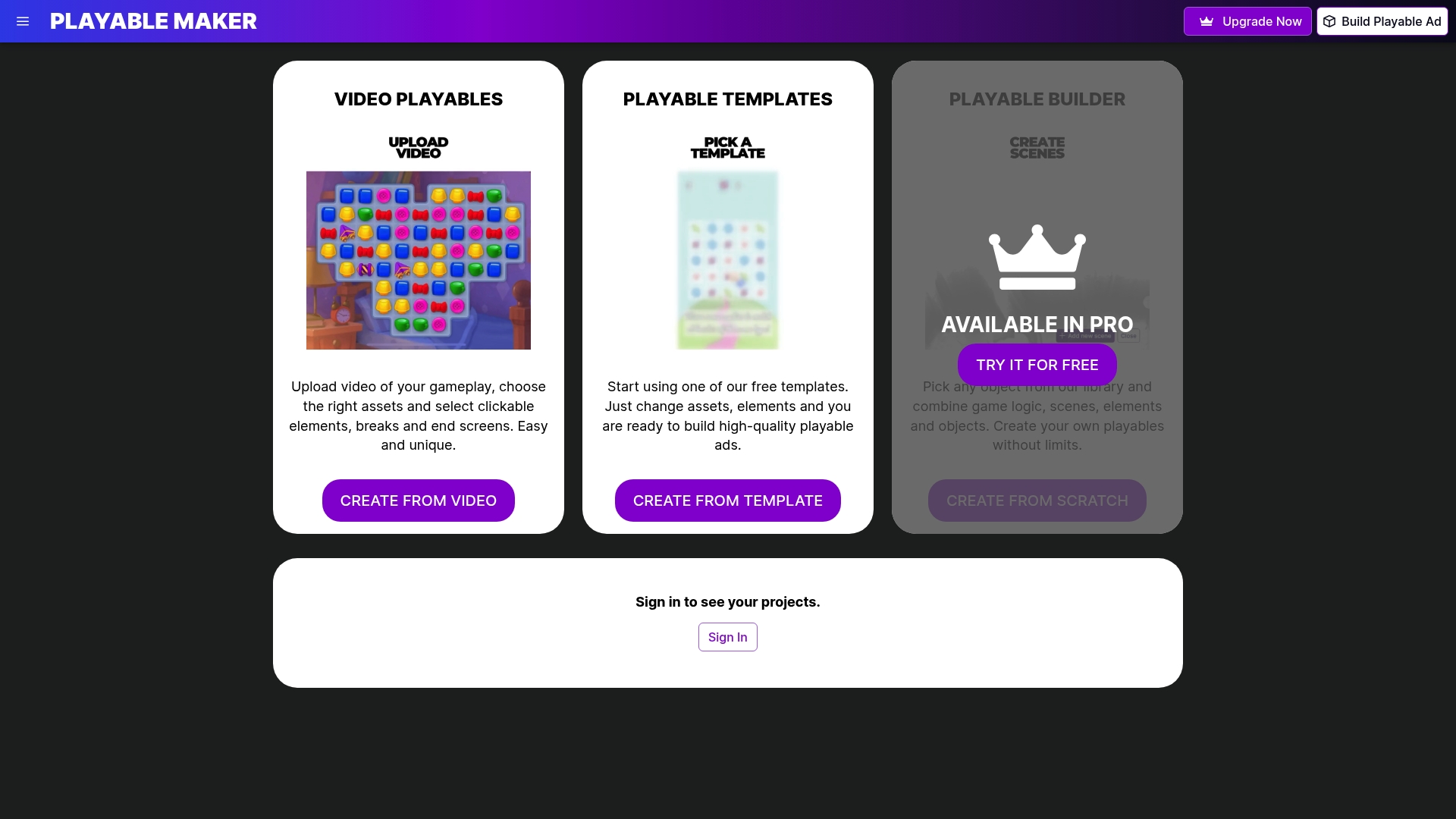
Start creating interactive ads swiftly—no code needed, and without draining your development team. PlayableMaker empowers marketers and studios to build beautiful playable ads on a budget so you can focus on data-driven acquisition without delay. Ready to accelerate your growth and seize your audience before your competitors do? Visit PlayableMaker’s platform today to get started.
Frequently Asked Questions
What are effective strategies for defining a target audience for mobile games?
Defining a target audience starts with developing detailed player personas that include demographics, gaming preferences, and psychological motivations. This approach ensures that marketing strategies resonate with players who will engage deeply with the game.
How can I analyse my competitors in the mobile gaming market?
Conduct a thorough competitive analysis by mapping direct and indirect competitors, examining their marketing strategies, and gathering quantitative data such as download numbers and user engagement metrics. This helps identify gaps that your game can fill and differentiates your offering.
What is a unique value proposition, and why is it important for mobile games?
A unique value proposition is a clear statement that communicates what makes your mobile game stand out from competitors. It is crucial because it highlights the emotional and functional benefits of your game, helping to attract and retain players.
How do I optimise my advertising channels for user acquisition?
To optimise your advertising channels, diversify across platforms while tracking performance meticulously. Focus on metrics like cost per install and retention rates to identify which channels are most effective, enabling rapid adjustments to your user acquisition strategy.
Recommended
- Mobile Gaming Industry in 2025: Trends, Technologies, and Market Insights – playablemaker.com Mobile Gaming Industry in 2025: Trends, Technologies, and Market Insights
- User Acquisition News June 2025 – playablemaker.com User Acquisition News June 2025
- Understanding What is User Acquisition in Mobile Gaming – playablemaker.com Understanding What is User Acquisition in Mobile Gaming
- How AI is Revolutionizing Mobile Game Marketing – playablemaker.com How AI is Revolutionizing Mobile Game Marketing
- Top Content Promotion Strategies for 2025 Success