Many American mobile game marketers wrestle with balancing creative ambition and budget constraints. Optimising user acquisition often hinges on selecting the right tools and strategies, especially when quick launches and deep engagement are top priorities. By adopting no-code solutions for interactive ad design and focusing on actionable metrics, specialists can transform how they attract and retain players while keeping costs manageable.
Table of Contents
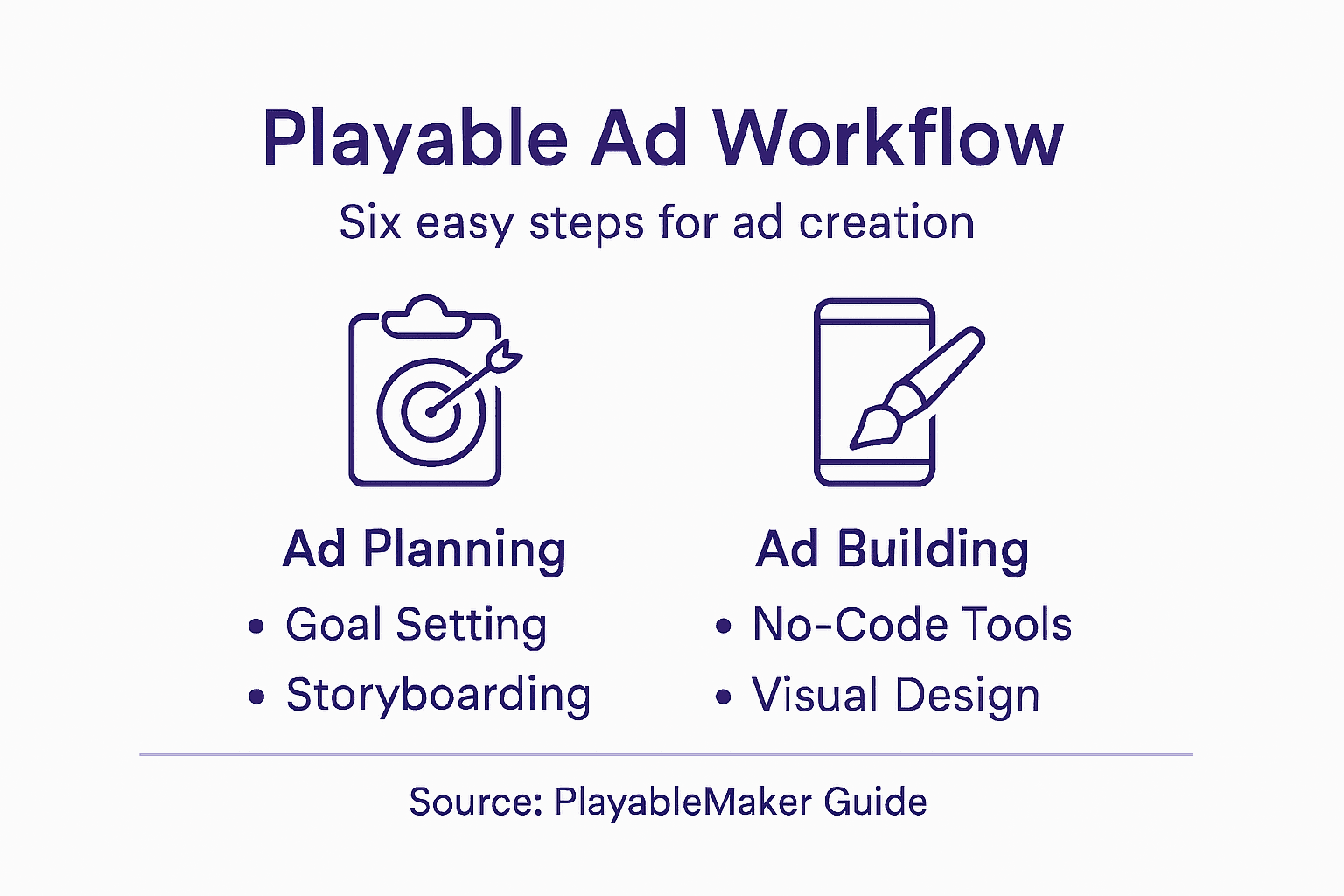
- Step 1: Define Campaign Goals And Player Engagement Metrics
- Step 2: Select Game Content And Storyboard Key Interactions
- Step 3: Leverage No-Code Tools To Build Interactive Ad Prototypes
- Step 4: Customise Visuals And Optimise Gameplay Flow
- Step 5: Test Playable Ads And Analyse Engagement Data
- Step 6: Implement Feedback And Launch Final Ads
Quick Summary
| Key Point | Explanation |
|---|---|
| 1. Define clear campaign metrics | Set specific performance indicators like user acquisition and retention to guide advertising efforts effectively. |
| 2. Create an engaging storyboard | Focus on showcasing unique gameplay and emotional journey to entice players in a compact format. |
| 3. Use no-code tools for prototypes | Leverage user-friendly platforms to quickly develop ad prototypes without needing programming skills. |
| 4. Optimise visuals and performance | Ensure fast loading times and appealing graphics to create a seamless player experience in ads. |
| 5. Continuously test and refine ads | Analyse engagement metrics and implement user feedback for ongoing improvements to maximise effectiveness. |
Step 1: Define campaign goals and player engagement metrics
Creating successful mobile game advertisements requires strategic goal setting and precise performance tracking. Your primary objective is to develop a comprehensive framework that measures player interaction and campaign effectiveness. By establishing clear metrics, you transform your advertising approach from guesswork to data-driven precision.
To define effective campaign goals, consider these key performance indicators:
- User acquisition rates
- Player retention percentages
- Click-through engagement
- Conversion metrics
- Cost per acquired player
Marketing experts emphasise the importance of defining clear campaign objectives that align directly with your game’s strategic vision. This means moving beyond generic targets and crafting specific, measurable goals that reflect your game’s unique value proposition.
Your campaign metrics should provide actionable insights, not just surface-level statistics.
To effectively track engagement, focus on nuanced indicators that reveal player interest. These include time spent viewing the playable ad, interactions within the demo, and subsequent download rates. By monitoring these granular metrics, you can continuously refine your advertising strategy.
Expert Suggestion: Select 3-4 core metrics that genuinely reflect player interest rather than tracking dozens of superficial indicators.
Here is a comparative overview of key engagement metrics and their strategic value for mobile game ads:
| Engagement Metric | What It Reveals | Strategic Advantage |
|---|---|---|
| User interaction length | Measures depth of ad engagement | Identifies optimal ad durations |
| Replay frequency | Tracks player ad return rate | Highlights replayable ad factors |
| Drop-off points | Shows where users exit the ad | Pinpoints areas for improvement |
| Demographic response | Analyses player segment reactions | Enables targeted refinements |
Step 2: Select game content and storyboard key interactions
Designing an effective playable ad requires thoughtful selection of game content that captures player imagination and demonstrates core gameplay mechanics. Your goal is to create a compact, engaging experience that represents your game’s most compelling features within a limited interaction window.
To develop a powerful storyboard, focus on these strategic elements:
- Highlight unique gameplay mechanics
- Showcase most exciting game moments
- Demonstrate core player progression
- Include visual narrative elements
- Capture player’s potential emotional journey
Professional designers understand that visual communication of user experiences is crucial for creating compelling interactive advertisements. This means crafting a narrative sequence that quickly communicates your game’s core value proposition and entices potential players to engage further.
Your storyboard should tell a micro-story that makes players want to explore more.
Break down your playable ad into specific interaction points that reveal your game’s most engaging elements. Consider which gameplay moments will most effectively demonstrate player agency, challenge, and reward. By mapping out these key interactions, you transform your ad from a passive display into an interactive invitation.

Expert Suggestion: Create a rapid prototype of your ad storyboard and test it with a small group of potential players to validate its emotional and interactive impact.
Step 3: Leverage no-code tools to build interactive ad prototypes
Transforming your game concept into an engaging playable advertisement no longer requires extensive programming skills. Modern no-code platforms enable game designers and marketers to rapidly prototype interactive ad experiences with minimal technical barriers.
When selecting a no-code tool, consider these critical features:
- Drag-and-drop interface
- Pre-built game asset libraries
- Visual animation controls
- Easy interaction mapping
- Quick export capabilities
- Cross-platform compatibility
Developers can now rapidly prototype interactive applications without writing complex code. These platforms democratise game advertising by providing intuitive design environments that translate creative vision into functional prototypes with unprecedented speed.
No-code tools transform technical complexity into creative possibility.
Focus on selecting a platform that offers flexibility in asset manipulation, smooth interaction design, and straightforward publishing mechanisms. By leveraging these tools, you can create compelling ad prototypes that capture player imagination without getting bogged down in technical implementation details.
Expert Suggestion: Experiment with multiple no-code platforms to discover which interface best matches your specific game advertisement design workflow.
To clarify the benefits of no-code prototyping tools, see the following table:
| Feature | Benefit for Game Advertisers | Business Impact |
|---|---|---|
| Drag-and-drop editing | Rapid assembly of interactive elements | Shortens production timelines |
| Asset library integration | Access to diverse visual/game resources | Supports creative experimentation |
| Cross-platform output | Single export for various devices | Expands potential player reach |
| No coding required | Enables non-technical team involvement | Lowers development resource barriers |
Step 4: Customise visuals and optimise gameplay flow
Creating a compelling playable ad requires meticulous attention to visual design and gameplay dynamics. Your objective is to craft an interactive experience that instantly communicates your game’s core excitement while maintaining smooth, engaging interactions that captivate potential players.
Prioritise these key visual and performance elements:
- Streamlined visual assets
- Performance-optimised graphics
- Intuitive interaction points
- Minimal loading times
- Responsive design elements
- Consistent colour palette
Game developers can optimise performance through strategic rendering techniques that ensure seamless player experiences. This involves carefully balancing visual complexity with technical efficiency to create advertisements that look stunning while running smoothly across different mobile devices.
Great playable ads transform technical limitations into creative opportunities.
Focus on creating a visual narrative that communicates your game’s unique personality within the first few seconds. Every graphical element should serve a purpose – driving player curiosity and highlighting the most compelling aspects of your gameplay experience.
Expert Suggestion: Test your ad prototype on multiple device types and screen sizes to ensure consistent visual quality and performance.
Step 5: Test playable ads and analyse engagement data
Validating your mobile game advertisement requires systematic testing and comprehensive data analysis. Your goal is to transform raw engagement metrics into actionable insights that refine your advertising strategy and maximise player acquisition potential.
Track these critical engagement indicators:
- User interaction duration
- Click-through rates
- Conversion percentages
- Replay frequency
- Drop-off points
- Player demographic responses
Marketers can measure in-game advertising effectiveness by carefully analysing player interaction patterns. Understanding these nuanced metrics allows you to iterate rapidly and create more compelling ad experiences that resonate with your target audience.
Meaningful data transforms advertising from guesswork to strategic precision.
Break down your analysis into granular segments, examining how different player groups respond to various ad elements. Look beyond surface-level metrics to understand the emotional and behavioural triggers that drive player engagement and conversion.
Expert Suggestion: Implement a continuous testing cycle where each ad iteration builds upon insights from previous performance data.
Step 6: Implement feedback and launch final ads
Successful mobile game advertisements require strategic refinement and careful preparation before final deployment. Your objective is to transform collected insights and user feedback into a polished, high-performing advertisement that maximises player engagement and conversion potential.
Prepare for launch by addressing these critical elements:
- Comprehensive user feedback review
- Performance metric analysis
- Visual design refinements
- Interaction flow optimisation
- Final creative quality checks
- Platform compatibility testing
Professional marketers understand how to successfully launch and optimise campaigns by systematically incorporating user insights and market intelligence. This approach ensures your advertisement resonates with your target audience and delivers meaningful results.
Launching an ad is not an endpoint, but the beginning of a strategic engagement journey.
Evaluate each iteration critically, focusing on how incremental improvements can enhance player experience and advertising effectiveness. Be prepared to make rapid adjustments based on initial performance data and user interactions.
Expert Suggestion: Develop a flexible launch strategy that allows for quick pivots and continuous refinement based on real-world performance metrics.
Simplify Your Playable Ad Creation with No-Code Solutions
Are you facing the challenge of building engaging playable ads that align perfectly with your mobile game’s unique mechanics without draining your developers’ time or blowing your budget The article highlights key pain points like the complexity of interactive ad prototypes, the need for precise engagement metrics and the importance of rapid iteration to optimise gameplay flow and visual impact
At PlayableMaker we understand these struggles and offer a no-code platform designed specifically to help you build playable ads fast and budget-friendly Without needing programming skills you can drag and drop game content customise visuals and easily track performance All while ensuring your ads capture player interest from the first interaction Ready to master playable ad creation Visit our Help Archives to learn more about the process and explore expert tips in our Uncategorized Archives Then start building your next hit interactive ad today at PlayableMaker Experience how effortless creating mobile game ads can be and launch campaigns that truly engage players now
Frequently Asked Questions
What are the essential steps to build playable mobile game ads easily?
To build playable mobile game ads, start by defining your campaign goals and player engagement metrics. Then, select game content, storyboard key interactions, choose no-code tools for prototyping, customise visuals, test ads, analyse engagement data, and implement feedback before launching.
How can I define effective engagement metrics for my mobile game ads?
Define effective engagement metrics by focusing on user interaction duration, click-through rates, and conversion percentages. Selecting 3-4 core metrics will help refine your advertising strategy and provide actionable insights as you progress.
What should I include in my storyboard for a playable ad?
Your storyboard should highlight unique gameplay mechanics, showcase exciting game moments, and capture the player’s emotional journey. Map specific interaction points that demonstrate player agency and challenge to create a compelling micro-story.
How do I optimise visuals and gameplay flow for my mobile game ads?
To optimise visuals, ensure you use streamlined assets, performance-optimised graphics, and a consistent colour palette. Prioritise minimal loading times and intuitive interaction points to create a smooth gameplay experience that retains player interest.
What are the key performance indicators I should track after launching my ad?
After launching your ad, monitor key performance indicators such as user interaction duration, replay frequency, and demographic responses. This data will help you iteratively improve your ad based on how different player groups engage with it.
How can I use feedback to refine my mobile game ad before launch?
Utilise user feedback by systematically reviewing performance metrics and making necessary visual and interaction flow optimisations. Conduct final quality checks and prepare for a flexible launch strategy that allows for quick adjustments based on real-world performance data.
Recommended
- 7 Essential Types of In-Game Ads for Mobile App Success – playablemaker.com 7 Essential Types of In-Game Ads for Mobile App Success
- Ads in Game: Everything You Need to Know – playablemaker.com Ads in Game: Everything You Need to Know
- Understanding What is Ad Placement in Mobile Gaming – playablemaker.com Understanding What is Ad Placement in Mobile Gaming
- Step-by-Step Guide to High-Performing Game Ads Creation – playablemaker.com Step-by-Step Guide to High-Performing Game Ads Creation