Most british mobile gaming startups are searching for smarter ways to capture attention without draining budgets or technical resources. In a competitive market where user engagement can fall below 10 percent, finding no-code tools for building interactive ads is no longer a luxury but a crucial strategy. This guide shows user acquisition specialists how to define goals, target the right audiences, and use practical, cost-effective methods to create ads that spark player interest and deliver real results.
Table of Contents
- Step 1: Define Campaign Objectives And Target Audience
- Step 2: Select And Plan Interactive Ad Elements
- Step 3: Assemble Playable Ads Using No-Code Tools
- Step 4: Optimise Creatives For Maximum Engagement
- Step 5: Test And Analyse Ad Performance
Quick Summary
| Key Insight | Explanation |
|---|---|
| 1. Define clear campaign objectives | Establish precise goals and identify your target audience for effective mobile game ads. |
| 2. Segment players into user personas | Use demographic and psychographic data to create tailored marketing strategies. |
| 3. Choose engaging interactive ad elements | Select formats that provide immersive experiences and highlight unique gameplay features. |
| 4. Utilise no-code tools for ad creation | Employ intuitive platforms to easily develop playable ads without coding skills. |
| 5. Implement systematic A/B testing | Continuously test and analyse ads to improve performance based on data-driven insights. |
Step 1: Define campaign objectives and target audience
Defining clear campaign objectives and understanding your target audience represents the foundational strategy for creating high-performing mobile game ads. Without precise targeting, your advertising efforts will scatter resources ineffectively.
To develop a robust targeting strategy, you must first segment your potential players using detailed demographic and psychographic research. Understanding user personas allows you to craft personalised advertising experiences that resonate deeply with specific player groups. Start by mapping out precise characteristics including age range, gaming preferences, income levels, and motivational triggers that drive game engagement.
Begin your targeting process by developing comprehensive user profiles. Consider factors like preferred game genres, spending habits, time spent gaming, and platform preferences. These insights enable you to design ads that speak directly to player motivations. By segmenting audiences into distinct groups with shared characteristics, you can create tailored messaging that increases conversion rates and player acquisition.
Top Strategy Tip: Create three distinct user personas representing different player segments to test and refine your targeting approach effectively.
Here’s a summary of key demographic and psychographic factors to consider when building user personas for mobile game advertising:
| Factor | Description | Impact on Ad Strategy |
|---|---|---|
| Age Range | Typical age bracket of players | Influences tone and content style |
| Gaming Preferences | Favoured game genres and mechanics | Guides ad creative and features |
| Income Levels | Players’ spending abilities | Dictates reward and monetisation |
| Motivational Triggers | Reasons for gameplay engagement | Shapes messaging and calls-to-action |
Step 2: Select and plan interactive ad elements
Selecting the right interactive ad elements is crucial for creating engaging mobile game advertisements that capture player attention and drive meaningful interactions. Your goal is to design an immersive experience that seamlessly demonstrates your game’s unique value proposition.

Start by exploring interactive ad formats recommended by industry standards, which include native ads, playable demos, interactive overlays, and audio integrations. Each format offers distinct advantages for showcasing game mechanics and player experience. Consider the specific gameplay elements that best represent your game’s core appeal and design interactive components that allow potential players to experience those features directly.
When planning your interactive elements, prioritise user experience and engagement metrics. Focus on creating concise, intuitive interactions that provide a genuine snapshot of gameplay without overwhelming users. Ensure your interactive ad includes clear navigation, immediate entertainment value, and a smooth transition between advertisement and game download. The most effective interactive ads feel less like traditional marketing and more like a compelling gameplay preview.
Pro Strategy Tip: Design your interactive ad elements to be 15-30 seconds long, providing just enough gameplay insight to spark curiosity without revealing the entire game experience.
Below is a comparison of popular interactive ad formats and their unique advantages for mobile game ads:
| Ad Format | Player Interaction Style | Strengths for Game Promotion |
|---|---|---|
| Native Ad | Seamlessly blended in apps | Increases trust and relevance |
| Playable Demo | Short hands-on gameplay | Showcases mechanics; boosts engagement |
| Interactive Overlay | Tappable screen elements | Highlights features without distraction |
| Audio Integration | Sound cues and voice overlays | Captures attention; adds immersion |
Step 3: Assemble playable ads using no-code tools
Creating engaging playable ads no longer requires extensive coding knowledge or significant technical resources. With modern no-code platforms, you can transform game concepts into interactive advertising experiences quickly and efficiently.
Begin by selecting a playable ad builder that offers intuitive drag and drop interfaces. These platforms eliminate complex programming barriers, allowing marketing teams and game developers to concentrate on design and user experience. Focus on selecting tools that provide template libraries, asset libraries, and customisation options that align with your game’s visual style and mechanics.
When assembling your playable ad, prioritise creating a compact yet compelling gameplay demonstration. Concentrate on designing an interactive snippet that captures your game’s core mechanics within 15 to 30 seconds. Ensure the experience is smooth, responsive, and provides an immediate sense of enjoyment that motivates potential players to download your game. Pay close attention to user interface elements, ensuring they are clear, intuitive, and representative of your actual game experience.
Pro Strategy Tip: Always preview your no-code playable ad on multiple device types to guarantee consistent performance and user experience across different screen sizes and platforms.
Step 4: Optimise creatives for maximum engagement
Optimising game ad creatives is a strategic process that transforms visual elements into powerful user acquisition tools. Your objective is to craft compelling advertisements that not only capture attention but also drive meaningful player interactions.
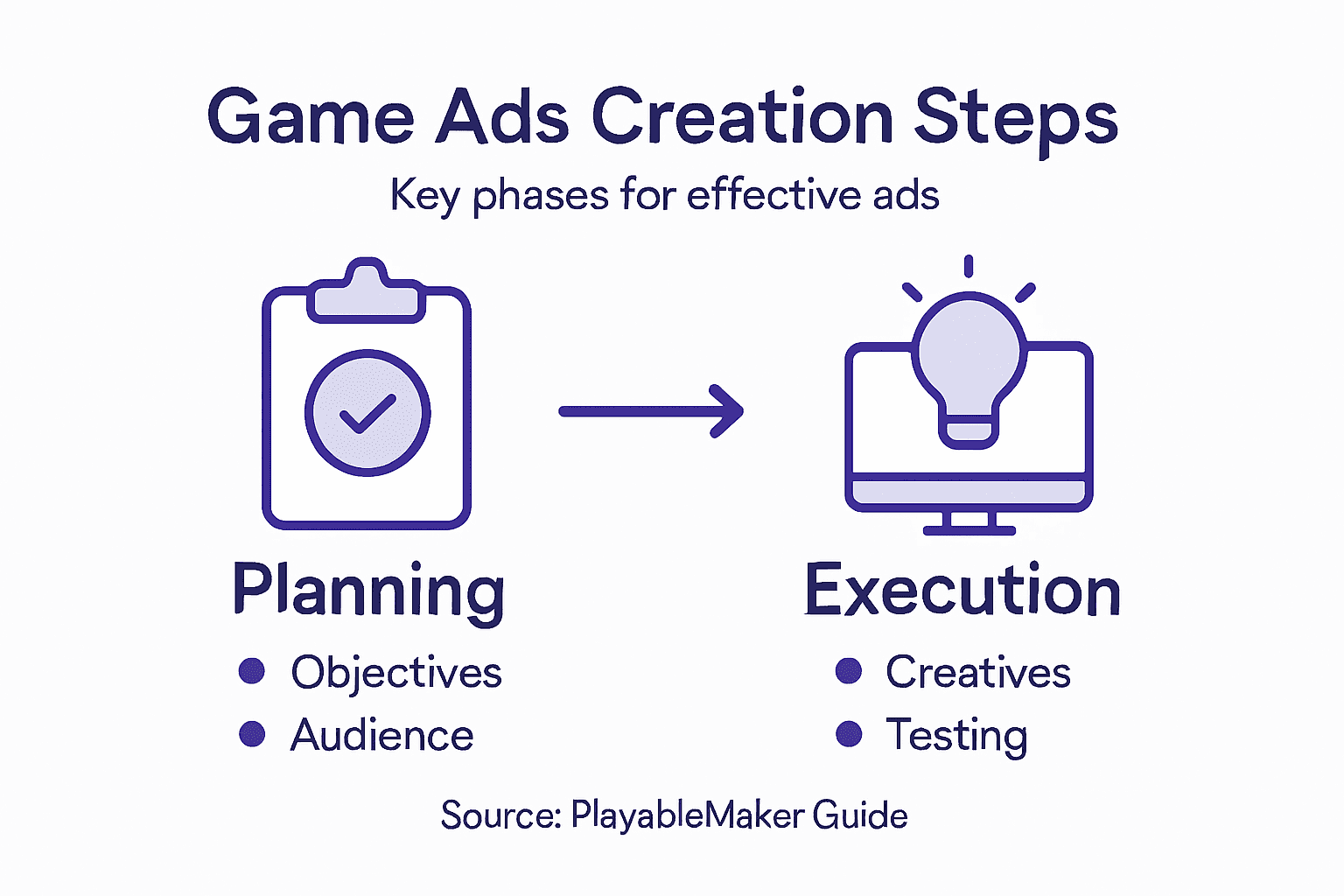
Begin by implementing data-driven creative strategies that leverage continuous testing and iteration. Analyse performance metrics across different visual and interactive components to identify design variations that resonate most effectively with your target audience. Focus on developing high-quality visuals that evoke emotional responses and accurately represent your game’s unique gameplay experience.
When optimising creatives, concentrate on platform-specific nuances and user preferences. Create multiple ad variants that showcase different gameplay aspects, mechanics, and reward systems. Prioritise clear call-to-action elements, smooth UI animations, and audio-visual effects that provide immediate engagement. Track key performance indicators such as click-through rates, conversion rates, and user retention to refine your creative approach continuously. Remember that successful ad optimisation is an ongoing process of experimentation, measurement, and strategic refinement.
Pro Strategy Tip: Develop a systematic A/B testing framework that allows you to compare creative variations systematically, ensuring you progressively improve ad performance with each iteration.
Step 5: Test and analyse ad performance
Testing and analysing ad performance is crucial for understanding the effectiveness of your mobile game advertising strategy. This process transforms raw data into actionable insights that can significantly improve your user acquisition efforts.
Systematic A/B testing methodology enables marketers to make data-driven decisions about ad creatives. Begin by establishing clear performance metrics such as click-through rates, conversion rates, and user engagement levels. Create multiple ad variants that test different visual elements, messaging approaches, and gameplay snippets. Ensure each test focuses on a single variable to isolate its impact on performance, whether that is colour schemes, call-to-action placement, or video content duration.
Analyse test results comprehensively by examining both quantitative metrics and qualitative user responses. Look beyond surface level statistics to understand why certain ad variations perform better. Pay attention to audience segment responses, platform specific performance differences, and emerging trends in user interaction. Use statistical significance testing to validate your findings and avoid drawing conclusions from insufficient data. Remember that ad performance optimisation is an iterative process requiring continuous monitoring, experimentation, and strategic refinement.
Pro Strategy Tip: Develop a standardised tracking spreadsheet that captures key performance indicators across all ad variations, enabling quick comparative analysis and informed decision making.
Simplify Your Journey to High-Performing Game Ads Today
Creating interactive mobile game ads can be overwhelming when faced with technical hurdles and budget constraints. This guide highlights key challenges such as defining precise player segments, assembling playable ads without coding skills, and optimising creatives for performance. These steps require time, resources, and expertise that many teams struggle to allocate effectively.
At PlayableMaker, we understand these pain points deeply. That is why our no-code platform enables you to build engaging playable ads fast while keeping costs under control. Whether you want to quickly test user personas or craft a compelling 15-30 second interactive demo that sparks curiosity, our tool empowers marketers and developers alike to focus on creativity rather than coding. Discover how easy it is to transform game features into irresistible ads with PlayableMaker’s drag-and-drop builder.
Looking for practical help on optimising and publishing your ads? Visit our Help Archives for expert guidance and best practices. Ready to create your first playable ad without technical barriers Explore our platform and start building your high-performing ads now at PlayableMaker. For more insights on game ad creation strategies, check out our Uncategorized Archives for fresh articles and tips.
Frequently Asked Questions
What are the key steps for creating high-performing game ads?
Creating high-performing game ads involves defining campaign objectives, selecting interactive elements, assembling ads using no-code tools, optimising creatives, and testing performance. Begin by outlining your campaign goals clearly, then use user profile data to craft targeted ads that resonate with your audience.
How can I define my target audience for mobile game ads?
Define your target audience by researching demographics such as age range, gaming preferences, and income levels. Create detailed user personas to better understand their motivations and tailor your ad messages accordingly.
What types of interactive ad elements should I use?
Consider using native ads, playable demos, interactive overlays, and audio integrations to engage potential players effectively. Choose an interactive ad format that showcases your game’s core mechanics and enhances player experience without overwhelming them.
How do I optimise my game ad creatives for better engagement?
To optimise your ad creatives, implement data-driven strategies that involve testing various visual elements and messaging approaches. Regularly track performance metrics such as click-through rates and adjust your ads based on the insights to improve engagement continuously.
What is the importance of A/B testing in game ad campaigns?
A/B testing allows you to compare different ad variations to determine which ones perform better. Perform tests on single variables, such as imagery or call-to-action placement, and evaluate results to refine your advertising strategies effectively.
How can I ensure my playable ads provide a good user experience?
Ensure your playable ads are intuitive and compact, capturing gameplay within 15 to 30 seconds. Prioritise smooth navigation and clear user interface elements to enhance the engagement and enjoyment of potential players.
Recommended
- Master Effective Ad Creative Processes for Mobile Gaming – playablemaker.com Master Effective Ad Creative Processes for Mobile Gaming
- Google Ad Performance: Maximising Mobile Game ROI – playablemaker.com Google Ad Performance: Maximising Mobile Game ROI
- Master the Dynamic Ad Creative Process for Mobile Gaming – playablemaker.com Master the Dynamic Ad Creative Process for Mobile Gaming
- How to Make Engaging Game Ads for Mobile Success – playablemaker.com How to Make Engaging Game Ads for Mobile Success
- Lead Ads Instagram: Unlocking Automated Growth for Creators