Most british mobile game campaigns on LinkedIn miss out on their full growth potential by overlooking the metrics that really matter. For user acquisition specialists, understanding which numbers drive real engagement and reduce ad costs is everything. With Click-Through Rates for british professional audiences averaging just 0.5 percent, knowing how to interpret and act on these benchmarks means the difference between wasted spend and meaningful installs. This resource breaks down the crucial metrics to help you increase campaign efficiency and optimise playable ad results.
Table of Contents
- Understanding LinkedIn Ads Metrics Fundamentals
- Key Metric Types For User Acquisition Success
- Essential Benchmarks And Industry Standards
- Optimising Metrics For Playable Ad Campaigns
- Common Mistakes And Cost Reduction Strategies
Key Takeaways
| Point | Details |
|---|---|
| Fundamental Metrics Focus | Prioritise Click-Through Rate, Cost Per Click, and Conversion Rate to effectively measure campaign performance on LinkedIn. |
| Targeted Audience Segmentation | Create custom audience segments based on job titles and industries to enhance targeting accuracy and reduce costs. |
| Benchmark Against Industry Standards | Regularly compare performance metrics to industry benchmarks to set realistic goals and optimise campaigns. |
| Continuous Performance Monitoring | Implement a systematic review process for campaign metrics to ensure timely adjustments and minimise expense wastage. |
Understanding LinkedIn Ads Metrics Fundamentals
Navigating LinkedIn advertising for mobile game growth requires a nuanced understanding of key performance indicators that reveal campaign effectiveness. Unlike other social platforms, LinkedIn offers unique metrics specifically tailored for professional targeting, making it particularly powerful for user acquisition strategies in gaming.
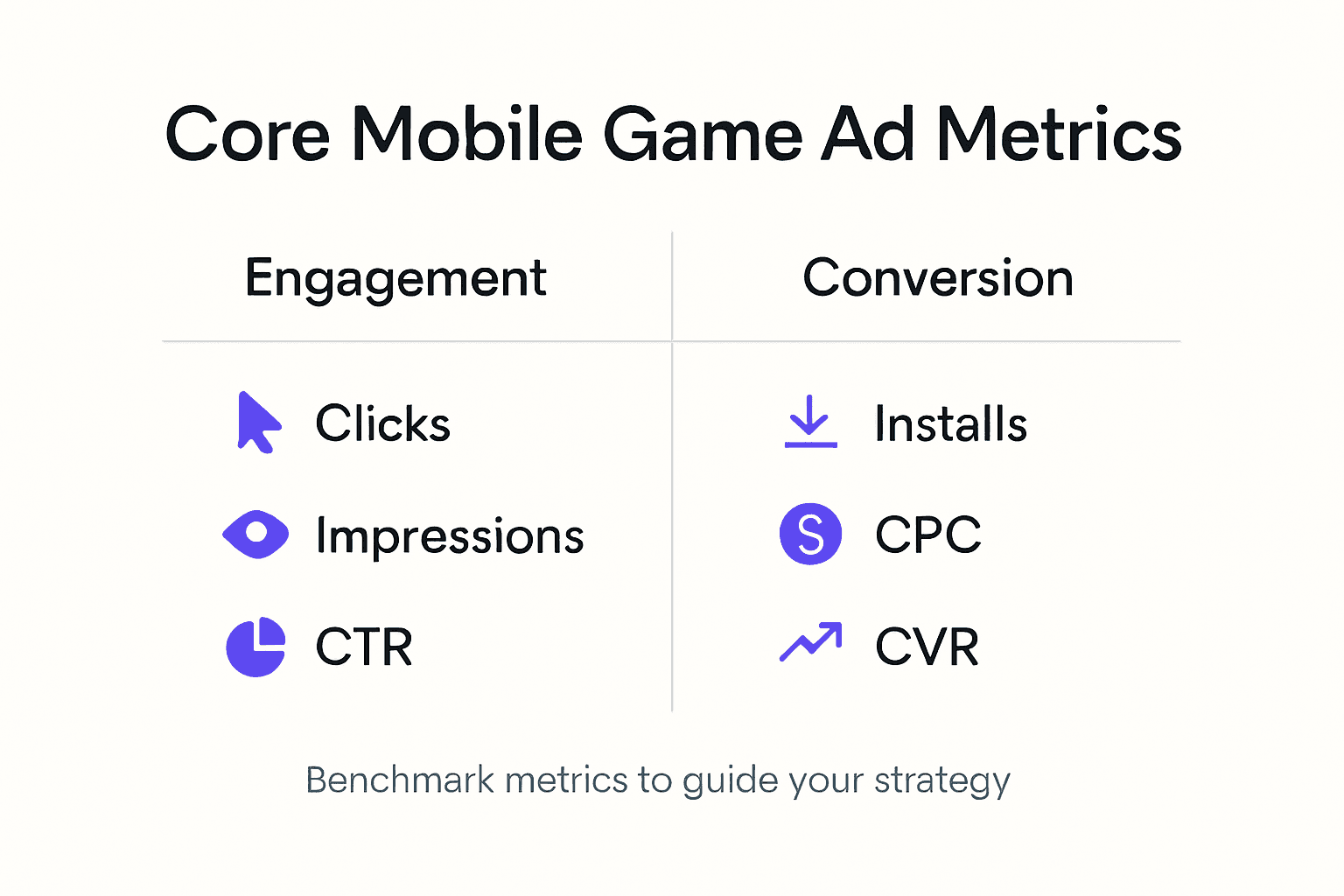
The fundamental metrics mobile game marketers should prioritise include Click-Through Rate (CTR), Cost Per Click (CPC), and Conversion Rate (CVR). LinkedIn analytics provide comprehensive insights into audience engagement and campaign performance. CTR measures the percentage of viewers who click your advertisement, indicating initial interest. A strong CTR typically ranges between 0.35% to 0.65% for professional audiences, signalling potential player acquisition opportunities.
Understanding granular metrics helps optimise ad spend and targeting precision. Cost Per Click reveals the financial investment required to generate user interaction, while Conversion Rate tracks the percentage of clicks transforming into actual game installations or registrations. Professional marketers recommend tracking these metrics alongside Impressions and Reach to develop a holistic view of campaign performance. Monitoring these indicators allows mobile game developers to refine targeting, adjust creative elements, and maximise return on advertising investment.
This table summarises the core LinkedIn ad metrics for mobile game marketing and their business value:
| Metric | What It Measures | Why It Matters for Growth |
|---|---|---|
| Impressions | Number of ad displays | Gauges potential campaign reach |
| Click-Through Rate | Percentage who click the ad | Indicates creative relevance and appeal |
| Cost Per Click | Average spend per ad click | Tracks acquisition cost efficiency |
| Conversion Rate | Percentage converting after clicking | Reflects success in driving installations |
| Reach | Unique users shown the ad | Shows breadth of targeted exposure |
Pro tip: Create custom audience segments based on professional attributes like job title, industry, and seniority to improve your LinkedIn ad targeting precision for mobile game user acquisition.
Key Metric Types for User Acquisition Success
Effective user acquisition for mobile games on LinkedIn demands a strategic approach to measuring performance through targeted metrics. Key performance indicators reveal precise audience engagement opportunities that go beyond traditional advertising tracking methods, enabling mobile game marketers to optimise their professional targeting strategies.
The core metric types crucial for user acquisition success include Exposure Metrics, Engagement Metrics, and Conversion Metrics. Exposure metrics like Impressions and Reach determine the potential audience size, while engagement metrics such as Click-Through Rate (CTR) and Total Engagement measure audience interaction. Conversion metrics, including Cost Per Click (CPC) and Conversion Rate, directly track how effectively ad interactions translate into actual game installs or sign-ups.

Professional targeting on LinkedIn allows for granular performance tracking, making it unique among social platforms. By analysing metrics like job title, industry segment, and seniority level engagement rates, mobile game marketers can refine their audience targeting, reduce acquisition costs, and improve overall campaign effectiveness. Understanding these nuanced metrics enables precise audience segmentation and more efficient user acquisition strategies tailored to professional demographics.
Pro tip: Develop custom audience segments that combine professional attributes with gaming interest indicators to create highly targeted LinkedIn ad campaigns for mobile game user acquisition.
Essential Benchmarks and Industry Standards
Navigating LinkedIn advertising benchmarks for mobile game user acquisition requires a nuanced understanding of industry-specific performance standards. Global LinkedIn advertising benchmarks provide crucial insights into competitive performance metrics that mobile game marketers can leverage to optimise their targeting strategies and campaign effectiveness.
Key performance benchmarks for mobile gaming user acquisition on LinkedIn typically range across several critical metrics. Click-Through Rates (CTR) for professional audiences generally hover between 0.35% to 0.65%, while Cost Per Click (CPC) varies depending on industry and targeting specificity. Conversion Rates for mobile game campaigns often range from 2.5% to 5%, with high-performing campaigns achieving up to 7% through precise audience segmentation and compelling creative assets.
Understanding these benchmarks allows mobile game marketers to set realistic expectations and develop data-driven strategies. Industry-specific variations play a significant role, with technology and professional services sectors demonstrating higher engagement rates compared to other industries. Professional targeting capabilities on LinkedIn enable marketers to refine audience segments, potentially reducing acquisition costs and improving overall campaign performance by focusing on job titles, seniority levels, and professional interests directly related to gaming and technology.
Pro tip: Regularly benchmark your LinkedIn ad performance against industry standards, adjusting targeting and creative strategies to maintain competitive conversion rates and reduce user acquisition costs.
Optimising Metrics for Playable Ad Campaigns
Playable ad campaigns on LinkedIn require a sophisticated approach to metric optimisation, focusing on capturing professional audience engagement through interactive and compelling game experiences. Strategic metrics monitoring enables precise campaign performance tracking across multiple dimensions of user interaction and conversion potential.
The core optimisation strategy involves systematically analysing key performance indicators specific to playable ad formats. Engagement Metrics become critical, including interaction duration, replay rates, and conversion progression. Mobile game marketers should prioritise metrics that demonstrate not just initial click-through, but sustained interest and willingness to explore the game’s core mechanics through the playable ad interface. Tracking granular interactions like tutorial completion, initial game stage progression, and interaction depth provides more nuanced insights than traditional click-based measurements.
Advanced optimisation requires a holistic view of performance across multiple metric categories. Conversion tracking should extend beyond initial interactions, measuring how playable ad experiences translate into actual game installations, account registrations, and long-term user retention. Professional audience targeting on LinkedIn allows for uniquely precise segmentation, enabling marketers to refine ad experiences based on job roles, industry sectors, and professional interests that correlate most strongly with mobile gaming engagement.
Pro tip: Implement multi-stage tracking that captures not just initial ad interactions, but also subsequent user behaviour to understand the true effectiveness of your playable ad campaign.
Common Mistakes and Cost Reduction Strategies
Navigating LinkedIn advertising for mobile game growth demands a strategic approach to avoiding costly errors that can quickly drain marketing budgets. Understanding common pitfalls helps mobile game marketers develop more cost-effective advertising strategies by identifying and mitigating potential financial risks before they escalate.
The most significant mistakes mobile game marketers encounter include overly broad audience targeting, inadequate audience segmentation, and inappropriate bid management strategies. Precise Targeting becomes crucial in reducing unnecessary expenditure, requiring marketers to narrow audience parameters using professional attributes like job titles, industry sectors, seniority levels, and specific technological interests. Implementing granular targeting helps reduce Cost Per Click (CPC) by ensuring ads reach professionals most likely to engage with mobile gaming content, thereby improving overall campaign efficiency and reducing wasted ad spend.
Advanced cost reduction strategies involve continuous campaign monitoring and dynamic adjustment. Mobile game marketers should leverage LinkedIn’s robust analytics to perform regular performance audits, identifying underperforming audience segments and reallocating budget towards high-conversion demographics. Implementing multi-variant testing, creating highly specific ad creatives tailored to professional audience segments, and utilising manual bidding techniques can significantly optimise campaign economics. By adopting a data-driven approach that prioritises quality interactions over quantity, marketers can dramatically improve return on advertising investment.
Compare key cost reduction strategies for LinkedIn mobile game campaigns:
| Strategy | Main Focus | Business Impact |
|---|---|---|
| Granular Audience Targeting | Narrowing by job, sector, seniority | Reduces wasted ad spend |
| Performance Auditing | Reviewing metrics to reallocate funds | Optimises budget to best converters |
| Multi-Variant Creative Testing | Testing ads for different segments | Improves engagement and conversion |
| Manual Bid Management | Adjusting bids based on performance | Controls costs and increases ROI |
Pro tip: Develop a systematic campaign review process that evaluates performance metrics weekly, enabling rapid budget reallocation and targeting refinement to minimise unnecessary advertising expenditure.
Accelerate Your Mobile Game Growth with Effortless Playable Ads
The article highlights the challenge of mastering LinkedIn Ads metrics to optimise mobile game user acquisition while managing costs and engagement. If targeting professional audiences precisely and boosting conversion rates feels overwhelming, our no-code solution directly addresses these goals. By simplifying playable ad creation, you can focus on refining key metrics like Conversion Rate and Click-Through Rate without straining your development resources or budget.
Unlock the power of interactive, engaging ads designed to capture professional interest quickly and affordably. Explore proven strategies in our Uncategorized Archives to maximise campaign impact and reduce cost per click. Ready to transform your LinkedIn ad campaigns now Step into PlayableMaker at https://app.playablemaker.com and start building playable ads that drive measurable growth with precision targeting. Need guidance Discover practical tips in our Help Archives to get started without delay.
Frequently Asked Questions
What are the key metrics to track in LinkedIn Ads for mobile game growth?
The key metrics to track include Click-Through Rate (CTR), Cost Per Click (CPC), Conversion Rate (CVR), Impressions, and Reach. These metrics help evaluate ad effectiveness and user engagement.
How can I improve the Click-Through Rate (CTR) of my LinkedIn Ads?
To improve CTR, use engaging creative assets tailored to your target audience, ensure clarity in messaging, and implement A/B testing on different ad formats to identify what resonates best with viewers.
What strategies can I use to optimise Cost Per Click (CPC) in my LinkedIn campaigns?
Optimise CPC by employing granular audience targeting based on job titles, industries, and seniority levels. Regularly monitor campaign performance and adjust bids and budgets accordingly to focus on high-converting segments.
How do I measure the success of my Conversion Rate (CVR) from LinkedIn Ads?
Measure CVR by tracking the percentage of ad clicks that result in actual game installations or registrations. Set up conversion tracking to capture data accurately and conduct regular performance evaluations to refine strategies.
Recommended
- Facebook Ad Performance: Complete Guide for Mobile Gaming – playablemaker.com Facebook Ad Performance: Complete Guide for Mobile Gaming
- Google Ads Performance Metrics: Optimise UA Costs – playablemaker.com Google Ads Performance Metrics: Optimise UA Costs
- Google Ad Performance: Maximising Mobile Game ROI – playablemaker.com Google Ad Performance: Maximising Mobile Game ROI
- Complete Guide to FB Ad Metrics for Mobile Gaming – playablemaker.com Complete Guide to FB Ad Metrics for Mobile Gaming
- Generative AI Solutions | NineArchs