Mobile games that use structured A/B testing are up to 70 percent more effective at driving player engagement and revenue growth. Setting precise goals for each ad test can make the difference between guessing and real improvement. When your measurements match your business priorities, you get actionable data that transforms both user experience and returns.
Quick Summary
| Key Point | Explanation |
|---|---|
| 1. Set clear goals for A/B testing | Define measurable goals to guide ad performance analysis and ensure alignment with your mobile game’s success. |
| 2. Use no-code tools for ad variants | Leverage no-code platforms to create diverse ad versions quickly, focusing on one variable change at a time. |
| 3. Target specific audience segments | Refine targeting to niche demographics for more effective ad campaigns, increasing engagement and conversion rates. |
| 4. Analyze results rigorously | Use critical metrics to assess ad performance, avoiding premature conclusions and allowing for informed decision-making. |
| 5. Optimize ads based on insights | Continuously improve playable ads using insights from A/B tests to enhance user retention and engagement effectively. |
Table of Contents
- Step 1: Define Measurable Ad Test Goals
- Step 2: Set Up Test Variants Using No-Code Tools
- Step 3: Launch Ad Campaigns To Target Audiences
- Step 4: Analyze A/B Test Results For Insights
- Step 5: Optimize Playable Ads Based On Findings
Step 1: Define measurable ad test goals
Designing an effective A/B testing strategy starts with setting clear measurement goals. Think of these goals as your marketing compass—they will guide every decision and help you understand whether your ad variations are actually moving the needle for your mobile game’s performance.
According to Chartboost Academy, you want to focus on key performance indicators that directly reflect your game’s business outcomes. These metrics aren’t just numbers—they tell a story about your game’s health and potential.
Start by identifying specific metrics that matter most to your mobile game. Some critical indicators to consider include:
Here’s a summary of essential KPIs for mobile game ad testing:
| KPI | Purpose | Typical Measurement |
|---|---|---|
| eCPM | Monetisation efficiency | Revenue/1,000 ad impressions |
| ARPDAU | Revenue per user per day | Daily revenue/active users |
| Retention Rates | Player loyalty over time | % on day 1, 7, 30 |
| User Engagement | Level of player interaction | Session length Frequency |
| ROAS | Return on ad investments | Revenue/ad spend ratio |
• eCPM (effective cost per mille)
• ARPDAU (average revenue per daily active user)
• Retention rates (day 1, day 7, and day 30)
• User engagement rates
• Return on ad spend (ROAS)
As research from Elevatix highlights, your testing goals should balance user experience with monetization strategies. This means looking beyond pure revenue and considering how different ad approaches impact player retention and enjoyment.
Pro Tip: Always choose metrics that align with your broader game development objectives. A metric that works for one game might not be ideal for another.
Before launching your tests, create a clear hypothesis about what you expect to improve. For instance, you might believe that a more engaging ad creative will increase day 7 retention rates by 15%. This specific, measurable goal will help you design targeted experiments and interpret results accurately.
In the next step, you’ll learn how to craft those precise ad variations that will help you test your hypotheses and unlock valuable insights about your mobile game’s advertising performance.
Step 2: Set up test variants using no-code tools
Now that you have defined your measurable goals, it’s time to create ad variations that will help you test your hypotheses. No-code tools have revolutionized this process, making it possible to rapidly design and deploy multiple ad versions without deep technical expertise. Learn more about how no-code technology is transforming game design.
Start by identifying the specific elements you want to test in your mobile game ads. These could include visual design, messaging, call-to-action buttons, character representations, or even color schemes. The key is to change only one variable at a time so you can clearly understand what drives performance differences.
With no-code platforms, you can quickly generate multiple ad variants by using drag-and-drop interfaces, pre-built templates, and intuitive design tools.
 This means you can create sophisticated ad variations without writing a single line of code. Upload different images, adjust text, swap out graphics, and experiment with various creative approaches in minutes.
Pro Tip: When creating variants, ensure they are distinct enough to provide meaningful insights but not so different that they become unrecognizable as part of the same game brand.
Consider creating 3-4 ad variants that each test a specific hypothesis. For instance, one variant might focus on highlighting gameplay mechanics, while another emphasizes character design or in-game rewards. By maintaining a consistent underlying structure and changing only specific elements, you’ll be able to isolate which factors truly impact user engagement.
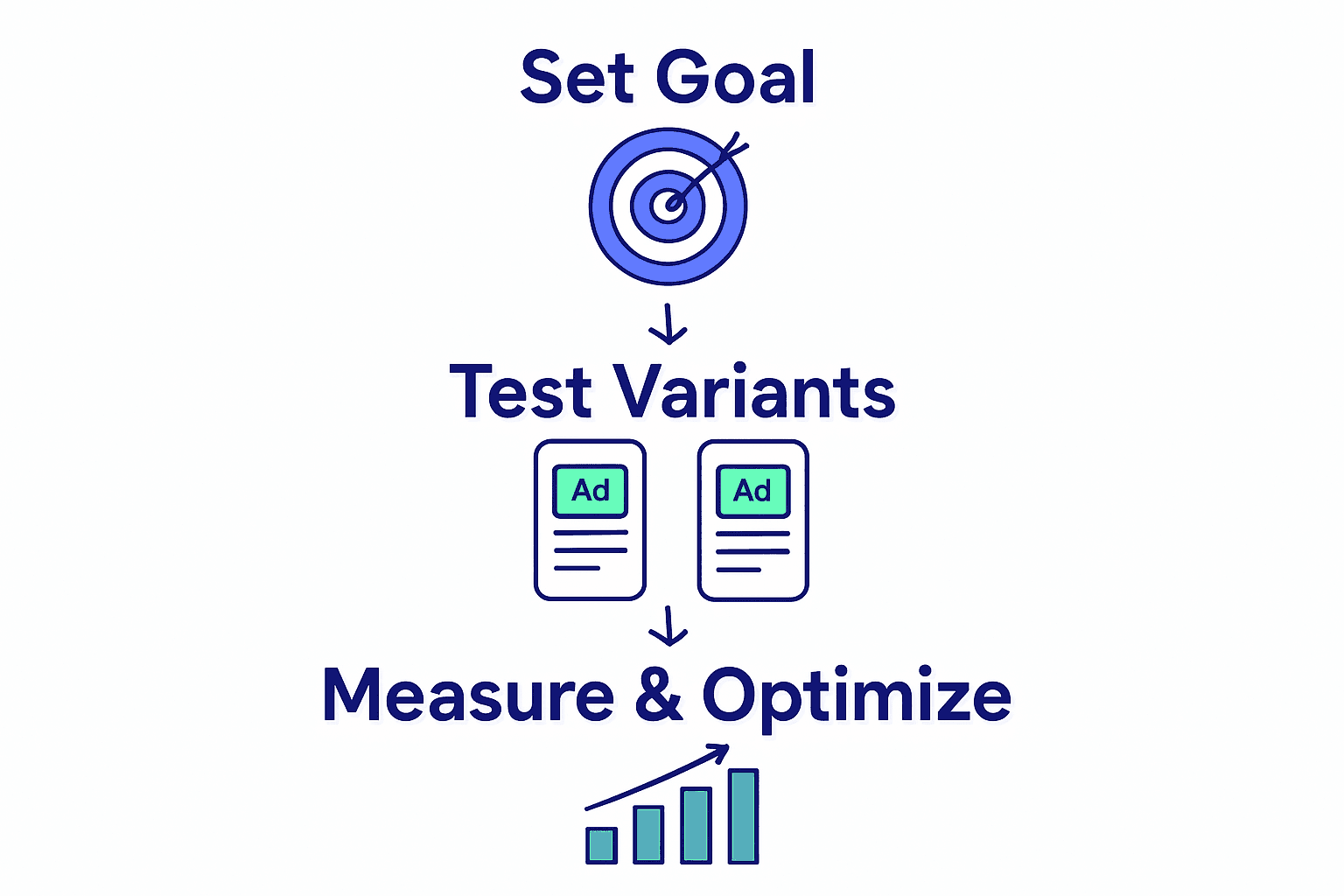
In the next step, you’ll learn how to set up tracking and measurement mechanisms to evaluate the performance of these ad variants systematically.
Step 3: Launch ad campaigns to target audiences
With your ad variants prepared, it’s time to strategically launch campaigns that will help you gather meaningful insights about your mobile game’s advertising performance. Learn more about precision ad targeting to maximize your campaign’s effectiveness.
Research indicates that targeted mobile game advertising can create powerful ripple effects beyond direct installations. According to an academic study, paid advertising not only drives immediate paid installs but can also significantly boost organic user acquisition across multiple platforms.
Start by defining your target audience segments with precision. Consider demographics like age, gaming preferences, device types, and previous game interactions. Most ad platforms offer sophisticated targeting tools that allow you to narrow down your audience based on complex behavioral and contextual parameters.
Pro Tip: Don’t just target broad gaming audiences. Look for niche player segments that closely align with your game’s unique mechanics and style.
Case studies from SuperScale demonstrate that personalized ad experiments can dramatically improve key performance metrics. By testing different audience profiles and tailoring ad content, game developers have achieved substantial increases in daily active users, average revenue per daily active user, and overall lifetime player value.
When launching your campaigns, allocate your budget across different audience segments to maximize learning opportunities. Start with smaller budget allocations to test initial hypotheses, then scale up strategies that demonstrate promising early results.
In the next step, you’ll dive into monitoring and analyzing the performance data from these targeted campaigns to refine your mobile game’s advertising approach.
Step 4: Analyze A/B test results for insightsAfter running your targeted ad campaigns, it’s time to dive deep into performance analysis and extract meaningful insights. Learn more about the foundational principles of A/B testing to ensure you’re interpreting your data correctly.
According to guidance from Chartboost, analyzing A/B test results requires a systematic and patient approach. The key is to compare performance metrics comprehensively while avoiding premature conclusions or mid-test adjustments that could skew your findings.
Start by comparing critical performance indicators across your ad variants. Look at metrics such as conversion rates, average revenue per daily active user (ARPDAU), user engagement levels, and retention rates. Pay close attention to statistically significant differences between your test groups.
Academic research underscores the importance of rigorous experimental design. Unlike other measurement techniques that can introduce bias, a well-structured A/B test provides reliable insights into what truly drives user behavior in your mobile game advertising.
Pro Tip: Wait until your test reaches statistical significance before drawing final conclusions. Rushing to interpret incomplete data can lead to misguided marketing decisions.
If a particular ad variant underperforms, don’t view it as a failure. Instead, treat it as valuable information that helps refine your understanding of what resonates with your target audience. Each test provides learning opportunities that can inform future creative and targeting strategies.
Consider creating a comprehensive report that not only highlights winning variants but also documents the hypotheses tested, methodological approach, and potential insights for future experiments. This documentation becomes an invaluable resource for continuous marketing optimization.
In the final step, you’ll learn how to leverage these insights to iterate and improve your mobile game advertising strategy.
Step 5: Optimize playable ads based on findingsAfter meticulously analyzing your A/B test results, it’s time to transform insights into actionable improvements for your mobile game advertising. Learn more about strategic ad optimization techniques to maximize your marketing effectiveness.
Industry research reveals powerful optimization strategies that can dramatically enhance your playable ad performance. According to RevX, playable ads pre-qualify users by offering a genuine gameplay experience, which leads to significantly higher user retention and post-install activity.
Focus first on refining your ad’s interactive elements. Industry analysis demonstrates that shorter playable ads around 20 seconds can reduce user churn by 30% and increase click-through rates by 15%. This means carefully curating your interactive experience to capture user interest quickly and authentically.
Pro Tip: Think of your playable ad like a movie trailer. You want to showcase the most compelling moments that make players curious about the full experience.
Optimize your end cards and interactive conclusion carefully. Research indicates that strategic improvements to these elements can raise engagement nine-fold and potentially increase return on investment by up to 50% while simultaneously lowering cost-per-install.
Consider incorporating narrative driven elements that showcase your game’s unique mechanics. Case studies like Dream Games’ Royal Match demonstrate how thoughtful storytelling within playable ads can contribute to massive user acquisition and revenue growth.
Remember that optimization is an ongoing process. Continuously experiment with different interactive approaches, track performance meticulously, and be prepared to iterate based on emerging user behavior patterns.
Transform Your Mobile Game A/B Testing Into Real Results
Are you spending too much time and budget creating playable ads for your A/B tests? If you have felt the frustration of slow ad production cycles or struggled to test engaging variants quickly, PlayableMaker is here to help. Our Help Archives are filled with tips to support each step, whether you are defining KPIs, setting up ad variations, or analysing your test results.
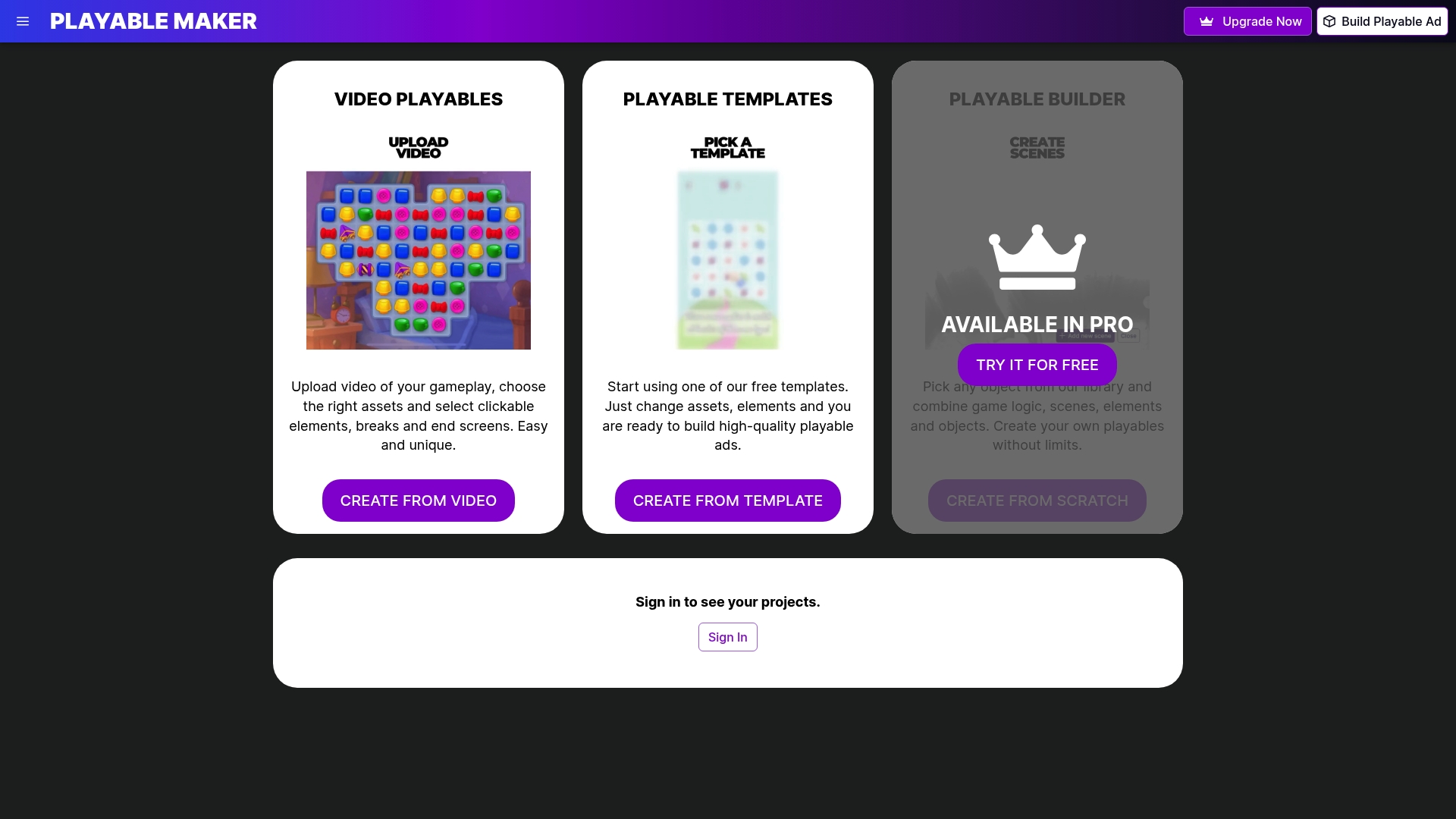
Stop letting technical barriers slow your growth. With PlayableMaker, you can build interactive ads instantly, without writing code or straining your resources. Visit our Publishing resources or jump straight to PlayableMaker to get started today. Start turning your A/B testing insights into higher player engagement and better returns. The best time to optimise your ad strategy is now.
Frequently Asked Questions
What are the key performance indicators (KPIs) to track in A/B testing ads for mobile games?
The essential KPIs to focus on include eCPM, ARPDAU, retention rates, user engagement, and ROAS. Start by defining which specific metrics align with your game’s business goals to effectively assess your ad performance.
How do I set up ad variants for A/B testing without coding?
You can use no-code tools to create ad variants quickly and easily. Identify the specific elements you want to test, such as visuals or messaging, and modify only one variable at a time to ensure clear insights about performance differences.
How can I define my target audience for mobile game ad campaigns?
Define your target audience by considering factors like demographics, gaming preferences, and device types. Utilize audience segmentation based on behavioral data to ensure that your ad campaigns resonate deeply with potential players.
How should I analyze the results of my A/B tests for mobile game ads?
Analyze your A/B test results by systematically comparing performance metrics across variants while avoiding premature conclusions. Wait for tests to reach statistical significance before making any decisions based on the data.
What steps can I take to optimize playable ads based on A/B testing findings?
To optimize your playable ads, focus on refining interactive elements and crafting compelling narratives within the ads. Experiment with various interactive approaches and track user engagement to continually improve the effectiveness of your ads.
How often should I conduct A/B tests for my mobile game ads?
Aim to conduct A/B tests continuously as part of your advertising strategy. Regular testing allows you to adapt to user preferences and market trends, ideally implementing testing cycles every few weeks to observe measurable improvements.
Recommended
- The Foundation and Basics of AB Testing in Mobile App Marketing – playablemaker.com The Foundation and Basics of AB Testing in Mobile App Marketing
- 8 Mobile Ad Best Practices for Successful Campaigns – playablemaker.com 8 Mobile Ad Best Practices for Successful Campaigns
- Master YouTube Ads Targeting for Mobile Games in 2025 – playablemaker.com Master YouTube Ads Targeting for Mobile Games in 2025
- Mastering Mobile Playable Ad Workflow for Gaming Success – playablemaker.com Mastering Mobile Playable Ad Workflow for Gaming Success
- De rol van experimenten in Google Ads begrijpen – Ecomtrada | Google Ads Bureau | Den Helder