
Most british marketers are surprised to learn that Facebook classifies users into over 500 detailed interest segments, powering some of the most precise audience targeting in digital advertising. With the mobile gaming industry growing rapidly in the United Kingdom and across Europe, understanding these tactics can make or break a campaign. Discover how sophisticated targeting methods help brands cut costs, attract the right players, and gain an edge in a fiercely competitive market.
Table of Contents
- Defining Facebook Interest Targeting Methods
- Types Of Interests And Audience Segments
- How Facebook Interest Targeting Works
- Optimising Campaigns With No-Code Playable Ads
- Common Mistakes And Cost Implications
Key Takeaways
| Point | Details |
|---|---|
| Interest Targeting Precision | Facebook enables hyper-specific audience targeting through detailed user behaviour analysis, improving ad relevance for mobile gaming marketers. |
| User Segmentation | Marketers can utilise over 500 interest parameters to create finely tuned audience segments, enhancing marketing efficiency and user acquisition strategies. |
| No-Code Ad Solutions | No-code playable ads facilitate rapid ad development and testing, allowing marketers to adapt quickly and effectively without extensive technical resources. |
| Avoiding Cost Pitfalls | Strategic audience targeting is crucial; poor targeting leads to increased ad spend and ineffective campaigns, highlighting the need for precision in budget allocation. |
Defining Facebook Interest Targeting Methods
Facebook interest targeting allows advertisers to reach specific audiences based on their demonstrated preferences, behaviours, and online interactions. Retrieval algorithms in ad recommendation systems enable precise audience segmentation by leveraging complex user profile data and behavioural insights.
These targeting methods operate through sophisticated mechanisms that analyse users’ digital footprints. By examining detailed user profiles, Facebook creates granular interest categories that help mobile gaming marketers connect with potential players. The platform tracks multiple signals including:
- Page likes and follows
- Content engagement
- Shared posts
- Application usage
- Demographic information
- Online purchase history
The precision of interest targeting becomes particularly powerful for mobile gaming user acquisition specialists. Audience targeting strategies enable marketers to drill down into specific player segments, identifying users most likely to download and engage with their games. By understanding nuanced user interests, gaming brands can dramatically improve their ad relevance and conversion rates, reducing acquisition costs and maximising marketing efficiency.
Types of Interests and Audience Segments
Facebook offers an intricate array of interest categories that enable precise audience targeting for mobile gaming marketers. Comprehensive interest lists reveal numerous strategic segments across multiple domains, allowing advertisers to drill down into highly specific audience niches.
The primary interest categories typically encompass several key areas:
- Business and Industry
- Entertainment and Media
- Gaming and Technology
- Health and Wellness
- Sports and Fitness
- Travel and Lifestyle
- Personal Hobbies
Within mobile gaming, these categories become particularly nuanced. Audience segmentation techniques allow marketers to identify users not just by broad interests, but by specific game genres, gaming platforms, and player behaviours. Detailed interest catalogues suggest over 500 potential targeting parameters, enabling unprecedented precision in user acquisition strategies.
The real power of these audience segments lies in their granularity. Mobile gaming brands can now target users based on hyper-specific criteria like preferred game mechanics, past in-app purchase behaviours, competitive gaming interests, and even psychological gaming profiles. This micro-targeting approach transforms audience selection from a broad brushstroke to a surgical instrument, dramatically improving marketing efficiency and reducing wasteful ad spend.
How Facebook Interest Targeting Works
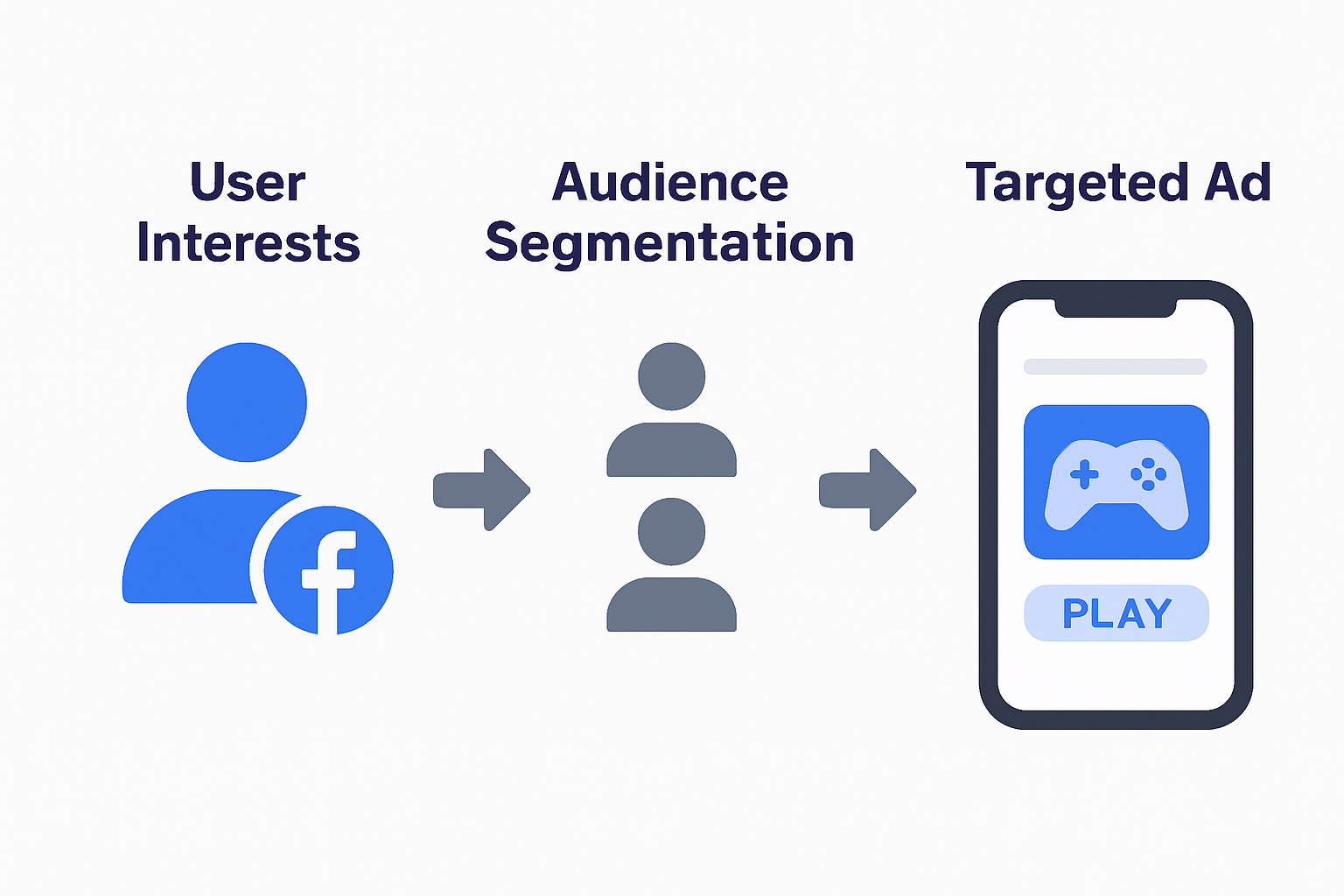
Facebook’s interest targeting mechanism operates through a sophisticated data aggregation system that tracks users’ digital interactions across multiple platforms. Proxy attribute analysis enables the platform to construct intricate user profiles by monitoring behavioural signals, engagement patterns, and contextual interactions.
The targeting process involves several key mechanisms:
- Tracking user likes and page interactions
- Analysing shared content and engagement
- Monitoring application and platform usage
- Evaluating demographic and behavioural data
- Clustering similar user characteristics
Recent targeting modifications have consolidated interest groups, making the segmentation process more streamlined yet complex. Detailed targeting strategies now require marketers to be more nuanced in their approach, understanding that each interaction provides a micro-signal about user preferences.

For mobile gaming marketers, this means constructing highly precise audience segments. The system can identify potential players not just by broad gaming interests, but by analysing specific behaviours like game genre preferences, spending patterns, competitive gaming tendencies, and even psychological gaming profiles. This granular approach transforms audience targeting from a generalised strategy to a precision instrument, enabling unprecedented specificity in user acquisition campaigns.
Optimising Campaigns With No-Code Playable Ads
No-code playable ads represent a revolutionary approach for mobile gaming marketers seeking efficient user acquisition strategies. Campaign configuration techniques demonstrate the importance of streamlining ad creation processes to maximise marketing efficiency.
The core advantages of no-code playable ad platforms include:
- Rapid ad development without coding skills
- Reduced production time and costs
- Enhanced creative flexibility
- Simplified A/B testing capabilities
- Instant performance metrics tracking
Interest targeting strategies have become increasingly sophisticated, making no-code solutions critical for marketers needing quick adaptation. Testing playable ad engagement allows brands to iterate rapidly, ensuring their mobile gaming advertisements resonate with precisely targeted audience segments.
By eliminating technical barriers, no-code platforms democratise ad creation, enabling marketing teams to produce interactive, compelling advertisements without extensive development resources. This approach transforms user acquisition from a complex, time-consuming process into an agile, data-driven strategy that can quickly respond to changing market dynamics and user preferences.
Common Mistakes and Cost Implications
Facebook interest targeting presents numerous potential pitfalls that can dramatically increase advertising expenditure for mobile gaming marketers. Detailed targeting modifications have fundamentally transformed how advertisers approach audience segmentation, making strategic precision more critical than ever.
Common mistakes in Facebook ad campaigns typically involve:
- Overly broad audience selection
- Neglecting audience refinement techniques
- Insufficient understanding of interest group consolidation
- Poor budget allocation strategies
- Ignoring performance metrics
Budget configuration techniques reveal that precise targeting directly correlates with cost efficiency. Mobile gaming marketers must develop sophisticated approaches to minimise wasted ad spend by creating hyper-targeted audience segments that maximise conversion potential while controlling acquisition costs.
The financial implications of poorly executed targeting can be substantial. Ineffective campaigns might consume budgets without generating meaningful user acquisition, potentially burning through marketing resources with minimal return. Playable ad testing strategies offer a robust mechanism for iterative improvement, enabling marketers to continuously refine their approach and optimise spending across increasingly complex targeting landscapes.
Master Facebook Interest Targeting with Effortless No-Code Playable Ads
The challenge with Facebook interest targeting lies in reaching the right audience without overspending or wasting resources on broad, ineffective campaigns. This article highlights common pitfalls like poor audience refinement and rising costs from imprecise targeting. As a mobile gaming marketer aiming to connect with hyper-specific user segments, you need solutions that keep up with the complexity of modern ad ecosystems while staying budget-friendly and quick to implement.
PlayableMaker offers the perfect answer with our no-code platform designed to build interactive ads rapidly and without relying on developers. By harnessing no-code playable ads, you can streamline your campaign creation, iterate quickly, and tap into Facebook’s intricate interest targeting options with agility. Say goodbye to overwhelming production costs and hello to smarter audience engagement strategies that maximise conversion potential. Discover how to optimise your user acquisition efforts now by visiting PlayableMaker and start crafting your winning campaigns today.
Frequently Asked Questions
What is Facebook interest targeting?
Facebook interest targeting is a feature that allows advertisers to connect with specific audiences based on their preferences, behaviours, and online interactions by leveraging user profile data and behavioural insights.
How does Facebook interest targeting enhance mobile gaming marketing?
It enables mobile gaming marketers to reach highly specific audience segments by analysing users’ digital footprints, including their game preferences, engagement, and in-app behaviours, which improves ad relevance and conversion rates.
What are the common mistakes to avoid in Facebook ad campaigns?
Common mistakes include overly broad audience selection, neglecting audience refinement, poor budget allocation, and insufficient tracking of performance metrics, all of which can unnecessarily increase advertising costs.
How can no-code playable ads improve my Facebook ad campaigns?
No-code playable ads allow marketers to swiftly create engaging advertisements without technical skills, reducing production time and costs while offering flexibility for A/B testing and immediate performance tracking.
Recommended
- Detailed Targeting Facebook Ads: Essential Guide – playablemaker.com Detailed Targeting Facebook Ads: Essential Guide
- Understanding Facebook Targeted Ads for Mobile Gaming – playablemaker.com Understanding Facebook Targeted Ads for Mobile Gaming
- Understanding Interest Facebook Ads for Mobile Gaming – playablemaker.com Understanding Interest Facebook Ads for Mobile Gaming
- Audience Targeting Explained: Boost Mobile Gaming Ads – playablemaker.com Audience Targeting Explained: Boost Mobile Gaming Ads
- Post | Tulip Films