
Over 60 percent of british mobile game marketers say that unclear campaign goals lead to wasted ad budgets. Precise objectives shape every choice from playable ad design to measuring performance, making them the foundation of successful user acquisition. Whether you want to capture attention or drive real installations, clear direction transforms how players engage with your games and ensures each campaign delivers measurable impact.
Table of Contents
- Step 1: Define Precise Campaign Objectives
- Step 2: Select The Ideal Playable Ad Format
- Step 3: Design Engaging Interactive Experiences
- Step 4: Build Ads Efficiently Without Coding
- Step 5: Test And Optimise Creative Performance
- Step 6: Monitor Outcomes And Refine Strategy
Quick Summary
| Key Message | Explanation |
|---|---|
| 1. Define Clear Campaign Objectives | Establish specific user acquisition targets to guide your ad design and performance metrics effectively. |
| 2. Choose the Right Ad Format | Selecting suitable playable ad formats is crucial to engaging potential players and sharing your game’s value. |
| 3. Design Engaging Experiences | Create interactive ads that quickly communicate your game’s core mechanics and entice potential players to try it. |
| 4. Use No-Code Solutions for Efficiency | Modern tools allow marketers to build engaging ads without coding skills, streamlining the ad creation process. |
| 5. Regularly Test and Optimise Performance | Systematically test variations of your ads to identify the best-performing versions and refine your marketing strategies. |
Step 1: Define precise campaign objectives
Creating effective playable ads demands crystal clear campaign objectives from the outset. Your campaign goals will determine every subsequent strategic decision in ad design, targeting, and performance measurement.
Start by identifying your specific user acquisition targets. Precise campaign structures help achieve targeted outcomes such as boosting user retention, driving installations, or increasing player engagement. Different objectives require tailored approaches. Brand awareness campaigns might prioritise reach and impressions, while performance marketing campaigns will focus on precise conversion metrics.
Consider mapping your key performance indicators (KPIs) directly to your ad format. Interactive playable ads work exceptionally well for product education and demonstrating gameplay mechanics. Static or short video formats excel at generating broad awareness. Your choice should align precisely with whether you want potential players to understand game features, experience a gameplay snippet, or simply recognise your mobile gaming brand.
Pro Tip: Always establish concrete, measurable objectives before designing your ad. Vague goals lead to unfocused creative strategies and wasted advertising budgets.
Step 2: Select the ideal playable ad format
Selecting the right playable ad format is crucial for capturing potential players’ attention and effectively communicating your mobile game’s unique value proposition. Your format choice will directly impact user engagement and campaign performance.
Playable ads offer strategic benefits by allowing users to interact directly with your product, making your brand message more memorable and immersive. Different ad formats suit different campaign objectives. Interactive overlays work brilliantly for demonstrating quick gameplay mechanics, while rich media playable ads provide a more comprehensive experience that lets users truly sample your game.
Consider your game’s core experience and target audience when choosing an ad format. Strategy games might benefit from mini challenge scenarios, while casual games could use quick, intuitive interactions that showcase core gameplay loops. Puzzle or arcade games often excel with short, punchy playable experiences that immediately demonstrate core gameplay.
Pro Tip: Always test multiple ad formats and track performance metrics. What works brilliantly for one game might fall flat for another. Continuous experimentation is key to finding your ideal playable ad approach.
Step 3: Design engaging interactive experiences
Creating compelling interactive ad experiences requires a strategic approach that transforms your mobile game’s core mechanics into a captivating preview. Your goal is to design an immersive snippet that instantly communicates the game’s unique value and entices potential players.
Interactive ads provide an essential opportunity for product education by offering users a hands-on experience, allowing them to sample gameplay before downloading. Focus on crafting a mini experience that highlights your game’s most exciting elements. For strategy games, this might mean presenting a quick tactical challenge. Puzzle games could offer a brief level that demonstrates core problem-solving mechanics. Arcade games work best with short, punchy interactions that showcase reflexes and excitement.
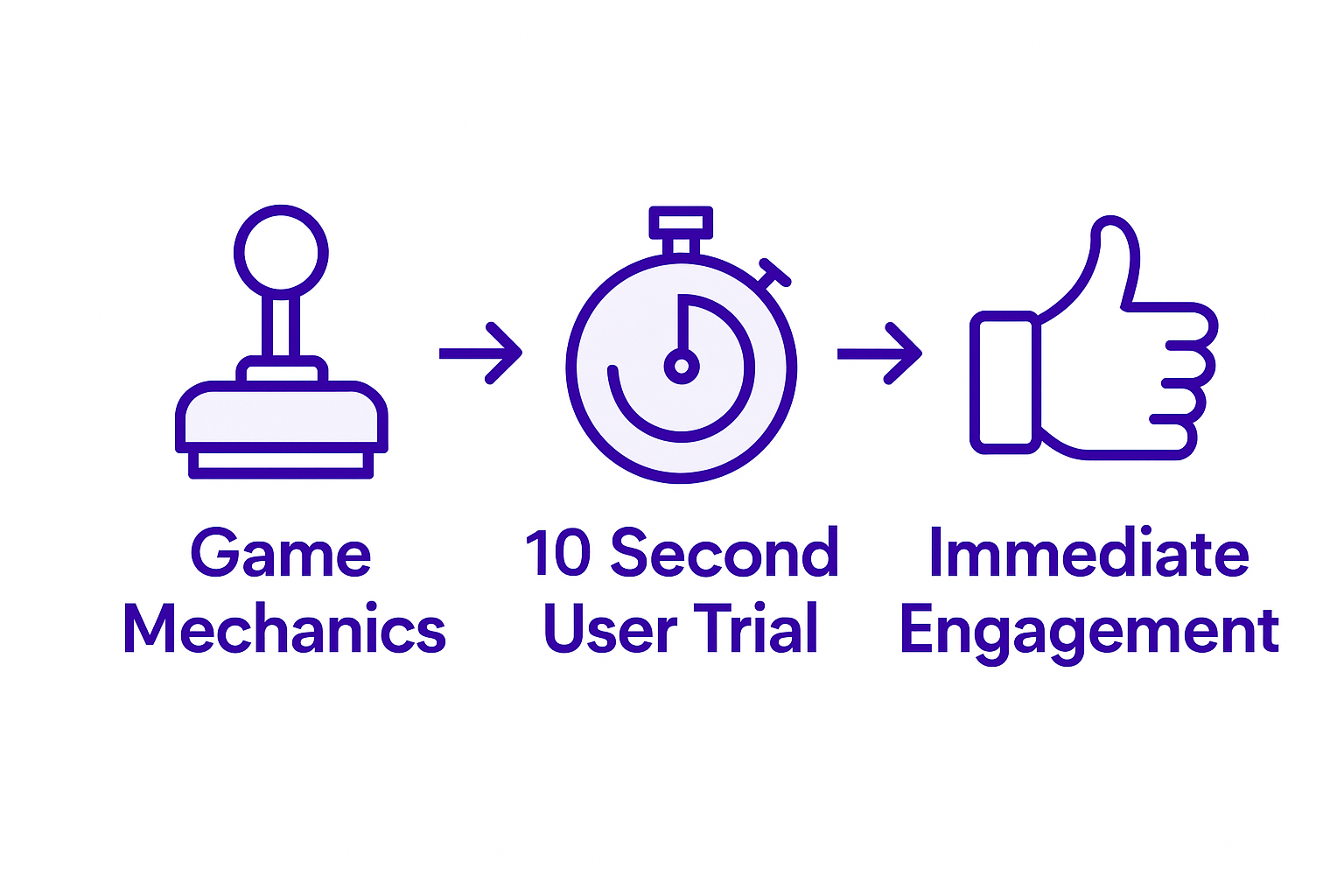
When designing your interactive experience, prioritise clarity and immediate engagement. The first ten seconds are critical for capturing user attention. Implement intuitive controls, clear objectives, and a sense of progression that makes players want to explore further. Ensure the interactive segment feels polished and representative of the full game experience, avoiding frustrating limitations or overly complicated instructions.
Pro Tip: User testing is crucial. What seems intuitive to you might confuse potential players. Conduct multiple rounds of testing to refine your interactive ad experience and maximise its conversion potential.
Step 4: Build ads efficiently without coding
Modern mobile game marketing demands sophisticated ad experiences without requiring extensive technical expertise. No-code solutions have revolutionised playable ad creation, enabling marketing teams to produce high-quality interactive advertisements without deep programming knowledge.
Interactive mechanics like drag-and-drop interfaces enable engaging ad creation without extensive technical skills, transforming the traditional development process. These tools provide intuitive visual interfaces where you can construct compelling ad experiences by simply dragging elements, configuring interactions, and designing gameplay snippets. Game marketers can now rapidly prototype and iterate ad concepts without waiting for development team intervention.

When building your no-code playable ad, focus on creating a concise, engaging experience that captures your game’s core mechanics. Select templates that match your game genre, customise interaction points, and ensure smooth user flow. Pay special attention to the first few seconds of interaction, as these are critical for capturing potential players’ interest and encouraging them to explore further.
Pro Tip: Always preview your no-code created ad from a user perspective. What seems intuitive to you might feel confusing to first-time viewers. Conduct multiple test runs to refine the user experience and maximise engagement potential.
Step 5: Test and optimise creative performance
Optimising playable ad performance requires a systematic approach to testing and refinement. Your goal is to transform initial creative concepts into high-converting marketing assets that resonate with potential players.
Implementing a creative pipeline with weekly testing and monthly refresh cycles helps in refining ad creatives and improving user acquisition strategies. Start by establishing a structured testing framework that allows you to compare different ad variations systematically. Focus on key performance indicators like click-through rates, engagement duration, and conversion metrics. Create multiple versions of your playable ad with slight variations in gameplay mechanics, visual design, or interaction points.
When conducting performance tests, maintain a scientific approach. Isolate individual variables to understand precisely what drives user engagement. Track metrics such as initial interaction time, completion rates, and subsequent app installation percentages. Pay close attention to user behaviour patterns and be prepared to make data-driven adjustments quickly. Some variations might perform unexpectedly well or poorly, offering valuable insights into player preferences.
Pro Tip: Document every test iteration meticulously. What seems like a minor change can significantly impact user engagement. Maintain a comprehensive log of creative variations, performance metrics, and learnings to build a robust knowledge base for future ad development.
Step 6: Monitor outcomes and refine strategy
Successful mobile game marketing demands continuous observation and strategic adaptation. Your ability to interpret performance data and rapidly adjust your approach will determine the effectiveness of your playable ad campaigns.
Regularly monitoring campaign performance metrics and being prepared to adjust strategies ensures sustained success in user acquisition. Establish a comprehensive dashboard that tracks key performance indicators such as conversion rates, user engagement duration, cost per install, and retention metrics. Look beyond surface level statistics to understand deeper behavioural patterns. Analyse which elements of your playable ad trigger positive user responses and which aspects might be causing potential players to disengage.
Break down your performance metrics into granular segments. Examine how different demographic groups interact with your ad, identifying nuanced variations in engagement across age ranges, device types, and geographical regions. Pay special attention to drop-off points in your playable ad experience, as these represent critical moments where user interest wanes. Use these insights to make targeted improvements, whether adjusting gameplay mechanics, refining visual design, or modifying interaction flow.
Pro Tip: Treat performance monitoring as an ongoing experiment. What works today might become less effective tomorrow. Maintain a flexible mindset and be prepared to completely reimagine your creative approach based on emerging data trends.
Unlock Your Mobile Game’s Potential with No-Code Playable Ads
The article highlights the complexities of crafting compelling playable ads, from defining clear campaign goals to rigorous testing and optimisation. These challenges often demand technical skills and significant resources, which can slow down your marketing efforts and inflate costs. If you are seeking a faster, budget-friendly way to design engaging interactive ad experiences without burdening your development team, there is a better solution.
At PlayableMaker, we understand the importance of quick, efficient playable ad creation that aligns perfectly with your mobile game’s unique mechanics. Our no-code platform allows you to build playable ads intuitively with drag-and-drop tools, ensuring your campaigns can test different formats and optimise creative content seamlessly. Explore our practical tips in the Help Archives to maximise your ad potential and learn how to publish your campaigns effectively through the Publishing Archives. Don’t let production bottlenecks hold back your user acquisition strategies. Start building your high-impact playable ads now at https://app.playablemaker.com and accelerate your path to success.
Frequently Asked Questions
What are the key objectives for creating effective playable ads in mobile gaming?
Establishing clear campaign objectives is crucial for designing effective playable ads. Focus on specific user acquisition targets like boosting user retention or increasing player engagement, and map your key performance indicators (KPIs) to your ad format to align your strategies effectively.
How do I choose the right playable ad format for my mobile game?
Selecting the ideal playable ad format depends on your game’s core experience and target audience. Consider experimenting with various ad formats, like interactive overlays or rich media playable ads, to determine which captures potential players’ attention best and matches your campaign objectives.
What steps should I take to design engaging interactive experiences in playable ads?
To design compelling interactive experiences, highlight your game’s most exciting elements in a mini experience. Focus on intuitive controls, clear objectives, and immediate engagement, aiming to capture the user’s attention within the first ten seconds of interaction.
How can I efficiently create playable ads without coding skills?
Utilise no-code solutions that offer drag-and-drop interfaces, enabling you to construct engaging playable ads without extensive programming knowledge. Focus on creating concise and engaging experiences, testing different templates that match your game genre and refining the user flow accordingly.
What is the best approach to test and optimise the performance of my playable ads?
Implement a structured testing framework that allows you to compare different ad variations based on key performance indicators. Create multiple versions of your playable ad and maintain a scientific approach by isolating variables, aiming to continuously refine your creatives based on user engagement data.
How do I monitor outcomes and refine my strategy for successful playable ad campaigns?
Regularly track your campaign performance using comprehensive metrics such as conversion rates and user engagement duration. Break down these metrics by demographic segments and identify drop-off points in the ad experience to target specific areas for improvement, adjusting your strategy as needed.
Recommended
- Understanding Ad Placement Strategy in Mobile Gaming – playablemaker.com Understanding Ad Placement Strategy in Mobile Gaming
- Understanding What is Ad Placement in Mobile Gaming – playablemaker.com Understanding What is Ad Placement in Mobile Gaming
- What Two Main Ad Formats Can Be Used in Mobile Gaming? – playablemaker.com What Two Main Ad Formats Can Be Used in Mobile Gaming?
- Google Ad Performance: Maximising Mobile Game ROI – playablemaker.com Google Ad Performance: Maximising Mobile Game ROI