Chasing lower user acquisition costs while ramping up installs is never easy for mobile gaming teams on tight budgets. A cluttered feed can bury even the slickest creative unless it cuts through with purpose-built visuals or interactive flair. For specialists seeking more than cookie-cutter banners, defining exactly what makes a quality creative in mobile game ads shapes every decision from format mix to testing priorities—especially when cost-effective no-code tools now make innovative assets accessible to everyone.
Table of Contents
- Defining Creatives In Mobile Gaming Ads
- Creative Types And Their Unique Roles
- How Creative Quality Drives User Acquisition
- Practical Implications: Costs, Fatigue, And Risks
- Avoiding Common Mistakes In Creative Production
Key Takeaways
| Point | Details |
|---|---|
| Creative Quality is Essential | Investing in high-quality creatives leads to higher engagement rates and improved conversion metrics. |
| Different Formats Serve Unique Purposes | Utilise various creative types, such as video and playable ads, to target users effectively based on their intent. |
| Combat Creative Fatigue | Regularly refresh creatives to maintain engagement and prevent diminishing returns within a short timeframe. |
| Legal and Ethical Compliance is Critical | Ensure adherence to advertising regulations and platform policies to avoid potential fines and reputation damage. |
Defining Creatives in Mobile Gaming Ads
Creatives in mobile game advertising refer to the visual, interactive, and narrative elements that comprise an ad. These aren’t simple static images or generic video clips—they’re purpose-built assets designed to capture attention and drive action within gaming contexts.
In mobile gaming, creatives serve a specific function: they bridge the gap between brand messaging and player engagement. Unlike traditional advertising, immersive advertising elements are woven into the gameplay experience itself, making the ad feel like part of the game rather than an interruption.
Core components of mobile game creatives include:
- Video assets – Short, looping clips (typically 15-30 seconds) optimised for silent viewing and quick hooks
- Interactive elements – Buttons, gestures, or playable mechanics that invite user interaction
- Static imagery – Banners or cards featuring product visuals, character artwork, or brand identity
- Copy and messaging – Concise headlines and calls-to-action that convert clicks into downloads
- Visual effects – Animations, particle systems, or motion graphics that grab attention instantly
The distinction matters because mobile gamers have fragmented attention. They’re already engaged in gameplay, so your creative must earn their focus in under two seconds. This is where quality creative direction becomes non-negotiable.
Effective mobile game creatives aren’t just ads—they’re micro-experiences designed to feel native to the gaming environment whilst delivering measurable conversions.
What makes a creative successful? User acquisition specialists know the answer varies by game genre, target demographic, and platform. A hypercasual puzzle game creative looks vastly different from a strategy RPG creative, yet both must follow the same principle: minimal friction, maximum clarity.
Professional tip: Test your creative assets across multiple device sizes and screen orientations before launch—a stunning creative that renders poorly on mid-range Android devices will tank your install rate regardless of its conceptual quality.
Creative Types and Their Unique Roles
Not all creatives serve the same purpose. Mobile game advertising relies on distinct creative formats, each optimised for different user acquisition goals and engagement levels. Understanding which type works best for your campaign is where strategy begins.
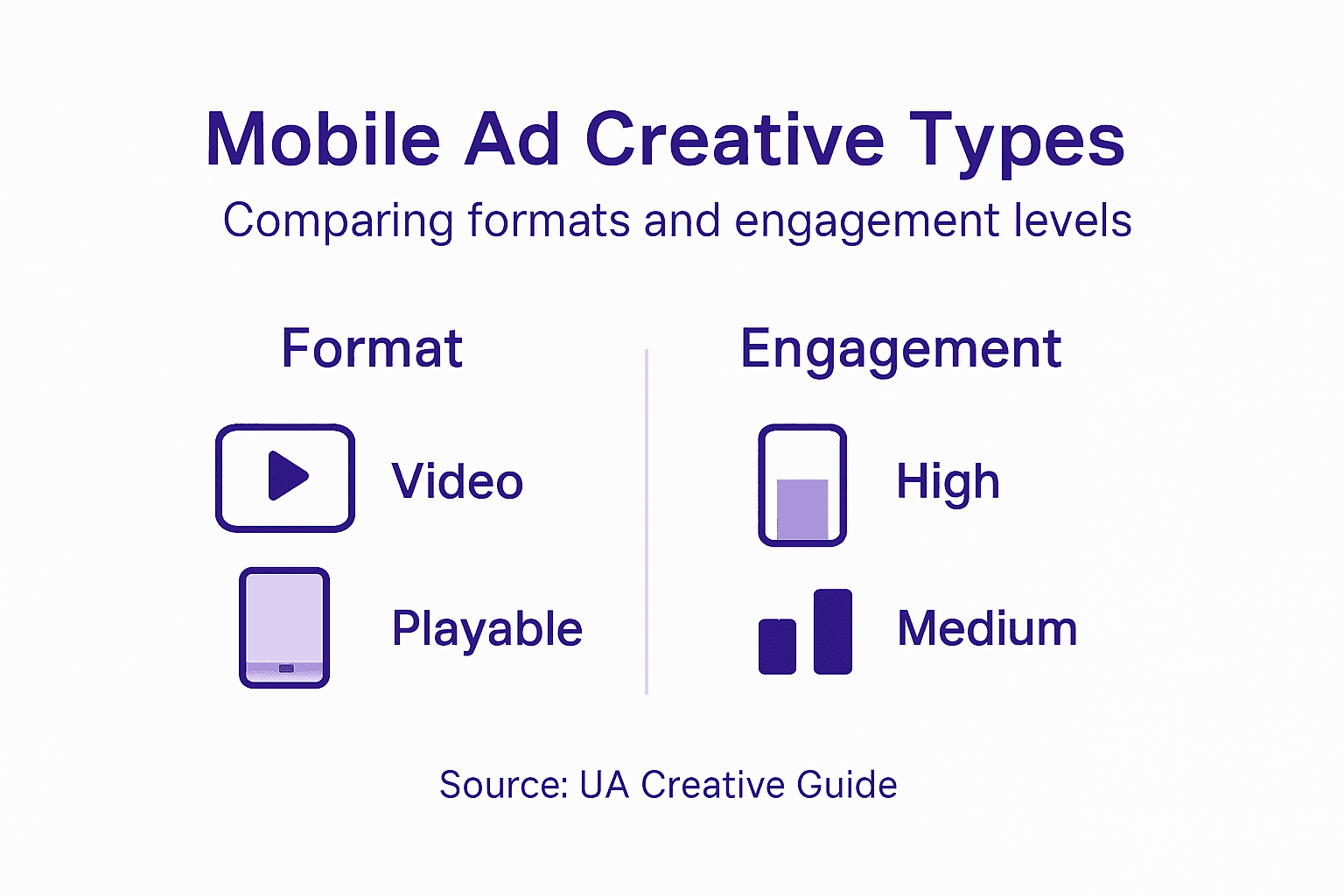
Video creatives showcase gameplay in motion. They tell a story—a player solving a puzzle, defeating an enemy, or unlocking rewards. Videos drive high engagement because they demonstrate actual gameplay rather than promising it. Most run 15-30 seconds, designed for silent autoplay on social feeds where sound isn’t guaranteed.
Playable creatives invite users into a functional mini-game. Rather than watching gameplay, users interact with it directly. This hands-on experience deepens emotional connection and builds confidence in the actual game before download. Playable ads and rich media help deepen player engagement significantly.
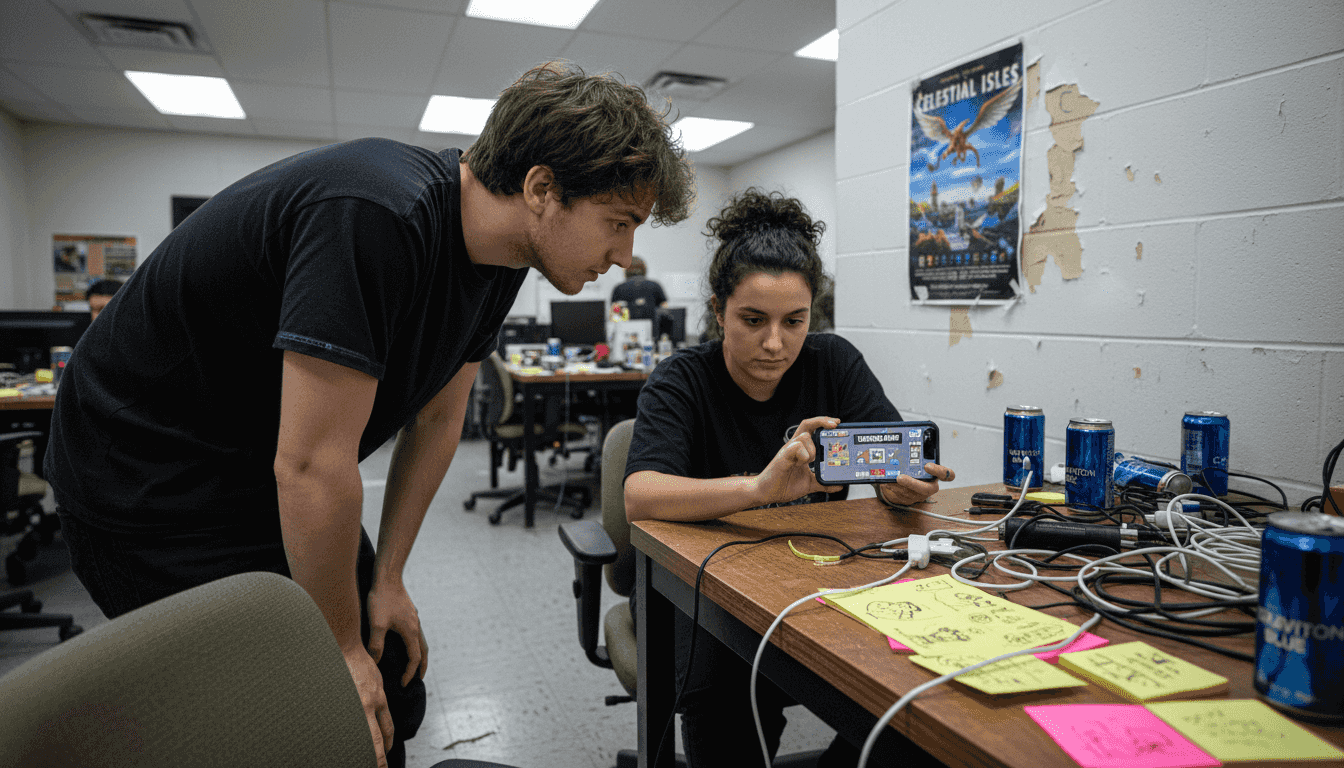
Banner creatives remain the workhorse of mobile advertising. Static images or minimal animations, banners provide broad visibility at lower cost. They’re less engaging than video or playable formats, but their efficiency at scale makes them valuable for awareness campaigns.
Native and audio creatives blend seamlessly into the gaming environment. Native ads match the visual style of the platform itself, whilst audio ads deliver brief, punchy messaging for high recall during gameplay sessions.
Each format serves distinct purposes:
- Video creatives – Narrative-driven engagement, demonstrating core gameplay loops
- Playables – Immersive trials that convert high-intent users to installs
- Banners – Cost-effective reach and brand awareness building
- Native ads – Contextual fit, minimal disruption to user experience
- Audio ads – Brief recalls, perfect for complementing visual elements
The highest-performing campaigns often combine multiple creative types, using A/B testing across formats to optimise cost-per-install and user retention outcomes.
Your UA budget determines which formats to prioritise. Premium budgets test all types; tighter budgets focus on playables and videos, which historically deliver the best return on ad spend in mobile gaming.
Professional tip: Match your creative format to player intent—use playables for decision-stage users considering the download, videos for awareness-stage discovery, and banners for retargeting lapsed players.
Here is a comparison of major creative types used in mobile game advertising and their strategic advantages:
| Creative Type | Engagement Level | Production Cost | Best Use Case |
|---|---|---|---|
| Playable | Very high, interactive | Highest | Converting high-intent users |
| Video | High, narrative-driven | Moderate | Driving awareness and discovery |
| Banner | Moderate, broad reach | Lowest | Retargeting and brand recognition |
| Native/Audio | Contextual, seamless | Low to moderate | Minimising user disruption |
How Creative Quality Drives User Acquisition
Quality creatives separate successful campaigns from wasted budgets. In a market saturated with thousands of ads, only the most compelling creatives break through the noise and convert viewers into installers.
High-quality creatives deliver measurable results. They cut through ad saturation by combining visual appeal with strategic messaging tailored to specific platforms. Android and iOS users respond differently—effective campaigns recognise these nuances and adapt accordingly.
The science backs this up. Effective creatives trigger psychological drivers such as curiosity and competition within just 2-3 seconds of viewing. If your creative doesn’t hook users in that window, they scroll past. That’s the reality of mobile advertising.
Quality matters more than volume. A single well-crafted creative consistently outperforms a dozen mediocre ones. Users remember emotionally resonant ads far longer than generic visuals, leading to higher recall, stronger intent, and ultimately more installs.
Key benefits of investing in quality creatives:
- Higher engagement rates—users interact rather than ignore
- Better ad recall—brands stick in player memory longer
- Improved conversion—stronger emotional connection drives downloads
- Reduced fatigue—quality creatives maintain performance over time
- Lower cost-per-install—efficiency improves with better creative resonance
Creative fatigue kills campaigns. Users see the same ad repeatedly and stop engaging. Quality creatives paired with strategic testing maintain relevance. Each iteration learns what resonates, adjusting messaging and visuals based on real user behaviour.
Investment in quality creatives leads to higher engagement, better ad recall, and ultimately more installs and retention compared to mass-produced low-quality ads.
Tight budgets often tempt studios toward cheaper, generic creatives. This backfires. Low-quality ads require higher spend to generate the same number of installs, destroying ROI. Your budget stretches further when creatives genuinely compel action.
Testing separates amateurs from professionals. Continual iteration addressing fatigue and user response changes keeps campaigns fresh and effective throughout their lifecycle.
Professional tip: Allocate 15-20% of your UA budget specifically to creative development and testing—this investment typically returns 3-5x through improved conversion rates and lower cost-per-install metrics.
Practical Implications: Costs, Fatigue, and Risks
Creative quality demands investment. Understanding the financial realities, fatigue cycles, and risk mitigation strategies separates sustainable campaigns from ones that crash spectacularly.
Production costs escalate quickly. Playable ads, whilst delivering the most cost-effective installs for gaming apps, are substantially more expensive and complex to produce than static banners. A single high-quality playable can cost £2,000-£8,000 depending on complexity, whilst a banner might run £500-£1,500. Video creatives sit somewhere in between.
This is where no-code solutions become invaluable. Traditional playable ad development requires developer resources, long timelines, and budget constraints that crush smaller studios. No-code platforms eliminate these barriers, allowing teams to build quality creatives without draining engineering capacity or blowing budgets.
Creative fatigue destroys campaigns systematically. Fatigue in mobile game advertising sets in within 5-7 days on platforms like TikTok, significantly impacting return on ad spend. Users stop engaging when they’ve seen the same creative repeatedly. Your ROAS plummets, and suddenly your profitable campaign turns unprofitable.
Countering fatigue requires continuous creative refreshment. This means variations in voiceovers, pacing, localisations, and visual treatments. Costly? Absolutely. Resource-intensive? Entirely. Necessary? Without question.
Key cost and fatigue challenges:
- High production complexity delays launch timelines
- Creative fatigue strikes within 5-7 days on high-volume platforms
- Refreshing creatives continuously demands ongoing investment
- Testing multiple variations increases production burden
- Localisation adds costs but significantly improves performance
Higher quality creatives often come with elevated costs but reduce risks associated with underperforming ads through improved user engagement metrics and ROI.
Why invest more upfront? Because underperforming creatives waste far more money through poor conversion rates than quality creatives cost to produce. One mediocre ad spending £5,000 generating 200 installs costs £25 per install. One quality creative spending £3,000 generating 300 installs costs £10 per install. The maths are ruthless.
Risk mitigation requires planning. Budget for creative development alongside your media spend. Plan your refresh schedule weeks ahead. Build creative pipelines so fatigue never catches you unprepared.
Professional tip: Allocate 25-30% of monthly budget to creative production and keep 2-3 backup variations ready to deploy immediately when fatigue signals appear—this buffer prevents costly campaign pauses.
To highlight business implications, here is a summary of core risks and mitigation strategies related to mobile ad creatives:
| Key Risk | Consequence | Mitigation Strategy |
|---|---|---|
| Creative fatigue | Lower engagement, wasted spend | Frequent creative refresh with variations |
| Poor localisation | Missed conversions in global markets | Allocate budget for translation and QA |
| Compliance breaches | Fines or ad bans | Enforce legal and platform review steps |
| Device incompatibility | Ads failing to display or lagging users | Mandatory testing on diverse real devices |
Avoiding Common Mistakes in Creative Production
Mistakes in creative production cost money, damage reputation, and alienate players. Understanding what goes wrong helps you build better creatives from the start.
The first critical error: ignoring legal compliance. Many studios rush creatives to market without considering FTC regulations, COPPA requirements for child-directed games, or platform-specific policies. Ethical advertising and regulatory compliance aren’t optional extras—they’re foundational requirements. Violations result in account suspensions, fines, and permanent platform bans.
Another widespread mistake: over-commercialising ads. Jamming too much product placement, aggressive sales language, or intrusive brand messaging into creatives creates negative player experiences. Players came to play games, not be bombarded with marketing. Ads that feel too salesy get ignored, reported, or actively blocked.
Common production mistakes include:
- Neglecting accessibility standards for colour contrast, captions, or audio descriptions
- Creating creatives without testing on actual devices and screen sizes
- Ignoring platform-specific technical requirements and specifications
- Skipping localisation testing for international audiences
- Failing to respect gaming context and player expectations
- Producing creatives without legal review from compliance teams
Accessibility often gets overlooked entirely. Deaf players need captions. Colour-blind players need sufficient contrast. Players with motor impairments need larger touch targets. Building accessibility into creatives from day one costs less than retrofitting later.
Creatives that respect the gaming context and avoid alienating players preserve brand reputation and player trust, preventing costly backlash and regulatory violations.
Testing represents another critical gap. Creatives developed on high-resolution desktop monitors often render poorly on mid-range Android devices. A beautiful creative that crashes, lags, or displays incorrectly wastes your entire budget. Test on actual devices before launch.
Workflow mistakes damage quality too. Unclear approval processes, missing stakeholder reviews, or skipped QA checks introduce errors late in production when fixes cost most. Establish clear creative approval workflows where compliance, marketing, and product teams sign off before launch.
Professional tip: Create a pre-launch checklist covering legal compliance, accessibility standards, device testing, and localisation review—run every creative through it before spending a single pound on media.
Transform Your Mobile Game Ads with PlayableMaker
The article highlights a crucial challenge for mobile game marketers: creating high-quality, engaging creatives quickly without overwhelming budgets or developer resources. If you have felt the pressure of creative fatigue, expensive production costs, or struggled to build interactive ads that truly capture player attention and drive installs then you are not alone. The need for cost-effective, no-code solutions to build playable ads that resonate with target audiences is clear.
At PlayableMaker we understand these pain points intimately. Our platform empowers you to build playable and interactive ads fast without the usual complexity or cost. Say goodbye to long development cycles and resource drain by harnessing our intuitive no-code tools designed for marketers and studios alike. Whether you want to test multiple creative variations swiftly or launch immersive ad experiences that stand out on any device, PlayableMaker supports your UA strategy with efficiency and ease.
Discover how to overcome creative production barriers by exploring our offerings in the Uncategorized Archives – playablemaker.com. Ready to take command of your mobile game advertising success today Visit PlayableMaker and start building compelling ads that convert now.
Frequently Asked Questions
What are the key components of effective mobile game creatives?
Effective mobile game creatives include video assets, interactive elements, static imagery, concise copy and messaging, and visual effects. These elements work together to engage players and drive action within the gaming context.
Why is the quality of creatives important in mobile game advertising?
Quality creatives are crucial as they cut through the saturation of ads, delivering higher engagement rates and better conversion. Compelling visuals and strategic messaging can foster emotional connections, leading to increased installs and player loyalty.
How do different types of creatives serve varied user acquisition goals?
Different creative types, such as videos, playables, and banners, cater to specific objectives. Videos showcase gameplay to drive awareness, playables offer hands-on experiences for high-intent users, while banners provide cost-effective reach for brand recognition.
What are the risks associated with poor creative production?
Poor creative production can lead to wasted budgets, damaged reputation, and missed player engagement. Common risks include failing to meet legal compliance, neglecting accessibility standards, and creating creatives that do not resonate with the gaming context or player expectations.
Recommended
- 2025 SocialPeta & Newsbreak Mobile Game Report: 9M+ Monthly Advertisers & the Rise of Weekly Creative Iteration – playablemaker.com 2025 SocialPeta & Newsbreak Mobile Game Report: 9M+ Monthly Advertisers & the Rise of Weekly Creative Iteration
- 7 Creative Ad Concepts for Mobile Game User Acquisition – playablemaker.com 7 Creative Ad Concepts for Mobile Game User Acquisition
- Concept of Creativity in Advertising: Complete Guide – playablemaker.com Concept of Creativity in Advertising: Complete Guide
- Creative Director Description: Leading Mobile Game Ads – playablemaker.com Creative Director Description: Leading Mobile Game Ads