User retention shapes which mobile games thrive or fade away. Many believe downloads are the most important sign of a successful game but acquiring a new user can cost five times more than keeping an existing player. The big surprise is that true victories in mobile gaming rarely come from getting noticed in the app store but from mastering the art of keeping players coming back for more.
Table of Contents
- Defining User Retention: Basic Concepts
- The Importance Of User Retention In Mobile Gaming
- How User Retention Works: Mechanisms And Strategies
- Key Metrics For Measuring User Retention
- Real-World Examples Of Effective User Retention
Quick Summary
| Takeaway | Explanation |
|---|---|
| User retention tracks returning users. | It measures the percentage of users who continue engaging with a mobile game after their first interaction. |
| High retention is economically advantageous. | Retaining users is cheaper than acquiring new ones, directly influencing long-term revenue and sustainability. |
| Focus on intrinsic motivations. | Psychological mechanisms like achievement and social connection enhance engagement and encourage repeated interactions. |
| Implement regular content updates. | Frequent updates keep the game fresh, maintaining user interest and enhancing the gaming experience. |
| Utilise advanced metrics for retention. | Employ sophisticated tracking to identify user behaviour patterns and tailor strategies for improvement. |
Defining User Retention: Basic Concepts
User retention represents the percentage of customers or users who continue engaging with a product, service, or platform over a specific time period. In the mobile gaming industry, retention is a critical metric that measures how effectively an application maintains user interest and encourages ongoing interaction.
The Core Definition of User Retention
At its fundamental level, user retention tracks the proportion of users who return to an application after their initial interaction. For mobile game developers, this means understanding how many players come back to play the game multiple times following their first download and installation.
Retention can be measured through various timeframes, such as:
- Daily retention (how many users return within 24 hours)
- Weekly retention (percentage of users returning within 7 days)
- Monthly retention (users who continue engaging after 30 days)
Why User Retention Matters
Understanding user retention goes beyond simple numerical tracking. It provides insights into user experience, game design effectiveness, and potential areas for improvement. Learn more about optimising user engagement in mobile gaming to enhance your game’s long-term success.
Successful mobile games maintain high retention rates by consistently delivering engaging gameplay, introducing regular updates, providing compelling rewards, and creating an immersive experience that keeps players returning. According to research published in digital health intervention studies, retention rates directly correlate with a product’s perceived value and user satisfaction.
Key considerations for improving user retention include:
- Creating intuitive and enjoyable game mechanics
- Developing a progression system that feels rewarding
- Implementing regular content updates
- Offering personalised user experiences
- Maintaining responsive customer support
By focusing on these elements, mobile game developers can transform initial downloads into sustained, long-term user engagement.
To clarify the critical concepts and strategies related to user retention in mobile gaming, the following table outlines key retention strategies and their principal characteristics.
| Retention Strategy | Description | Example Applications |
|---|---|---|
| Intuitive Game Mechanics | Designing gameplay that is easy to learn yet progressively deep | Simple controls, gradual challenge |
| Reward Systems | Meaningful incentives and micro-rewards to keep users engaged | Daily rewards, variable achievements |
| Social & Competitive Elements | Facilitating player interaction and competition | Leaderboards, social features |
| Regular Content Updates | Releasing new content and updates to sustain interest | New levels, seasonal events |
| Personalised User Experience | Tailoring gameplay and content based on individual behaviour | Custom offers, adaptive progression |
| Responsive Customer Support | Offering assistance to resolve user issues and maintaining trust | In-app help, live chat support |
The Importance of User Retention in Mobile Gaming
User retention represents a fundamental metric for success in mobile gaming, serving as a critical indicator of an application’s overall performance, user satisfaction, and potential long-term profitability. Unlike initial downloads, which provide a momentary spike in user numbers, retention reveals the genuine appeal and engagement potential of a mobile game.
Economic Impact of User Retention
Retention directly influences a mobile game’s economic sustainability. Each returning user represents not just potential ongoing revenue, but also reduces the costly need for continuous user acquisition. Acquiring a new user can cost five times more than retaining an existing player, making retention strategies a cost-effective approach to maintaining game popularity.
The economic implications are substantial:
- Lower marketing expenditure for user reacquisition
- Higher lifetime value per player
- More predictable revenue streams
- Enhanced opportunities for in-app purchases
- Stronger community building
Measuring User Retention Effectiveness
Explore the latest mobile gaming industry trends to understand how top developers approach retention strategies. According to research utilizing advanced predictive models, sophisticated tracking methods now enable developers to anticipate player churn and implement targeted retention interventions.
Successful mobile games typically focus on creating compelling gameplay loops, consistent content updates, and personalised user experiences that encourage repeated engagement. This approach transforms a simple mobile game into an interactive ecosystem that players want to revisit.
Key strategies for improving retention include:
- Designing intuitive and progressively challenging game mechanics
- Implementing reward systems that feel meaningful
- Creating social and competitive elements
- Providing regular content updates
- Offering personalised gaming experiences
By prioritising user retention, mobile game developers can build sustainable, profitable games that maintain player interest far beyond the initial download.
How User Retention Works: Mechanisms and Strategies
User retention operates through complex psychological and technological mechanisms that encourage players to consistently return and engage with a mobile game. Understanding these intricate strategies helps developers create experiences that transcend simple entertainment and become integral parts of users’ digital interactions.
Psychological Engagement Mechanisms
At the core of user retention are psychological principles that trigger continuous player involvement. Games that successfully tap into intrinsic motivational drivers like achievement, social connection, and progression create compelling experiences that naturally encourage repeated engagement. Dopamine-driven reward systems play a crucial role, where players receive consistent micro-rewards that generate feelings of accomplishment and anticipation.
Learn innovative strategies for making mobile ads more engaging, which can significantly enhance user retention. According to research on user retention mechanisms, successful digital applications focus on reducing user friction and creating personalised, adaptive experiences.
Key psychological retention strategies include:
- Creating clear progression pathways
- Implementing variable reward schedules
- Establishing meaningful social interactions
- Generating a sense of personal investment
- Maintaining unpredictability and novelty
Technical Retention Strategies
Beyond psychological mechanisms, technical approaches enable precise user retention management. Advanced analytics platforms help developers track user behaviour, identify potential churn points, and develop targeted interventions. These technical strategies transform raw user data into actionable insights that can dramatically improve game engagement.
Critical technical retention approaches encompass:
- Implementing sophisticated user segmentation
- Developing personalised user experience algorithms
- Creating adaptive difficulty scaling
- Utilising machine learning predictive models
- Designing non-intrusive re-engagement notifications
By integrating psychological understanding with technological precision, mobile game developers can create retention strategies that feel natural, enjoyable, and genuinely compelling to players.
Key Metrics for Measuring User Retention
Measuring user retention requires a comprehensive approach that goes beyond simple numerical tracking. Mobile game developers must employ sophisticated metrics that provide nuanced insights into player engagement, satisfaction, and long-term potential. Understanding these metrics enables precise strategic interventions that can significantly improve game performance.
Fundamental Retention Metrics
Retention metrics offer developers a granular view of how players interact with their mobile game over time. The most critical metrics track user behaviour across different temporal dimensions, revealing patterns of engagement and potential areas for improvement.
Explore advanced strategies for understanding advertising performance to complement your retention analysis. According to research on user engagement indicators, effective retention measurement involves calculating the proportion of initial users who remain active within specific timeframes.
Key fundamental retention metrics include:
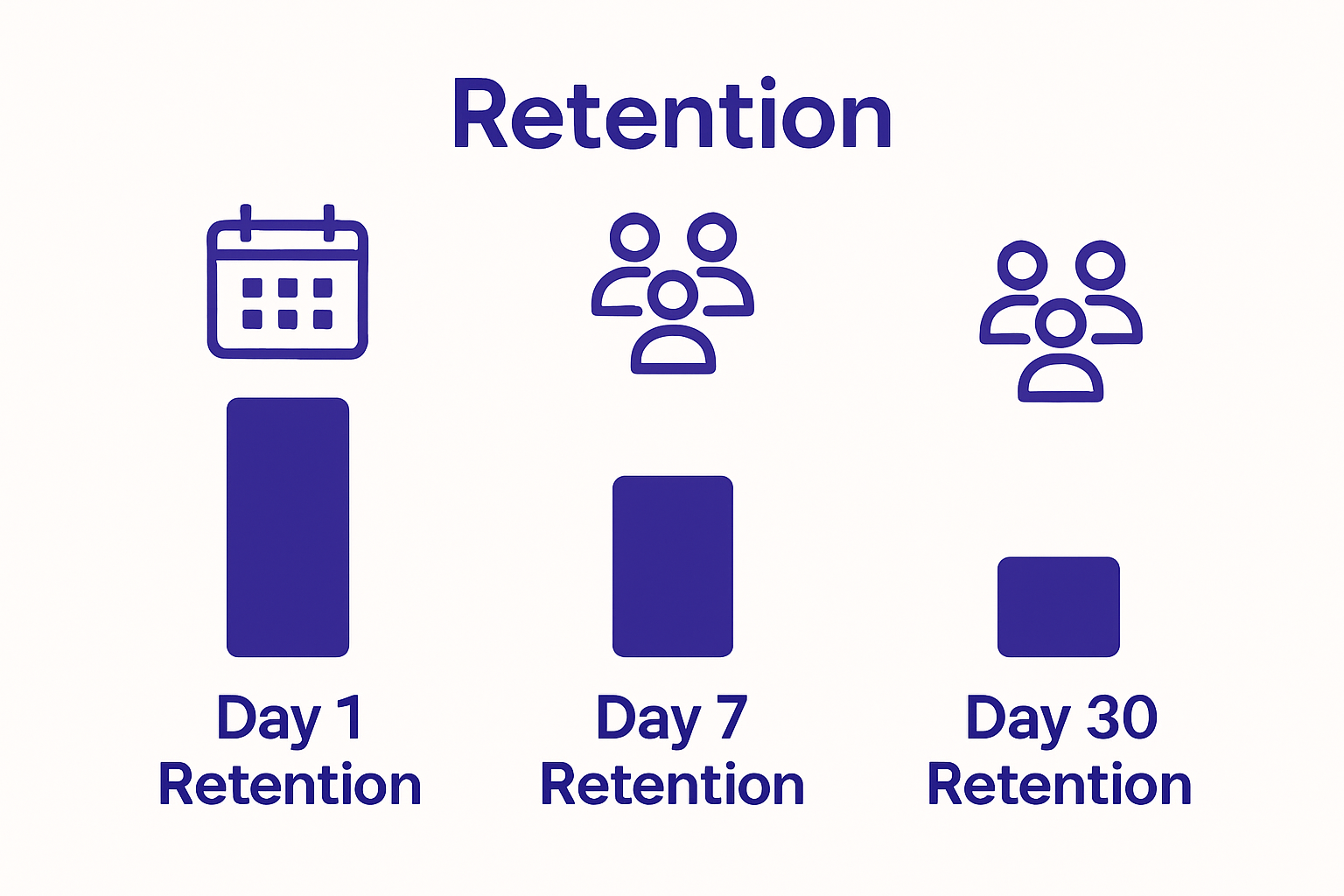
- Day 1 retention (users active 24 hours after installation)
- Day 7 retention (users active one week after installation)
- Day 30 retention (users active one month after installation)
- Churn rate (percentage of users who stop using the game)
- Lifetime value per user
Advanced Engagement Indicators
Beyond basic retention rates, advanced metrics provide deeper insights into player behaviour and game health. These sophisticated indicators help developers understand not just whether users return, but how they interact with the game and what drives their continued engagement.
Comprehensive engagement metrics encompass:
- Average session duration
- Frequency of gameplay sessions
- In-game progression rate
- Social interaction metrics
- Monetisation conversion rates
By systematically tracking these metrics, mobile game developers can create data-driven strategies that enhance user experience, reduce player churn, and build more compelling game environments.
The following table provides a concise overview of the fundamental metrics and indicators used to measure user retention in mobile games and what each signifies.
| Metric | Timeframe/Type | Significance |
|---|---|---|
| Day 1 Retention | 24 hours after install | Early indicator of first impressions |
| Day 7 Retention | One week after install | Reflects medium-term engagement |
| Day 30 Retention | One month after install | Indicates long-term commitment |
| Churn Rate | Ongoing (percentage of drop-offs) | Measures how many users stop playing |
| Lifetime Value per User | Ongoing (average per user) | Predicts revenue generated by each user |
| Average Session Duration | Per play session | Shows depth of engagement |
| Gameplay Session Frequency | Over a chosen period | Measures how often users return to play |

Real-World Examples of Effective User Retention
Successful user retention strategies transcend theoretical concepts, demonstrating tangible results across various digital platforms. Mobile game developers can learn invaluable lessons from strategic approaches that transform casual users into dedicated players.
Mobile Gaming Success Stories
Leading mobile game developers have implemented sophisticated retention strategies that dramatically improve user engagement. Titles like Clash of Clans and Pokémon GO exemplify how innovative game design and continuous content updates can maintain player interest over extended periods.
Discover how artificial intelligence is transforming mobile game marketing and learn from cutting-edge retention techniques. According to research examining digital intervention programs, successful platforms maintain user engagement through strategic, data-driven approaches.
Key characteristics of successful retention strategies include:
- Regular content updates
- Dynamic reward mechanisms
- Personalised user experiences
- Community engagement features
- Adaptive difficulty scaling
Cross-Industry Retention Innovations
Beyond mobile gaming, other digital platforms provide compelling examples of effective user retention. Educational technology platforms, healthcare applications, and productivity tools demonstrate how understanding user behaviour can create sustainable engagement.
Innovative retention approaches across industries reveal common strategies:
- Creating meaningful user progression pathways
- Implementing intelligent recommendation systems
- Developing responsive customer support
- Offering tangible user value
- Maintaining transparent communication
These real-world examples illustrate that successful user retention is not about manipulating users, but about creating genuinely compelling experiences that address user needs and expectations. By studying these approaches, mobile game developers can design more engaging, sustainable digital experiences.
Unlock Higher User Retention with Effortless Playable Ads
You know that keeping users engaged is no simple task. The article made it clear that user retention depends on intuitive experiences, ongoing rewards and personalised engagement. Yet, many studios struggle because building interactive ad experiences eats up time and budget. This challenge can turn retention goals into costly headaches.
What if you could create high-impact playable ads without any coding or big investments? With PlayableMaker, anyone can quickly design engaging interactive ads proven to boost user retention and long-term value. Experience a solution crafted for rapid development that fits your resources. Start today on PlayableMaker’s main platform and see the difference. Take charge of your user retention strategy now and deliver rewarding game experiences from the very first ad.
Frequently Asked Questions
What is user retention in mobile gaming?
User retention in mobile gaming is the percentage of players who continue to engage with a game after their initial download and interaction over a specified time period, such as daily, weekly, or monthly.
Why is user retention important for mobile games?
User retention is crucial because it indicates user satisfaction, engagement, and the overall effectiveness of a game in maintaining player interest. High retention rates can lead to increased revenue and reduced marketing costs associated with acquiring new users.
How can developers improve user retention?
Developers can improve user retention by creating engaging gameplay, implementing regular content updates, offering personalised experiences, and maintaining responsive customer support to enhance user satisfaction and loyalty.
What metrics are used to measure user retention?
Key metrics for measuring user retention include Day 1 retention (users active after one day), Day 7 retention, Day 30 retention, churn rate, and lifetime value per user. These metrics help gauge user engagement and the effectiveness of retention strategies.
Recommended
- Understanding What is User Acquisition in Mobile Gaming
- Understanding What is Ad Frequency in Mobile Marketing
- What is Mobile Attribution? Understanding Its Importance
- What is Ad Targeting? Understanding Its Importance and Mechanics
- How to Increase Website Engagement in 2025