
Many mobile game marketers assume ad design is purely about creating visually appealing graphics. However, the ad design process for playable ads is a sophisticated workflow that combines creative strategy, technical optimisation, and continuous performance tracking. This article walks you through each stage of designing effective playable ads that drive genuine user acquisition and deliver measurable return on investment for mobile gaming campaigns.
Table of Contents
- Understanding The Ad Design Process
- Core Components Of Effective Playable Ad Design
- Optimising And Iterating To Maximise Ad Performance
- Technical Considerations And Compliance In Playable Ad Design
- Discover Tools And Insights To Streamline Your Playable Ad Design
Key takeaways
| Point | Details |
|---|---|
| Structured process matters | Ad design involves concept, prototyping, technical build, testing, and optimisation stages that work together |
| Technical optimisation drives conversions | MRAID compliance and fast loading times (under 2 seconds) increase conversion rates by 50% |
| Creative focus on onboarding | Tutorial and onboarding experience is the most critical creative element for engagement |
| Continuous improvement essential | Regular A/B testing and performance tracking improve conversion rates by 15-25% |
| Core gameplay showcase | Playable ads should demonstrate the app’s main gameplay within 10 seconds to reduce uninstall rates |
Understanding the ad design process
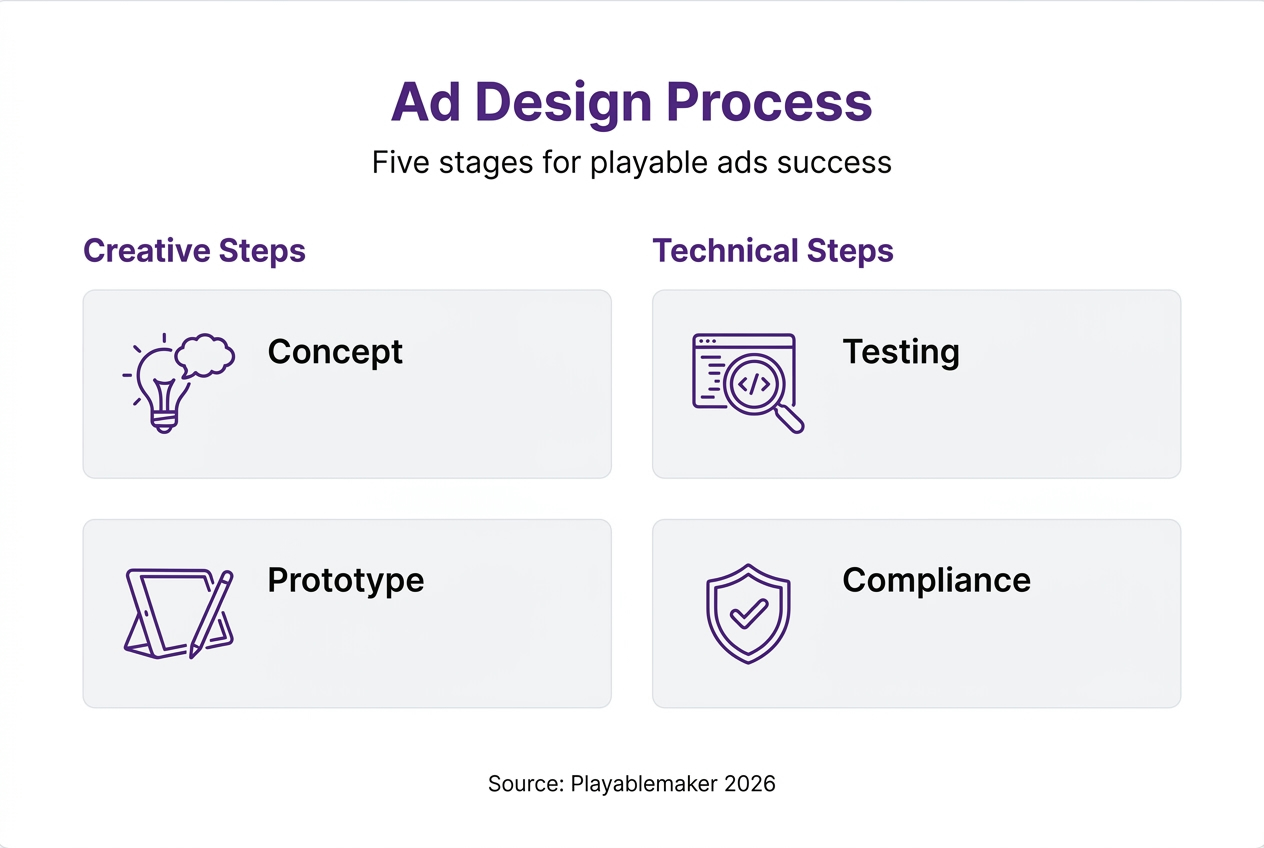
The ad design process for playable ads extends far beyond creating attractive visuals. It encompasses five interconnected stages: concept development, prototyping, technical build, testing, and ongoing optimisation. Each stage plays a vital role in creating interactive experiences that convert users effectively.
MRAID compliance forms the technical foundation of successful playable ads. This standard ensures your ads load quickly and function seamlessly across various devices and platforms. Ads that load within 2 seconds achieve 50% higher conversion rates compared to slower loading alternatives, making technical optimisation as crucial as creative excellence.
Playable ads differ fundamentally from static display advertisements. They create interactive experiences that allow potential users to sample your game’s core mechanics before installing. This hands on approach to introduction to playable ads transforms passive viewers into engaged participants who understand your game’s value proposition immediately.
The design process focuses on these key priorities:
- Creating authentic gameplay samples that reflect your app’s actual experience
- Optimising file sizes and load times for maximum device compatibility
- Designing intuitive interfaces that require minimal instruction
- Establishing clear conversion paths from play to install
- Implementing performance tracking from the initial concept stage
Your playable ad should mirror your app’s core gameplay to manage user expectations accurately. When the playable experience matches the actual app, you dramatically reduce post install uninstall rates and improve long term retention metrics.
Core components of effective playable ad design
Successful playable ads balance interactivity with simplicity. Your ad needs enough gameplay depth to showcase your game’s unique features whilst remaining straightforward enough for users to grasp within seconds. This balance determines whether users engage meaningfully or scroll past your advertisement.
Tutorial and onboarding experience represents the most critical creative element of your playable ad. Users need immediate clarity about what actions they should take and why those actions matter. Guide users with one or two instructional overlays that explain controls without overwhelming them.
Follow these design principles for maximum effectiveness:
- Demonstrate core gameplay mechanics within the first 10 seconds of interaction
- Limit tutorial elements to essential instructions only, avoiding information overload
- Create clear visual feedback for every user action to maintain engagement
- Design fail states that encourage retry rather than abandonment
- Ensure the playable experience authentically represents your actual app
Playable ads should last approximately 30 seconds, with an acceptable range between 10 and 40 seconds. This duration allows users sufficient time to understand your game’s mechanics whilst maintaining their attention span. Shorter experiences may feel incomplete, whilst longer ones risk user drop off before conversion.

Pro Tip: Avoid creating playable ads that rely entirely on single click interactions. True interactivity requires meaningful player choices that demonstrate your game’s strategic depth and entertainment value.
Match your playable ad aesthetic to your actual app interface. Consistency builds trust and sets accurate expectations. When users install your app after playing your advertisement, they should immediately recognise familiar visual elements and gameplay patterns. This continuity significantly impacts day one retention rates.
Incorporate effective playable ad techniques that highlight your game’s unique selling points. Whether your game excels in puzzle mechanics, strategic combat, or creative building, your playable ad should feature these distinctive elements prominently. Generic gameplay demonstrations fail to differentiate your app from competitors.
Optimising and iterating to maximise ad performance
Creating your initial playable ad marks the beginning of an ongoing optimisation journey. Continuous monitoring and A/B testing form the backbone of sustained advertising success. Regular creative updates based on performance data improve conversion rates by 15 to 25% compared to static campaigns that never evolve.
Track these essential performance indicators:
- Engagement rate: percentage of users who interact with your playable ad
- Conversion rate: proportion of engaged users who complete the install
- Cost per install: total advertising spend divided by successful installations
- Day seven retention: percentage of installed users still active after one week
- Return on advertising spend: revenue generated relative to campaign costs
A/B testing reveals which creative elements resonate most strongly with your target audience. Test variables systematically rather than changing multiple elements simultaneously. Focus on high impact variables like tutorial clarity, gameplay difficulty, and call to action placement.
| Metric | With Continuous Optimisation | Without Optimisation | Impact |
|---|---|---|---|
| Conversion Rate | 8-12% | 4-6% | +100% improvement |
| Cost Per Install | £2.50-£3.50 | £5.00-£7.00 | 50% cost reduction |
| Day 7 Retention | 18-25% | 10-15% | +60% retention boost |
| ROAS | 250-350% | 120-180% | Double return |
Campaigns with well defined interactive objectives boost brand recommendation by 21% and purchase intent by 9%. Clear objectives guide users through your playable experience with purpose, transforming casual interactions into meaningful engagement that drives conversions.
Implement a structured playable ad workflow guide that establishes regular review cycles. Schedule weekly performance analyses during campaign launches, then transition to fortnightly reviews once performance stabilises. This cadence allows you to identify trends without overreacting to daily fluctuations.
Pro Tip: Avoid overcomplicating your A/B testing strategy with too many simultaneous variables. Test one significant change at a time, allow sufficient sample size for statistical significance, then implement winning variations before testing the next element.
Leverage successful creative elements across multiple campaigns through strategic repurposing of ad creatives. When you identify high performing gameplay mechanics or visual styles, adapt these elements for different audience segments and geographic markets. This approach maximises your creative investment whilst maintaining fresh campaign performance.
Technical considerations and compliance in playable ad design
Technical excellence forms the invisible foundation of playable ad success. Users never consciously appreciate fast loading times or seamless device compatibility, but they immediately notice when technical elements fail. Poor technical performance damages user experience and harms brand perception before users even sample your gameplay.
MRAID standards ensure your playable ads function consistently across diverse devices, operating systems, and advertising platforms. This standardisation eliminates compatibility issues that previously plagued mobile advertising. Implementing MRAID compliance from your initial design phase prevents costly technical revisions later in your campaign lifecycle.
Prioritise these technical optimisation strategies:
- Compress assets aggressively without sacrificing visual quality
- Implement lazy loading for non essential elements
- Test thoroughly across multiple device types and screen sizes
- Optimise code efficiency to reduce processing demands
- Monitor actual load times in live campaign environments
File size management directly impacts load speed and user experience. Aim for total file sizes under 5MB to ensure rapid loading across various network conditions. Users on slower mobile connections should experience equivalent performance to those on high speed networks. Every additional second of load time correlates with measurable increases in abandonment rates.
Device compatibility testing prevents embarrassing failures that waste advertising spend. Test your playable ads on both premium flagship devices and budget models that represent significant market share. Screen size variations, processor speeds, and memory limitations all influence how users experience your advertisement.
Pro Tip: Prioritise MRAID compliance during your initial technical build rather than treating it as an afterthought. Retrofitting compliance into completed playable ads requires substantially more development time and often compromises creative vision.
Collaborate closely between creative and technical teams throughout the design process. Technical constraints shape creative possibilities, whilst creative ambitions push technical innovation. This collaboration produces playable ads that balance artistic vision with technical performance. Refer to comprehensive mobile game ad best practices to align both disciplines effectively.
Monitor technical performance metrics alongside creative engagement data. Correlate load times with conversion rates to identify technical bottlenecks that limit campaign effectiveness. Small technical improvements often yield disproportionate returns on conversion performance, making technical optimisation a high value investment.
Discover tools and insights to streamline your playable ad design
Playablemaker provides drag and drop tools specifically designed for mobile game marketers who need professional playable ads without extensive development resources. Our no code platform enables you to create, test, and deploy interactive advertisements quickly whilst maintaining technical excellence and creative control.
Explore our comprehensive guide to playable ads explained to understand how interactive advertising transforms user acquisition strategies. Our playable builder drag and drop creator eliminates technical barriers that traditionally limited playable ad creation to large studios with dedicated development teams.
Discover why playable ads succeed through psychological engagement principles that drive higher conversion rates. Our platform incorporates these evidence based strategies into every template and workflow, ensuring your campaigns benefit from proven best practices automatically.
Frequently asked questions
What is the typical duration for playable ads?
Playable ads typically last around 30 seconds, providing sufficient time for users to understand core gameplay without losing attention. The acceptable range extends from 10 to 40 seconds depending on game complexity. Shorter durations work well for simple mechanics, whilst more strategic games benefit from longer demonstrations.
How does onboarding impact playable ad effectiveness?
Clear tutorial elements and intuitive onboarding dramatically boost engagement and conversion rates in playable advertisements. Users need immediate understanding of controls and objectives to interact meaningfully. Well designed onboarding transforms confused viewers into engaged players who progress through your advertisement successfully.
Why is MRAID compliance important in ad design?
MRAID compliance ensures playable ads load quickly and function seamlessly across all devices and advertising platforms. This standardisation prevents technical failures that waste advertising spend and damage brand perception. Compliant ads achieve 50% higher conversion rates through faster loading times and consistent user experiences.
What are effective methods for optimising playable ads performance?
Regular A/B testing of creative elements and targeting parameters improves conversion rates by up to 25% compared to static campaigns. Focus testing efforts on high impact variables like tutorial clarity, gameplay difficulty, and call to action placement. Implement data driven creative updates based on performance metrics to maintain campaign effectiveness over time.
Recommended
- Playable Ad Trends 2025: Build Engaging Ads Without Coding – playablemaker.com Playable Ad Trends 2025: Build Engaging Ads Without Coding
- Master Effective Playable Ad Techniques for Mobile Gaming – playablemaker.com Master Effective Playable Ad Techniques for Mobile Gaming
- How to Make Engaging Game Ads for Mobile Success – playablemaker.com How to Make Engaging Game Ads for Mobile Success
- Master Effective Ad Creative Processes for Mobile Gaming – playablemaker.com Master Effective Ad Creative Processes for Mobile Gaming
- Simplifica si castiga: Campanii Google Ads eficiente