Most users have encountered a screen-filling pop-up just as they try to access fresh content, and many british consumers report these moments can be both engaging and annoying. The way interstitial advertisements capture attention is powerful—some formats achieve up to 30 percent higher conversion rates than standard banners. Understanding how these ads shape the digital experience helps you see why developers and marketers rely on them, and what it means for your next online interaction.
Table of Contents
- What Interstitial Advertising Means
- Interstitial Ad Formats Explained
- How Interstitial Ads Work
- Timing And Frequency Best Practices
- Policy And User Experience Risks
Key Takeaways
| Point | Details |
|---|---|
| Interstitial Ads Capture Attention | These full-screen advertisements increase engagement by interrupting user interaction during natural transition points. |
| Strategic Placement is Crucial | Effective ad placement during logical navigation moments enhances visibility and user experience. |
| Implement User-Friendly Mechanisms | Clear dismissal options and brief ad durations help maintain user satisfaction and prevent frustration. |
| Balance Monetisation and User Privacy | Marketers must navigate user privacy concerns and legal compliance to avoid negative brand associations. |
What Interstitial Advertising Means
An interstitial advertisement represents a full-screen digital marketing format designed to capture users’ attention during natural transition points in mobile applications or websites. Interstitial ads typically appear between content pages, occupying the entire screen and providing an immersive advertising experience that interrupts standard user navigation.
These advertisements differ significantly from traditional banner ads by commandeering the complete visual space, which allows for more engaging and dynamic content presentation. Unlike small embedded advertisements, interstitial ads create a momentary pause in user interaction, compelling viewers to engage with the promotional material before proceeding to their intended destination. Mobile game developers and application designers strategically position these ads during natural breaks in user experience, such as level transitions or loading screens.
The technical mechanics of interstitial advertising involve precise timing and user experience considerations. When triggered, these advertisements automatically display across the full screen, temporarily replacing the current page content. They typically include clear dismissal mechanisms, allowing users to close the ad after a mandatory viewing period, which ensures advertisers receive sufficient exposure while maintaining user autonomy.
Pro Tip: Strategic Placement: Position interstitial ads during natural app transition points to minimise user frustration and maximise potential engagement, such as between game levels or during content loading sequences.
Interstitial Ad Formats Explained
Interstitial advertisements encompass several distinctive formats designed to maximise user engagement across digital platforms. Full-screen advertising formats occupy the entire browser window, creating an immersive visual experience that demands immediate user attention. These ads strategically interrupt user journeys, appearing during natural transition points to ensure maximum visibility and interaction potential.
Mobile gaming platforms have developed sophisticated interstitial ad variations tailored to different user experiences. Interstitial ads in mobile apps typically manifest in several key formats:
- Reward-based Interstitials: Offer in-game benefits like extra lives or currency in exchange for watching the complete advertisement
- Mandatory Transition Interstitials: Appear during unavoidable app navigation moments, such as level completions or loading screens
- Opt-in Interstitials: Provide users voluntary engagement options with potential rewards for watching
- Contextual Interstitials: Dynamically matched to user behaviour and app content for enhanced relevance
The technical implementation of these ad formats requires careful user experience design. Successful interstitial advertisements include clear dismissal mechanisms, ensuring users maintain control over their interaction while providing advertisers sufficient exposure windows. Sophisticated mobile marketing strategies now prioritise non-intrusive ad placements that respect user autonomy while delivering compelling promotional content.
Pro Tip: Balanced Engagement: Design interstitial ads with user-friendly timing and clear exit options to maintain positive app experience and prevent user frustration.
Here is a comparison of interstitial ad formats and their typical business impacts:
| Format Type | User Experience Impact | Business Objective |
|---|---|---|
| Reward-based Interstitials | Increases retention | Boosts engagement and loyalty |
| Mandatory Transition | May cause irritation | Ensures high ad visibility |
| Opt-in Interstitials | Enhances sense of control | Builds user trust |
| Contextual Interstitials | Feels highly relevant | Improves conversion rates |
How Interstitial Ads Work
Interstitial advertisements operate through a sophisticated mechanism of digital interruption and engagement. Advertising navigation strategies involve strategically positioning full-screen advertisements during critical user transition moments, effectively capturing attention without permanently disrupting the user experience. These ads seamlessly integrate into digital platforms, appearing momentarily between content pages or application screens.
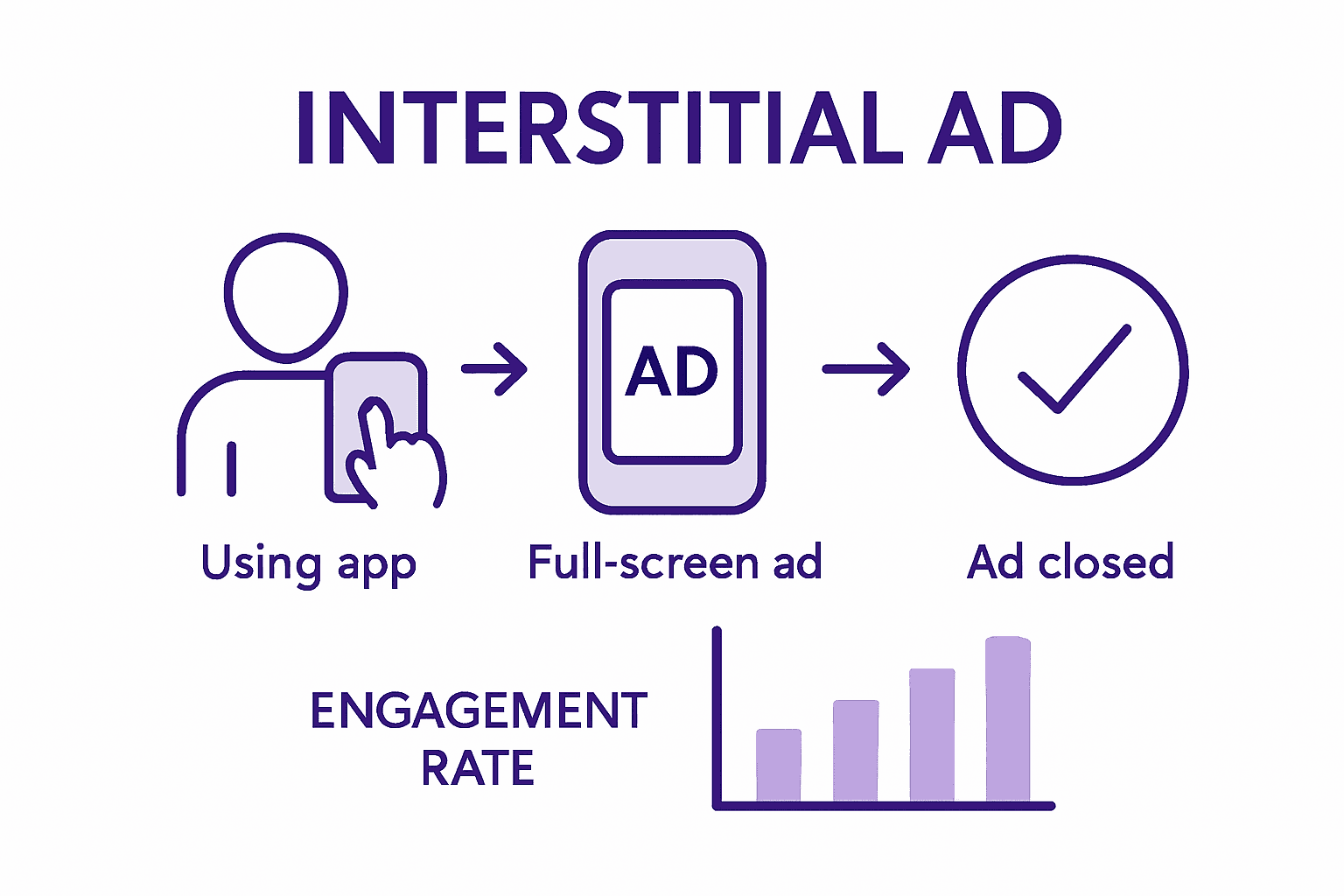
The technical implementation of interstitial ads follows a precise sequence of user interaction:
- Trigger Mechanism: Activated during natural navigation points
- Display Phase: Occupies entire screen interface
- Engagement Window: Provides predetermined interaction time
- Dismissal Option: Allows user to close and return to original content
- Redirection: Automatically transitions user to intended destination
Broadcast advertising techniques have significantly influenced digital interstitial strategies, particularly in managing brief promotional windows. Modern interstitial advertisements leverage advanced algorithmic placement, ensuring ads appear at moments of maximum receptivity without causing user frustration. The core philosophy involves creating a momentary yet compelling advertising experience that respects user autonomy while delivering marketing messages.

Successful interstitial ad implementation requires nuanced understanding of user behaviour and technological platforms. Mobile applications and websites must carefully calibrate ad frequency, duration, and placement to maintain a delicate balance between monetisation and user experience. Sophisticated tracking mechanisms allow marketers to analyse user interaction, engagement rates, and conversion potential in real-time.
Pro Tip: Precision Placement: Analyse user navigation patterns to identify optimal interstitial ad moments that feel natural and minimally invasive.
Timing And Frequency Best Practices
Optimising interstitial ad placement requires a strategic approach that balances user experience with marketing objectives. High-visibility advertising techniques demonstrate that full-screen advertisements can generate up to 30% higher conversion rates compared to traditional banner ads, highlighting the critical importance of precise timing and frequency management.
Successful interstitial ad implementation relies on several key strategic considerations:
- Natural Transition Points: Place ads during logical app or website navigation moments
- User Experience Priority: Limit frequency to prevent user frustration
- Context Relevance: Match ad content with user’s current interaction state
- Duration Management: Keep advertisement displays brief and optional
- Performance Tracking: Continuously analyse engagement and conversion metrics
The frequency of interstitial advertisements should follow a carefully calibrated approach. Mobile marketers must strike a delicate balance between monetisation objectives and user retention. Recommended best practices suggest displaying no more than one interstitial ad per user session, with strategic spacing between ad displays. This approach prevents user fatigue while maintaining advertising effectiveness.
Technical implementation demands granular understanding of user behaviour patterns. Advanced tracking mechanisms enable marketers to develop predictive models that identify optimal ad placement windows. Machine learning algorithms can now analyse user interaction data to determine precisely when an interstitial advertisement is most likely to generate positive engagement without causing user irritation.
Pro Tip: Adaptive Frequency: Implement dynamic ad frequency algorithms that adjust display rates based on individual user interaction patterns and historical engagement data.
Policy And User Experience Risks
Interstitial advertisements present complex challenges in balancing marketing objectives with user privacy and regulatory compliance. Web page interruption strategies frequently involve displaying preliminary content for regulatory purposes, such as age verification or cookie consent, which introduces significant user experience considerations.
The primary risks associated with interstitial advertising can be categorised into several critical domains:
- User Intrusion: Potential disruption of seamless digital navigation
- Privacy Concerns: Potential misuse of personal data collection mechanisms
- Consent Management: Ensuring transparent user agreements
- Performance Impact: Potential reduction in application or website engagement
- Legal Compliance: Meeting diverse international digital advertising regulations
Screen Interruption Dynamics reveal that while full-screen advertisements effectively capture attention, they are perceived as highly intrusive by most users. This perception can lead to negative brand associations and potentially higher user abandonment rates. Sophisticated marketers must therefore develop nuanced strategies that prioritise user consent and provide clear, immediate exit mechanisms.
This table summarises risks associated with interstitial advertising and possible mitigation strategies:
| Key Risk | Potential Consequence | Mitigation Strategy |
|---|---|---|
| User Intrusion | Increase in app abandonment | Use at natural breaks only |
| Privacy Concerns | Loss of user trust | Implement transparent data practices |
| Performance Impact | Slower app or site performance | Optimise ad loading and duration |
| Legal Compliance | Fines or regulatory action | Adhere to international ad standards |
Navigating the complex landscape of interstitial advertising requires a multifaceted approach that integrates technical implementation, legal compliance, and user experience design. Mobile marketers must develop adaptive frameworks that respect user autonomy while delivering targeted promotional content. This involves implementing intelligent algorithmic controls that dynamically adjust advertisement frequency, content relevance, and display duration based on sophisticated user interaction analysis.
Pro Tip: Consent Architecture: Design transparent, user-controlled consent mechanisms that provide clear information about data usage and offer granular opt-out options for interstitial advertisements.
Unlock Powerful Engagement with Easy-to-Build Playable Ads
Interstitial advertising demands strategic timing and user-friendly design to maximise engagement without frustrating your audience. If the challenge of creating immersive, budget-friendly ads that respect user experience resonates with you, PlayableMaker is your solution. We understand the need for quick development of interactive playable ads that do not drain your resources or require complex coding skills.
Explore how our no-code platform helps you build dynamic, full-screen ads that seamlessly fit into natural transition points as explained in interstitial ad strategies. Don’t let high production costs or limited developer time hold back your marketing campaigns. Visit Publishing Archives for expert insights on ad optimisation or get immediate access to our platform at https://app.playablemaker.com and start creating engaging playable ads today. Need guidance along the way Check out our Help Archives for support that keeps your projects moving forward without hassle.
Take control of your advertising impact now with PlayableMaker and experience ad creation that respects user attention and your budget.
Frequently Asked Questions
What are interstitial advertisements?
Interstitial advertisements are full-screen digital ads that capture users’ attention during natural transition points within mobile apps or websites, providing an immersive advertising experience that temporarily interrupts user navigation.
How do interstitial ads work?
Interstitial ads work by being triggered during key navigation moments, replacing the current screen with the ad for a brief period, after which users have the option to dismiss the ad and return to their original content.
What are the different types of interstitial ads?
The main types of interstitial ads include reward-based interstitials, mandatory transition interstitials, opt-in interstitials, and contextual interstitials, each designed to enhance user engagement in different ways.
What are the best practices for using interstitial ads?
Best practices for using interstitial ads include strategically placing them during natural transition points, limiting their frequency to prevent user frustration, ensuring content relevance, and providing clear dismissal options for a better user experience.
Recommended
- 8 Mobile Ad Best Practices for Successful Campaigns – playablemaker.com 8 Mobile Ad Best Practices for Successful Campaigns
- What is Mobile Attribution? Understanding Its Importance – playablemaker.com What is Mobile Attribution? Understanding Its Importance
- What Is an Ad Network? Understanding Ad Networks in Mobile Gaming – playablemaker.com What Is an Ad Network? Understanding Ad Networks in Mobile Gaming
- Understanding What is Ad Placement in Mobile Gaming – playablemaker.com Understanding What is Ad Placement in Mobile Gaming