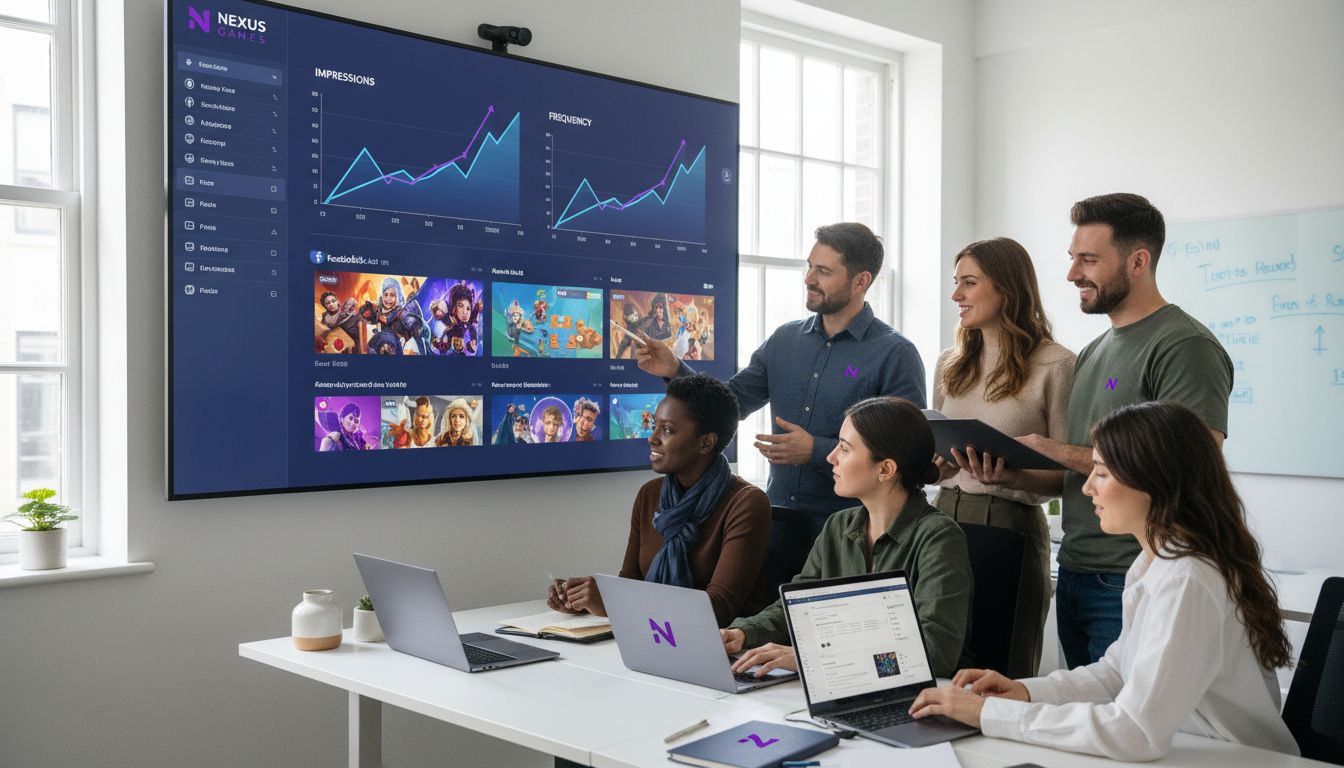
Overexposing audiences to the same Facebook ad is a common hazard for british mobile game marketers. Studies show that a frequency above 3 can quickly trigger ad fatigue, making each impression less effective and driving up costs. With advertising budgets under pressure and fierce competition for attention, understanding ad frequency is vital for anyone aiming to reach and engage players without waste. This guide reveals how measuring and managing frequency helps you find the right balance for better campaign results.
Table of Contents
- Defining Frequency In Facebook Ads Campaigns
- Types Of Frequency Metrics And Variations
- How Facebook Ad Frequency Is Calculated
- Impact Of Frequency On Campaign Performance
- Common Pitfalls And Frequency Management Strategies
Key Takeaways
| Point | Details |
|---|---|
| Understanding Ad Frequency | Ad frequency is calculated by dividing total impressions by reach, revealing how often an ad is viewed by unique users. |
| Impact on Campaign Performance | Optimal ad frequency varies; balancing visibility and engagement is critical to prevent ad fatigue and maintain user interest. |
| Frequency Management Strategies | Employ strategies such as audience segmentation and frequency capping to enhance ad effectiveness and minimise user annoyance. |
| Continuous Monitoring | Regularly track frequency metrics to make adjustments that ensure sustained user engagement and limit wasted advertising spend. |
Defining Frequency in Facebook Ads Campaigns
In the world of digital advertising, ad frequency represents a crucial metric that provides insight into how often your target audience encounters your advertisement. According to MetricHQ, ad frequency is calculated by dividing total impressions by reach, essentially revealing the average number of times a unique user views your advertisement.
Understanding ad frequency helps mobile game marketers gauge audience engagement and potential ad fatigue. As Bankable explains, frequency tells you precisely how many times each person sees your ads on average. This metric becomes particularly important when managing advertising campaigns, as repeatedly showing the same ad can lead to diminishing returns.
For mobile gaming user acquisition specialists, monitoring ad frequency allows for strategic campaign management. Key considerations include:
- Preventing audience ad fatigue
- Optimising advertising budget allocation
- Understanding audience receptiveness to specific creative assets
- Balancing reach with repetition
By carefully tracking and adjusting ad frequency, marketing professionals can ensure their Facebook advertising campaigns remain effective and efficiently targeted towards potential game users.
Types of Frequency Metrics and Variations
Ad frequency metrics offer nuanced insights into how users interact with digital advertisements across various platforms. MetricHQ highlights that the fundamental frequency calculation involves dividing total ad impressions by reach, providing a baseline understanding of audience exposure.
In mobile gaming marketing, several critical frequency variations emerge that help user acquisition specialists refine their advertising strategies. These variations include lifetime frequency (total ad views across an entire campaign), interval frequency (views within specific time periods), and unique user frequency (distinct users reached multiple times).
The primary frequency metric types can be categorised as follows:
- Gross Frequency: Total number of ad exposures, including repeated views
- Net Frequency: Number of unique user views
- Average Frequency: Mean number of times an individual sees an advertisement
- Effective Frequency: Optimal number of views required to generate desired marketing response
As Bankable notes, understanding these frequency variations allows marketers to strategically manage ad visibility, preventing audience fatigue while maintaining engagement. By carefully analysing these metrics, mobile game marketers can fine-tune their advertising approach, ensuring maximum impact without overwhelming potential users.
How Facebook Ad Frequency Is Calculated
Facebook ad frequency is a critical metric calculated through a straightforward yet powerful mathematical approach. MetricHQ explains that the fundamental calculation involves dividing total ad impressions by reach, which provides marketers with an average view count for their target audience.
To break down the calculation process, mobile gaming marketers need to understand two primary components: total impressions and unique reach. Impressions represent the total number of times an advertisement is displayed, while reach indicates the number of distinct users who have viewed the ad. By dividing total impressions by unique reach, marketers obtain the precise frequency metric that reveals how often individual users encounter their advertisement.
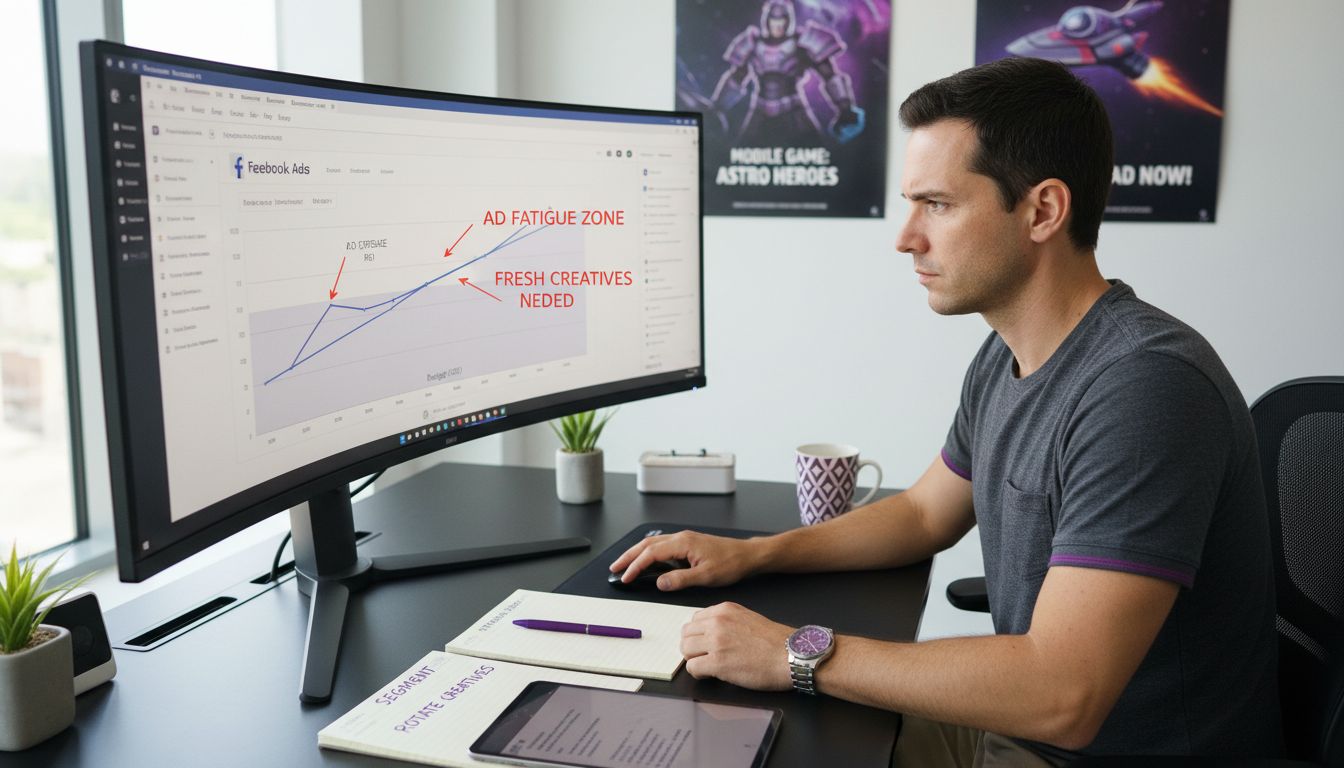
The calculation process can be outlined in these steps:
- Track total number of ad impressions across your campaign
- Determine unique user reach
- Divide total impressions by unique reach
- Interpret the resulting frequency number
As Bankable notes, this metric helps marketers understand audience exposure levels. For mobile game user acquisition specialists, monitoring this calculation enables strategic adjustments to prevent ad fatigue while ensuring sufficient visibility for potential game downloads.
To enhance your understanding of Facebook ad metrics, consider our guide to FB ad metrics for mobile gaming, which provides deeper insights into interpreting these crucial advertising measurements.
Impact of Frequency on Campaign Performance
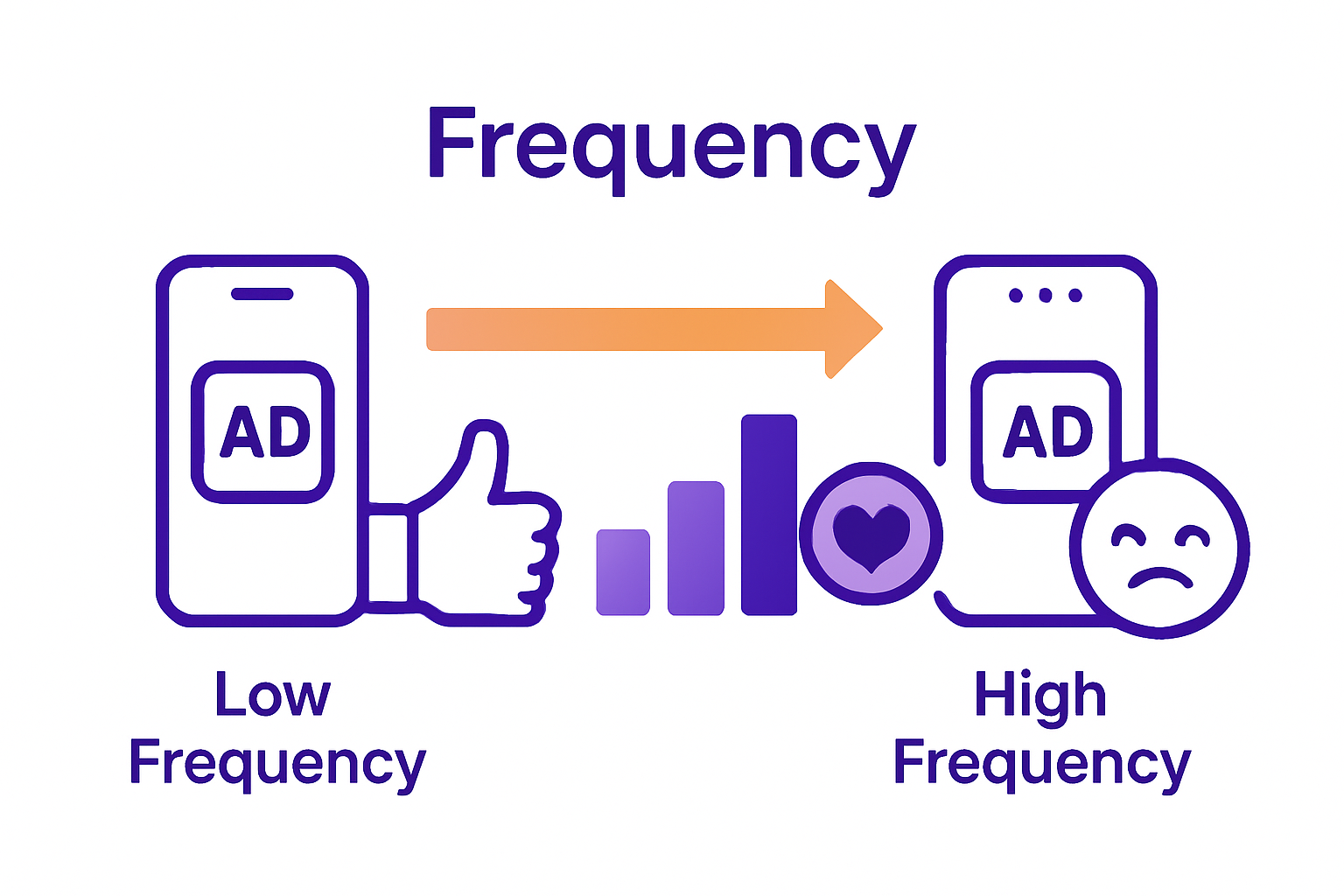
Ad frequency plays a pivotal role in determining the overall success and efficiency of mobile gaming marketing campaigns. While repeated exposure can reinforce brand messaging, excessive repetition risks alienating potential users through ad fatigue.
Mobile game marketers must strike a delicate balance between maintaining visibility and preventing audience burnout. Research suggests that optimal frequency varies across different audience segments, with some users requiring multiple exposures to engage, while others become disinterested after just a few ad views. Newsfeed highlights the importance of implementing strategic rules to manage campaign parameters and prevent unnecessary spending.
Key performance impacts of ad frequency include:
- Conversion Rate: Diminishing returns as frequency increases
- User Engagement: Potential drop-off with excessive repetition
- Cost per Acquisition: Increased costs with higher unnecessary impressions
- Brand Perception: Risk of negative sentiment with overly aggressive advertising
To mitigate potential negative impacts, user acquisition specialists should continuously monitor and adjust frequency metrics. By understanding ad frequency in mobile marketing, game developers can develop more nuanced, targeted advertising strategies that maximise user acquisition while minimising wasted advertising expenditure.
Common Pitfalls and Frequency Management Strategies
Ad frequency management represents a critical challenge for mobile gaming marketers, requiring sophisticated approaches to balance user engagement and advertising effectiveness. Domestika emphasises that excessively high frequency can become extremely annoying, potentially discouraging potential user acquisition.
Mobile game marketing specialists must navigate several nuanced pitfalls when managing ad frequency. Newsfeed recommends implementing strategic budget and bid controls to prevent unnecessary spending and manage campaign parameters effectively.
Key frequency management strategies include:
- Audience Segmentation: Develop targeted approaches for different user groups
- Frequency Capping: Limit total ad exposures per unique user
- Creative Rotation: Regularly update ad creative to maintain user interest
- Performance Monitoring: Continuously track engagement metrics
- Adaptive Budgeting: Dynamically adjust spending based on frequency performance
To refine your approach, understanding ad frequency in mobile marketing becomes crucial for developing more intelligent, responsive advertising strategies that maximise user acquisition while minimising audience fatigue.
Master Facebook Ad Frequency with Effortless Playable Ads
Understanding the complexities of Facebook ad frequency is essential to avoid ad fatigue and to optimise your marketing budget effectively. With frequent ad exposure impacting conversion rates and brand perception, creating fresh and engaging ads that capture user attention without overwhelming them can feel challenging. You need solutions that empower you to rotate creative assets quickly and manage your campaigns with precision while keeping costs under control.
At PlayableMaker, we address these core challenges by offering a no-code, budget-friendly platform to build interactive playable ads fast. This enables you to maintain optimal ad frequency by refreshing your creatives seamlessly and engaging your audience without exhausting resources. Discover how our solution complements your campaign strategy by visiting our Help Archives for practical guidance and browsing insights in our Uncategorized Archives.
Ready to elevate your Facebook ads with smarter frequency management and compelling creative formats. Start building your playable ads today at PlayableMaker and transform your user acquisition approach now.
Frequently Asked Questions
What is ad frequency in Facebook ads?
Ad frequency in Facebook ads refers to the average number of times a unique user sees your advertisement. It is calculated by dividing the total ad impressions by the unique reach of your ad.
How does ad frequency impact the effectiveness of a campaign?
Ad frequency can greatly influence campaign performance. While some exposure helps reinforce brand messaging, excessive frequency may lead to ad fatigue, diminishing returns on conversion rates, and potential negative brand perception.
What are some common types of frequency metrics?
Common types of frequency metrics include gross frequency, net frequency, average frequency, and effective frequency. These variations provide insights into how users interact with ads and help in optimising advertising strategies.
How can I manage ad frequency effectively in my campaigns?
To manage ad frequency effectively, consider strategies such as audience segmentation, frequency capping to limit exposures per unique user, rotating ad creatives to maintain interest, and continuously monitoring performance metrics.
Recommended
- Understanding What is Ad Frequency in Mobile Marketing – playablemaker.com Understanding What is Ad Frequency in Mobile Marketing
- Complete Guide to FB Ad Metrics for Mobile Gaming – playablemaker.com Complete Guide to FB Ad Metrics for Mobile Gaming
- Detailed Targeting Facebook Ads: Essential Guide – playablemaker.com Detailed Targeting Facebook Ads: Essential Guide
- Facebook Ad Performance: Complete Guide for Mobile Gaming – playablemaker.com Facebook Ad Performance: Complete Guide for Mobile Gaming
- Post | Tulip Films