
Over half of mobile ad campaigns fail to reach their full potential because they overlook the crucial steps of planning and execution. Creating interactive ad creatives that truly engage users takes more than eye catching visuals or clever copy. It demands a structured approach that connects business goals, user intent, and seamless digital experiences. By following a clear step by step process, marketers can maximize engagement, drive conversions, and achieve measurable campaign success.
Table of Contents
- Step 1: Define Campaign Goals And User Journey
- Step 2: Choose Interactive Elements And Design Layout
- Step 3: Build Creatives Using No-Code Ad Builder
- Step 4: Integrate Game Assets And Compelling CTAs
- Step 5: Test And Validate Ad Functionality
- Step 6: Launch And Track Performance Metrics
Quick Summary
| Key Point | Explanation |
|---|---|
| 1. Define campaign goals clearly | Identify specific objectives, such as app downloads or brand awareness, to guide your interactive ad strategy. |
| 2. Prioritize user experience | Design interactive elements that are intuitive and enjoyable, focusing on engagement rather than complexity. |
| 3. Test under various conditions | Conduct thorough functionality tests on multiple devices and network types to ensure robust performance. |
| 4. Integrate compelling CTAs | Create action-oriented calls to action that prompt users to engage immediately, enhancing ad effectiveness. |
| 5. Track detailed performance metrics | Set up comprehensive tracking to analyze user behavior and refine your ad based on real-world data insights. |
Step 1: Define campaign goals and user journey
Defining precise campaign goals and mapping out the user journey are foundational steps for creating successful interactive mobile ad creatives. This critical process helps you understand exactly how potential users will engage with your advertisement and what actions you want them to take.
According to Wikipedia, a user journey outlines the experiences a person has when interacting with a system or application, detailing the specific steps taken to complete tasks. For mobile ad creatives, this means meticulously charting out each potential interaction point and desired outcome. Start by identifying your primary objective whether that is app downloads, in-app purchases, or brand awareness.
Personalization becomes key in this process. As Wikipedia highlights, personalized marketing uses data analysis to deliver individualized messages that resonate with target audiences. Break down your user journey into clear stages like awareness, consideration, and conversion. For each stage, define specific metrics and design interactive ad elements that guide users smoothly towards your ultimate campaign goal.
A pro tip: Always map your user journey from the perspective of your target audience. What motivates them? What barriers might prevent them from completing the desired action? By anticipating these elements, you can create more compelling and effective interactive ad experiences.
With your campaign goals and user journey carefully defined, you are now ready to move into designing the actual interactive ad creative that will captivate and convert your mobile audience.
Step 2: Choose interactive elements and design layout
Selecting the right interactive elements and designing an engaging layout are crucial steps in creating mobile ad creatives that capture and maintain user attention. This phase transforms your strategic goals into a visually compelling and interactive experience that motivates users to engage.
According to Wikipedia, interactive advertising utilizes media to engage consumers and promote products or services. When designing your interactive ad layout, focus on creating elements that invite immediate user participation. Consider incorporating interactive components such as mini-games, touchable animations, drag and drop interfaces, or quiz style interactions that make the ad feel less like an advertisement and more like an enjoyable experience.
Wikipedia highlights dynamic creative optimization as a programmatic approach that assembles ad components in real-time to optimize performance. This means your design should be flexible and adaptable. Experiment with different interactive elements that can be easily reconfigured based on user data and preferences. For mobile gaming ads, this might mean creating multiple game mechanics or challenge levels that can be dynamically adjusted to match user interest.
Pro tip: Always prioritize user experience over complexity. An interactive element that is confusing or frustrating will drive users away rather than draw them in. Test your design with a small group of potential users to ensure the interactive components are intuitive and genuinely enjoyable.

With your interactive elements and layout carefully crafted, you are ready to bring your mobile ad creative to life and captivate your target audience.
Step 3: Build creatives using no-code ad builder
Building interactive mobile ad creatives without coding expertise has become increasingly accessible through no-code ad builders. This step transforms your strategic vision into a compelling visual experience that can engage potential users without requiring advanced technical skills.
According to Maven, no-code platforms enable designers to create complex digital experiences without traditional programming knowledge. When using a no-code ad builder, start by selecting a template that aligns with your campaign goals. Look for drag and drop interfaces that allow you to easily manipulate design elements, add interactive components, and customize the visual experience.
IIIMP emphasizes the importance of understanding design specifications for different ad formats. Ensure your no-code tool provides options to adjust creatives for various platforms like Google Ads, Facebook Ads, or mobile gaming networks. Focus on creating modular designs that can be quickly adapted and optimized based on initial performance metrics.
Pro tip: While no-code builders simplify the creative process, always maintain a critical eye on design quality. Spend time experimenting with different layouts, interactions, and visual elements to create an ad that feels professional and engaging.
With your no-code ad creative built, you are now ready to prepare for testing and deployment across your chosen advertising platforms.
Step 4: Integrate game assets and compelling CTAs
Integrating game assets and crafting compelling calls to action are critical steps in creating an interactive mobile ad that captures user attention and drives engagement. This phase transforms your creative concept into a visually stunning and motivational experience that encourages users to take immediate action.
Research from arXiv highlights the importance of strategic ad creative selection, revealing that the right combination of game assets and calls to action can significantly enhance click-through rates. When selecting game assets, choose visuals that represent the most exciting and unique aspects of your mobile game. Focus on dynamic scenes that showcase gameplay mechanics, character interactions, or moments of high excitement that will instantly grab a potential user’s attention.
The ACQ framework emphasizes the role of interactive elements and persuasive CTAs in maximizing ad performance. Craft your call to action with precision and energy. Use action-oriented language that creates a sense of immediacy and excitement. Phrases like “Play Now,” “Unlock Your Adventure,” or “Compete Today” can transform a passive viewer into an active participant. Position your CTA prominently, ensuring it stands out visually and appears at a moment of peak visual interest within your game asset.
Pro tip: Always align your game assets and CTA with the core emotional experience of your game. If your game is about strategy, show a moment of tactical triumph. If it is about adventure, capture a breathtaking landscape or an epic character moment. Make users feel the potential excitement before they even download.
With your game assets integrated and compelling CTA crafted, you are now prepared to test and refine your interactive mobile ad creative.
Step 5: Test and validate ad functionality
Testing and validating your interactive mobile ad is a critical final step that ensures your creative delivers the intended user experience and meets performance expectations. This comprehensive validation process helps identify potential issues and optimise your ad before full deployment.
According to research from arXiv, testing is crucial for maintaining user trust and ensuring the effectiveness of targeted advertising campaigns. Begin by conducting multiple rounds of functionality testing across different mobile devices and operating systems. Check that interactive elements respond correctly, game assets load smoothly, and the call to action triggers precisely as designed. Pay special attention to touch responsiveness, animation transitions, and overall user interaction flow.
The AdSplit system research emphasizes the importance of seamless integration and optimal user experience during ad testing. Implement comprehensive testing protocols that evaluate technical performance, visual appeal, and user engagement metrics. Use A/B testing methodologies to compare different creative variations, tracking key performance indicators such as click-through rates, interaction duration, and conversion rates.
Pro tip: Always test your interactive ad under diverse network conditions and device specifications. What works perfectly on a high-end smartphone might perform differently on older or budget devices. Simulate various scenarios including low bandwidth, interrupted connections, and different screen sizes to ensure robust functionality.
With thorough testing complete, you are now prepared to launch and monitor your interactive mobile ad creative, ready to make data-driven optimisations as you gather real-world performance insights.
Step 6: Launch and track performance metrics
Launching your interactive mobile ad and establishing a robust performance tracking system is the final crucial phase that transforms your creative strategy into measurable results. This step helps you understand how your ad performs in real world conditions and provides actionable insights for continuous improvement.
Wikipedia emphasizes the importance of tracking performance metrics in mobile campaigns to assess effectiveness and make data-driven decisions. Start by setting up comprehensive tracking across key performance indicators such as click-through rates, interaction duration, conversion rates, and user acquisition costs. Implement analytics tools that provide granular insights into user behavior, tracking not just overall performance but drilling down into specific interaction points within your interactive ad.
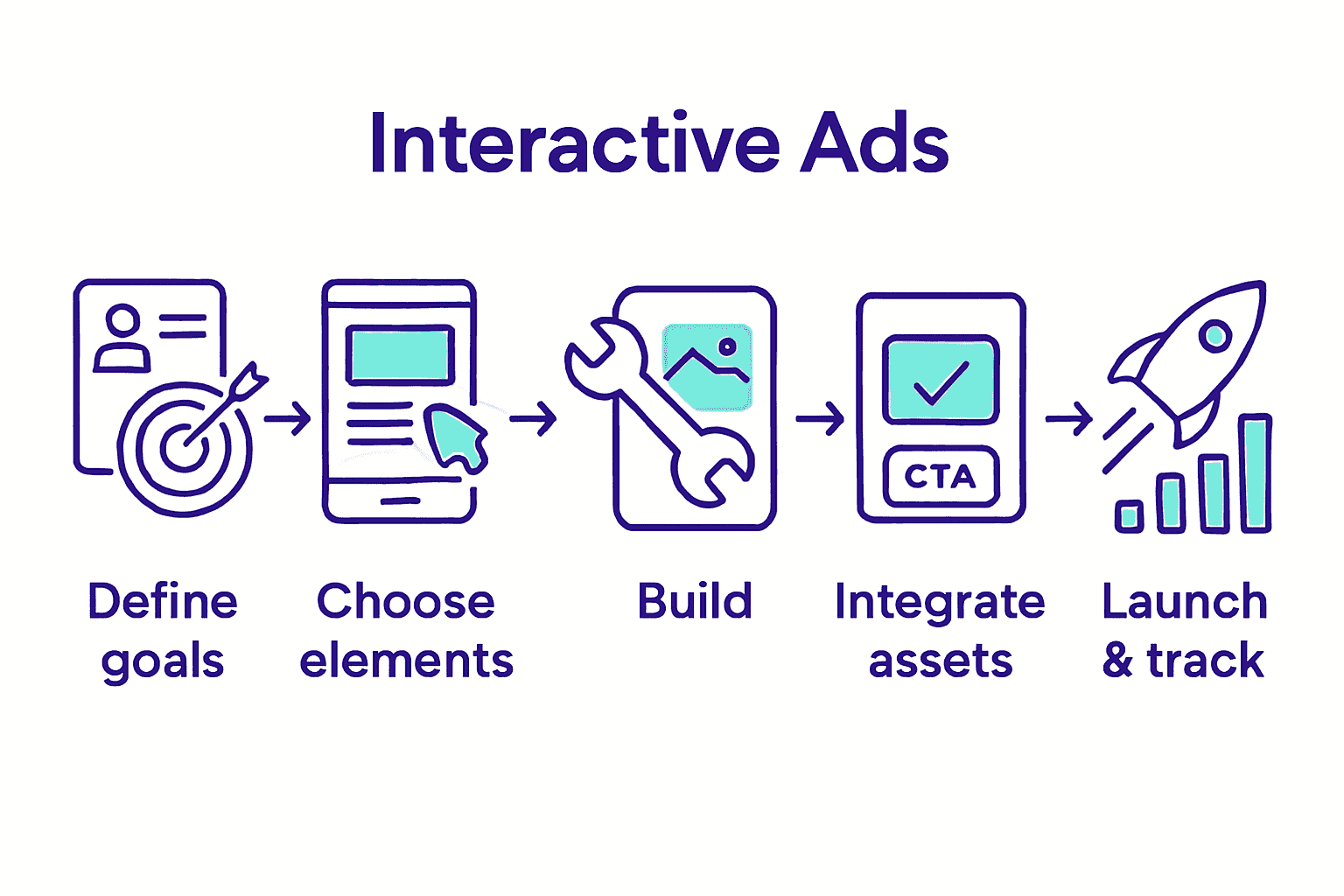
According to Wikipedia, interactive advertising is about engaging consumers and promoting products through media. Your tracking should go beyond surface level metrics and explore deeper engagement signals. Monitor how users interact with different elements of your creative, which game assets generate the most interest, and at what point users are most likely to drop off or convert. Use these insights to create iterative improvements and refine your ad creative in future iterations.
Pro tip: Consider setting up real time dashboards that allow you to monitor performance metrics dynamically. This enables quick adjustments and helps you respond rapidly to emerging trends or unexpected performance variations.
With your performance metrics now being tracked, you are ready to continuously optimize and evolve your interactive mobile ad strategy based on concrete user data.
Unlock the Power of Interactive Mobile Ads with Ease
Creating engaging interactive ad creatives can feel overwhelming when you face challenges like high development costs, slow turnaround times, and the complexity of integrating dynamic elements. This article highlights the critical need for fast, intuitive, and budget-friendly solutions that empower marketers and developers alike to build captivating experiences without technical hurdles. If you want to avoid the frustration of resource-heavy ad creation and finally deliver interactive ads that truly convert, understanding tools that offer no-code flexibility is essential.
PlayableMaker offers exactly that. Our platform enables you to build playable and interactive ads quickly and without compromising your budget or creative vision. With drag-and-drop simplicity and the ability to easily integrate compelling game assets and calls to action, you can bring your creative concepts to life in a fraction of the time. Ready to stop depending on costly developer resources and start crafting remarkable ad experiences today
Explore our Publishing archives for expert tips on launching effective campaigns and visit Help archives for guidance on maximising ad performance. Take the first step now and see how easy interactive ad creation can be at PlayableMaker.
Frequently Asked Questions
How do I define campaign goals for interactive mobile ads?
Clearly define your campaign goals by identifying what you want users to do, such as downloading an app or making an in-app purchase. Start by outlining these objectives on paper and then refine them into measurable outcomes like click-through rates or conversion percentages.
What interactive elements should I include in my mobile ad creatives?
Incorporate interactive elements that engage users, like mini-games or quizzes. Aim for at least two to three different interactive features that encourage user participation and enhance the overall experience of your ad.
How can I create mobile ad creatives using a no-code builder?
Choose a no-code ad builder that offers drag-and-drop functionality to design your ad. Begin by selecting a template that fits your campaign goals and customize it by adding interactive elements without writing any code.
What types of game assets should I integrate into my mobile ads?
Select visually dynamic game assets that showcase exciting moments and unique aspects of your game. Focus on imagery that captivates attention immediately, reflecting the core gameplay experience to entice potential users.
How do I validate the functionality of my interactive mobile ads before launch?
Conduct thorough testing of your ad across multiple devices and operating systems to ensure all interactive elements work properly. Plan for at least two rounds of testing to identify and correct any issues before deployment.
What performance metrics should I track after launching my mobile ad?
Track key performance metrics such as click-through rates, interaction duration, and conversion rates to gauge success. Set up a dashboard to monitor these metrics dynamically and make adjustments based on user behavior trends.
Recommended
- 8 Mobile Ad Best Practices for Successful Campaigns – playablemaker.com 8 Mobile Ad Best Practices for Successful Campaigns
- Mastering Interactive Ads Workflow for Mobile Games – playablemaker.com Mastering Interactive Ads Workflow for Mobile Games
- 7 Interactive Banner Ads Examples to Boost Engagement – playablemaker.com 7 Interactive Banner Ads Examples to Boost Engagement
- 7 Key Advantages of Interactive Ads for Mobile Games – playablemaker.com 7 Key Advantages of Interactive Ads for Mobile Games
- 7 Essential Types of Digital Campaigns for Local Success | Website Design & Google Ads That Generate Leads