
Interactive banner ads are turning digital advertising on its head. While many expect boring graphics or a quick logo flash, these ads actually let users click, swipe, even play mini-games on the spot. The numbers are impossible to ignore. Playable ads in mobile gaming are 20 times more likely to drive app installs than static banners. Most surprising though, the very best results come from simple interactions rather than complicated gimmicks. Simplicity can beat the fanciest effects every time.
Table of Contents
- Understanding Interactive Banner Ads
- Key Elements Of Successful Interactive Ads
- Top Examples From The Mobile Gaming Industry
- Designing Your Own Interactive Banner Ads
- Measuring The Success Of Your Interactive Ads
- Common Mistakes To Avoid In Interactive Advertising
- Future Trends In Interactive Banner Advertising
Quick Summary
| Takeaway | Explanation |
|---|---|
| Interactive ads enhance user engagement | Interactive banner ads require users to participate, leading to higher retention compared to static formats. |
| Simplicity in design drives user interaction | Clear, minimalist designs ensure that users understand how to engage with the ad quickly. |
| Measure performance with diverse metrics | Focus on metrics like interaction duration and depth to gain insights beyond just click-through rates. |
| Gamification increases effectiveness | Incorporating game-like elements can provide immediate gratification, encouraging user engagement and conversion. |
| Future trends include AI and AR | Emerging technologies such as AI personalisation and augmented reality will redefine interactive advertising experiences. |
1: Understanding Interactive Banner Ads
Interactive banner ads represent a quantum leap in digital advertising, transforming passive viewing experiences into engaging, participatory encounters. These dynamic ad formats move beyond traditional static imagery, inviting users to interact directly with the advertisement through touch, swipe, click, or play mechanisms.
Unlike conventional banner advertisements that merely display information, interactive banner ads transform viewers into active participants. This fundamental shift creates a more memorable and compelling marketing experience that significantly improves user engagement and retention rates.
Key characteristics of interactive banner ads include:
-
Immediate User Interaction: Compelling design that encourages immediate engagement
-
Gamification Elements: Incorporating playful challenges or mini-game experiences
-
Personalised Experience: Adapting content based on user interactions
According to Nielsen Norman Group, interactive content generates substantially higher engagement compared to static advertisements. The psychological principle behind this phenomenon is simple: people are more likely to pay attention and remember experiences they actively participate in.
The technical foundations of interactive banner ads rely on advanced web technologies like HTML5, JavaScript, and CSS animations. These tools enable developers to create seamless, responsive ad experiences that work across multiple devices and platforms.
For mobile gaming marketers, our guide on interactivity in ads provides deeper insights into designing compelling interactive advertising strategies that capture user attention and drive meaningful conversions.
2: Key Elements of Successful Interactive Ads
Successful interactive banner ads require a strategic blend of psychological insight, creative design, and technical execution. These advertisements must capture user attention rapidly while delivering a compelling, meaningful experience that transcends traditional marketing approaches.
Psychological Engagement stands as the cornerstone of effective interactive advertising. Users must feel an immediate connection and motivation to interact with the ad, which demands a nuanced understanding of human behaviour and digital interaction patterns.
Critical elements for creating successful interactive ads include:
-
Instant Gratification: Providing immediate reward or feedback for user interaction
-
Seamless User Experience: Ensuring smooth, intuitive interaction mechanisms
-
Clear Value Proposition: Communicating the benefit of engagement within seconds
According to Interactive Advertising Bureau, the most compelling interactive ads share three fundamental characteristics: relevance, entertainment value, and minimal friction in user experience.
Technical Performance equally determines an interactive ad’s success. Ads must load quickly, function smoothly across multiple devices, and maintain high visual quality while supporting diverse interaction models.
The complexity of design should never compromise the ad’s core message or usability. Simple, intuitive interactions typically outperform overly complicated mechanisms. A user should understand how to interact with the ad within milliseconds of encountering it.
Discover more about unlocking engagement in mobile advertising to gain deeper insights into creating interactive experiences that truly resonate with your target audience.
3: Top Examples from the Mobile Gaming Industry
The mobile gaming industry has pioneered interactive banner ad techniques that transform user engagement from passive viewing to active participation. These innovative approaches leverage psychological triggers and technical creativity to capture audience attention.
Match-3 Games: Interactive Ad Mastery
Match-3 genre developers have particularly excelled in creating interactive banner ads that mirror gameplay mechanics. These ads allow potential users to experience a snippet of the game directly within the advertisement, providing an immediate and compelling preview of the gaming experience.
Key strategies employed by top mobile gaming interactive ads include:
-
Miniature Game Previews: Offering a 30-second playable game segment
-
Reward-Based Interactions: Providing in-game currency or bonuses for ad engagement
-
Skill-Testing Challenges: Creating mini-challenges that demonstrate game mechanics
According to Liftoff’s Mobile Ad Creative Index, playable ads in mobile gaming are 20 times more likely to drive app installations compared to traditional static banner advertisements. This statistic underscores the transformative potential of interactive advertising.
Psychological Engagement Techniques
Successful interactive ads in mobile gaming tap into fundamental psychological motivations. They create immediate gratification by allowing users to experience game dynamics instantly, reducing the cognitive distance between advertisement and actual gameplay.
Explore the fascinating world of mobile game genres to understand how different game types approach interactive advertising strategies. The nuanced approach to ad design can significantly impact user acquisition and retention rates.
4: Designing Your Own Interactive Banner Ads
Creating compelling interactive banner ads requires a strategic blend of technical skills, creative design, and user psychology. The goal is to transform a static advertisement into an engaging, memorable experience that captures user attention within seconds.
Visual Design Principles play a crucial role in developing effective interactive banner ads. The visual elements must be clean, intuitive, and immediately communicative of the ad’s interactive potential.
Key considerations for designing interactive banner ads include:
-
Minimalist Visual Approach: Use clean, uncluttered design that guides user interaction
-
Colour Psychology: Select colours that evoke emotional responses and enhance engagement
-
Clear Call-to-Action: Ensure interactive elements are immediately recognisable
According to Cambridge University’s Advertising Research Study, the complexity and design of banner advertisements significantly impact user interaction rates.
Technical Implementation demands precision. Interactive banner ads must function seamlessly across multiple devices and platforms, maintaining high performance and visual quality. Responsive design is non-negotiable in modern digital advertising.
Programmers and designers should focus on creating lightweight, quick-loading interactive experiences. HTML5, CSS3, and JavaScript provide powerful tools for developing dynamic, engaging banner advertisements that respond instantly to user interactions.
Learn more about implementing playable ads in mobile marketing to gain deeper insights into creating compelling interactive advertising experiences that drive user engagement and conversions.
5: Measuring the Success of Your Interactive Ads
Comprehensive performance measurement is essential for understanding the true impact of interactive banner advertisements. Marketers must move beyond traditional metrics like click-through rates to capture the nuanced engagement these dynamic ads generate.
Modern interactive ad success is evaluated through multifaceted performance indicators that provide deeper insights into user behaviour and campaign effectiveness.
Key metrics for measuring interactive ad performance include:
-
User Interaction Duration: Total time users spend engaging with the ad
-
Interaction Depth: Number and complexity of user interactions
-
Conversion Rate: Percentage of interactions resulting in desired outcomes
According to City University London’s research, interactive advertising elements can increase brand choice by up to 36.6% when designed effectively.
Technical Analytics play a crucial role in comprehensive ad performance evaluation. Modern tracking technologies enable marketers to capture granular data about user engagement, including mouse movements, interaction patterns, and precise interaction timestamps.
Advanced measurement techniques go beyond surface-level metrics. Emotional response tracking and cognitive engagement analysis provide sophisticated insights into how users truly interact with interactive advertisements.
Psychological factors such as user curiosity, perceived value, and interaction enjoyment become quantifiable through sophisticated measurement frameworks. These metrics help marketers understand not just whether users clicked, but how deeply they were emotionally and intellectually engaged.
Explore our comprehensive guide to measuring playable ad effectiveness to gain deeper insights into transforming raw data into actionable marketing intelligence.
6: Common Mistakes to Avoid in Interactive Advertising
Interactive advertising represents a sophisticated marketing approach that demands precision and strategic thinking. Fundamental errors can significantly undermine the effectiveness of these dynamic ad experiences, rendering potentially powerful campaigns ineffective.
Marketers frequently encounter critical pitfalls that compromise user engagement and diminish advertising performance. Understanding these challenges is crucial for developing compelling interactive advertisements.
Common mistakes in interactive banner advertising include:
-
Overcomplicating User Interactions: Creating complex mechanics that frustrate users
-
Misaligning Ad Experience with Brand Message: Developing interactive elements disconnected from core marketing objectives
-
Neglecting Performance Optimization: Failing to ensure smooth, fast-loading interactive experiences
According to UNESCO’s advertising module, effective advertising requires careful evaluation of messaging and audience appeal. Technical execution must be as refined as the creative concept.
Performance barriers often emerge from insufficient user experience testing. Interactive ads must provide immediate value, with intuitive interfaces that require minimal cognitive load. Users will abandon experiences that feel complicated or unclear within milliseconds.
Designers must strike a delicate balance between creativity and functionality. An interactive ad should feel like an invitation, not an obstacle. The primary goal remains communicating a compelling value proposition while providing an enjoyable, frictionless interaction.
Explore our comprehensive guide on debunking playable ad myths to gain deeper insights into avoiding common interactive advertising pitfalls and maximising user engagement.
7: Future Trends in Interactive Banner Advertising
Digital advertising is undergoing a transformative revolution, driven by technological advancements that promise to make interactive banner ads more immersive, intelligent, and personalised than ever before. The convergence of artificial intelligence, augmented reality, and advanced data analytics is reshaping how brands communicate with potential customers.
Emerging technologies are fundamentally changing the interactive advertising landscape, creating unprecedented opportunities for engagement and user experience.
Key future trends in interactive banner advertising include:
-
Artificial Intelligence Personalisation: Dynamic content adaptation based on real-time user behaviour
-
Augmented Reality Integration: Immersive experiences that blend digital interactions with physical environments
-
Predictive User Experience Design: Anticipatory ad mechanics that respond before users explicitly request interaction
According to UMA Technology’s research, emerging technologies like augmented reality will revolutionise banner advertising by enabling users to interact with products dynamically within advertisement spaces.
Machine learning algorithms are becoming increasingly sophisticated, enabling banner ads to learn from user interactions and continuously refine their engagement strategies. These intelligent systems can analyse millisecond-level user responses, adapting creative elements in real time to maximise engagement potential.
The future of interactive banner advertising lies in creating experiences that feel less like advertisements and more like personalised, value-added interactions. Contextual awareness and emotional intelligence will become critical differentiators, allowing ads to respond not just to user actions, but to underlying user intent and emotional states.
Below is a comprehensive table summarising the key insights and concepts from the article on interactive banner ads, providing readers with a complete overview of the main points, benefits, strategies, and trends discussed.
| Section / Topic | Main Points & Insights |
|---|---|
| Definition & Importance | Interactive banner ads turn passive viewing into engaging, participatory encounters; they invite user interaction through clicks, swipes, or mini-games, significantly boosting engagement and retention over static ads. |
| Key Elements of Success | Effective ads prioritise psychological engagement, instant gratification, a seamless user experience, and a clear value proposition; simple and intuitive designs consistently outperform complex or cluttered mechanisms. |
| Industry Examples | Mobile gaming leads with interactive ads like playable previews, reward-based interactions, and demonstrative mini-challenges; such ads are proven to be 20 times more effective for app installs than static banners. |
| Design & Technical Best Practices | Successful ads use minimalist, clean visuals, strong colour psychology, clear calls-to-action and responsive, technically robust implementation; focus is on fast loading and device compatibility. |
| Measuring Success | Move beyond click-through rates to track metrics such as interaction duration, interaction depth, and conversion rate; advanced analytics include emotional response and cognitive engagement measurement for deeper insights. |
| Common Mistakes to Avoid | Frequent errors include making interactions overly complex, misaligning ad experience with brand message, and neglecting performance or user experience optimisation; successful ads are appealing and frictionless. |
| Future Trends | Advances in AI, AR, and machine learning will drive hyper-personalised, immersive, and context-aware interactive ads, blending digital and physical experiences, and adapting in real-time based on user behaviours and emotional states. |
Explore the evolving landscape of mobile game monetization to understand how interactive advertising is reshaping digital marketing strategies.
Ready to Create Interactive Banner Ads Without the Usual Hassle?
Building high-performing interactive banner ads should not mean draining your budget or overwhelming your team. As highlighted in the article, marketers often struggle with complex technical requirements, slow ad production cycles, and the frustration that comes from delays or sky-high costs. Whether you want to boost engagement or deliver instant gratification with interactive ads, a no-code, cost-effective solution can make all the difference. Learn more about industry challenges and tips in our Publishing category.
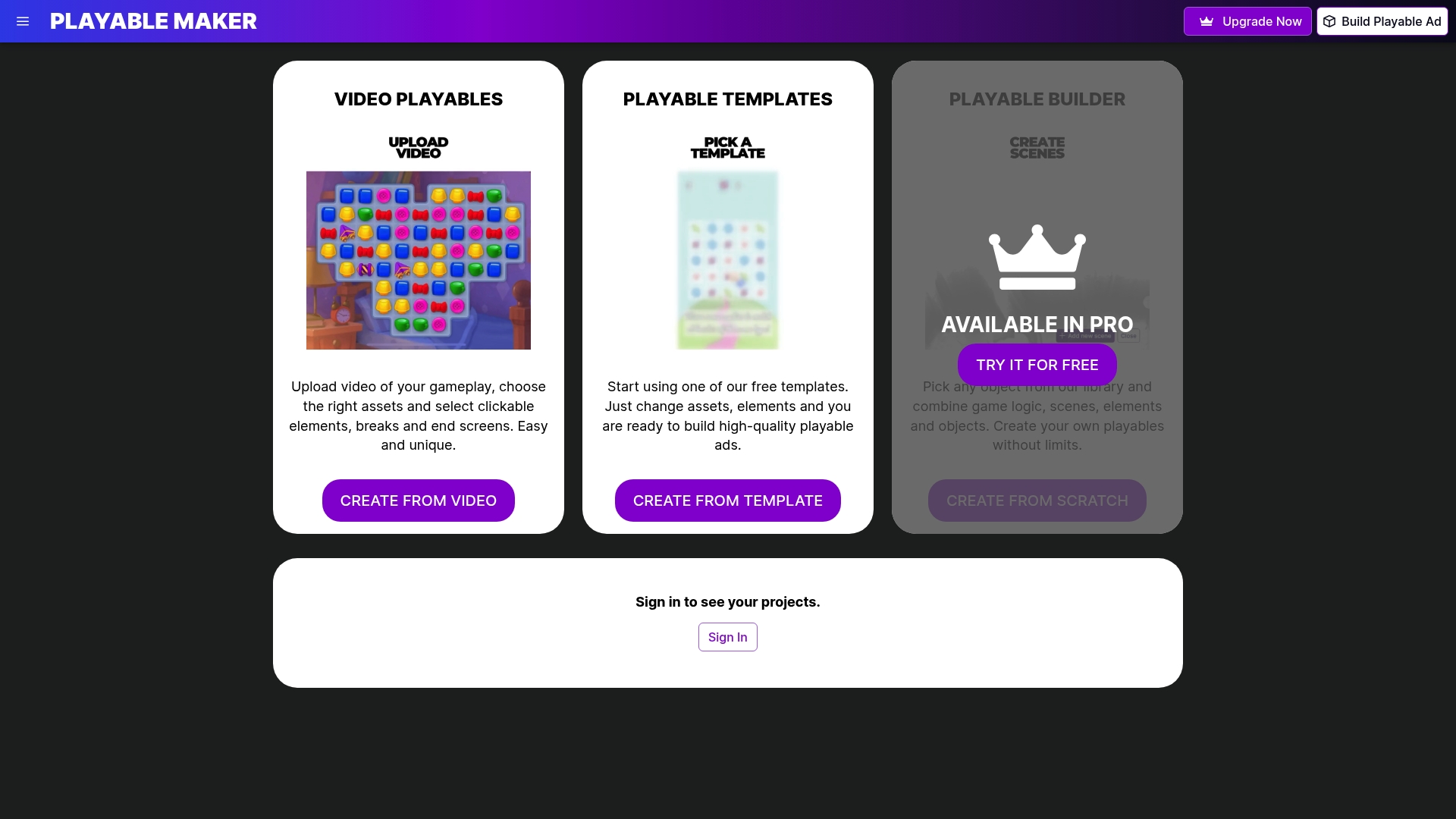
Imagine launching playable ads that capture attention, encourage clicks, and drive real conversions—without touching a single line of code. At PlayableMaker, we empower you to build stunning playable ads quickly and affordably. Take action today so you can be the first in your industry to enjoy easy, budget-friendly ad creation. Start building your next interactive campaign by visiting PlayableMaker now.
Frequently Asked Questions
What are interactive banner ads?
Interactive banner ads are digital advertisements that allow users to engage with them through actions like touch, swipe, or click, creating a more engaging and memorable experience compared to traditional static ads.
How do interactive banner ads increase user engagement?
Interactive banner ads increase user engagement by transforming viewers into active participants, utilising gamification elements, personalised experiences, and instant gratification to capture and retain attention.
What are some key characteristics of successful interactive ads?
Successful interactive ads are characterised by their ability to provide immediate rewards for user interaction, a seamless user experience, and a clear value proposition that communicates benefits swiftly to the audience.
What common mistakes should marketers avoid when designing interactive ads?
Marketers should avoid overcomplicating interactions, misaligning the ad experience with brand messaging, and neglecting performance optimisation to ensure ads function smoothly and effectively engage users.
Recommended
- The Rising Dominance of Playable Ads in Mobile Marketing – playablemaker.com The Rising Dominance of Playable Ads in Mobile Marketing
- Unlocking Engagement: Why Playable Ads Outshine Regular Ads – playablemaker.com Unlocking Engagement: Why Playable Ads Outshine Regular Ads
- From Zero to Wow: The Power of Playable Ad Templates to Skyrocket Engagement – playablemaker.com From Zero to Wow: The Power of Playable Ad Templates to Skyrocket Engagement
- Introduction to Playable Ads in Mobile Game Marketing – playablemaker.com Introduction to Playable Ads in Mobile Game Marketing
- How to Increase Website Engagement in 2025: Proven Strategies