Struggling to produce eye-catching playable ads on tight budgets is a common challenge for user acquisition specialists in mobile gaming. The pressure to drive installs while maintaining quality and speed means traditional development methods can feel limiting. Game design principles such as points and challenges offer a proven way to turn standard ads into interactive experiences, attracting attention and repeat engagement. This overview brings clarity to gamified advertising, exposing common myths and highlighting how no-code solutions can deliver impressive results without excessive spend.
Table of Contents
- Ad Gamification Defined And Common Myths
- Types Of Ad Gamification For Mobile Gaming
- Core Mechanics And Interactive Features
- Measuring Success In Gamified Campaigns
- Budget And Resource Implications
- Alternatives To Ad Gamification Methods
Key Takeaways
| Point | Details |
|---|---|
| Understanding Gamification | Ad gamification enhances traditional advertising by integrating game design principles to create engaging, interactive experiences that hold consumers’ attention. |
| Core Interactive Features | Utilising game mechanics like points systems and achievement badges can transform passive viewers into actively engaged participants in advertisements. |
| Measuring Success | Effective gamified advertising requires a focus on key metrics such as user engagement and conversion rates to optimise strategies and improve performance. |
| Diverse Engagement Alternatives | Marketers should explore various engagement strategies beyond gamification, including augmented reality and personalised content, to connect with different audience segments. |
Ad gamification defined and common myths
Ad gamification represents a strategic approach to digital advertising that transforms traditional marketing messages into interactive, engaging experiences. At its core, gamification applies game design principles to advertising, creating immersive interactions that capture user attention far more effectively than static advertisements.
The fundamental concept goes beyond simple entertainment. Game mechanics in digital marketing involve systematically integrating elements like points, challenges, and rewards into advertising content. These techniques encourage voluntary consumer participation and transform passive viewing into active engagement.
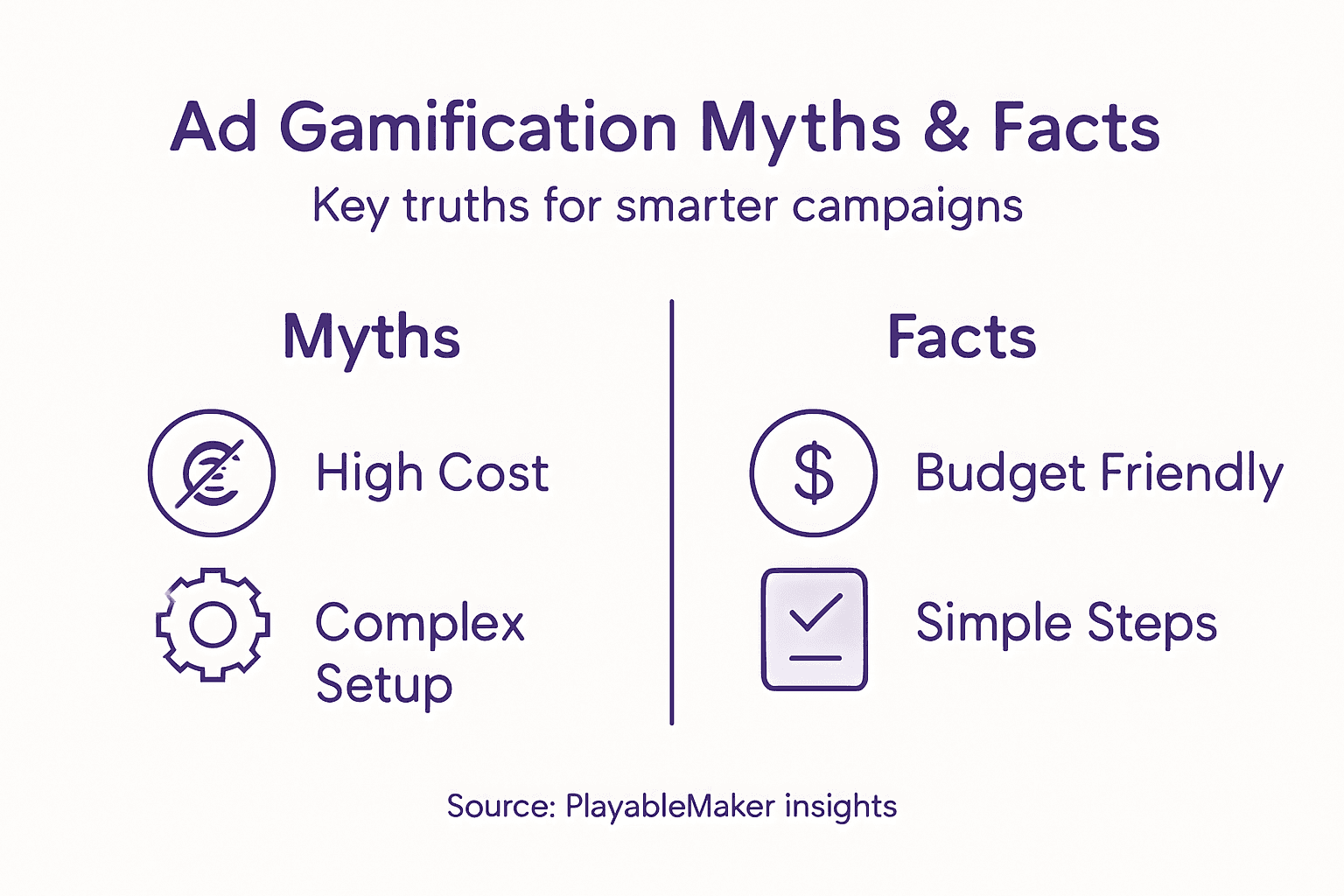
Several persistent myths surround ad gamification that deserve clarification:
- Myth 1: Gamification is just about making ads fun
- Myth 2: Gamified ads work for every target audience
- Myth 3: Game mechanics are universally applicable across all marketing channels
- Myth 4: Gamification guarantees immediate conversions
In reality, effective ad gamification requires nuanced understanding of user psychology and precise implementation. Strategic marketing approaches reveal that successful gamification involves creating meaningful interactions that align with brand messaging and consumer expectations.
Pro tip: Start small by introducing one game mechanic at a time and measure user engagement before expanding your gamified advertising strategy.
Types of ad gamification for mobile gaming
Mobile gaming has revolutionised digital advertising by introducing diverse gamified advertising formats that transform traditional marketing approaches. Interactive ad formats have emerged as powerful tools for engaging potential users through immersive experiences.
The primary types of ad gamification in mobile gaming include:
- In-Game Advertising (IGA): Seamless brand placements within existing game environments
- Advergames: Custom-designed games specifically created to promote a brand or product
- Playable Ads: Mini interactive experiences that allow users to preview game mechanics
- Mini-Games: Short, engaging game-like interactions embedded within advertisements
- Interactive Quizzes: Knowledge-based challenges that integrate brand messaging
Mobile gaming advertising techniques demonstrate that each format offers unique advantages for capturing user attention. In-game advertising subtly integrates brand elements, while advergames provide a more immersive brand experience. Playable ads, in particular, have gained significant traction by allowing users to directly experience a product’s core gameplay before downloading.

These gamification strategies share a common goal: transforming passive advertising into active, enjoyable interactions that generate meaningful user engagement.
Here is a summary of key ad gamification formats and their main business advantages:
| Format Type | Engagement Strength | Best Use Case |
|---|---|---|
| In-Game Advertising | Seamless brand exposure | Ongoing brand awareness |
| Advergames | Deep user immersion | Product launches or storytelling |
| Playable Ads | High interaction rates | Driving app downloads |
| Mini-Games | Quick engagement bursts | Short campaigns, contests |
| Interactive Quizzes | Data collection and recall | Market research, education |
Pro tip: Select an ad gamification format that closely matches your target audience’s gaming preferences and interaction style.
Core mechanics and interactive features
Ad gamification transforms traditional advertising by introducing dynamic, engaging mechanisms that capture user attention and drive interaction. Game mechanics in marketing leverage psychological triggers that make advertisements more compelling and memorable.
The core interactive features of gamified advertising include:
- Points Systems: Reward users for engagement and interaction
- Achievement Badges: Recognise and celebrate user accomplishments
- Progress Tracking: Visual representations of user advancement
- Competitive Leaderboards: Encourage user comparison and motivation
- Challenge Mechanisms: Create dynamic, goal-oriented interactions
- Immediate Feedback Loops: Provide instant response to user actions
Interactive advertising strategies demonstrate that these mechanics tap into fundamental human motivations. By introducing elements of competition, achievement, and personal progress, advertisers can transform passive viewing into active participation.
These interactive features work by creating a sense of investment and emotional connection, turning advertisements from interruptions into experiences users actually want to engage with.
Pro tip: Design interactive ad mechanics that align closely with your target audience’s intrinsic motivations and gaming preferences.
Measuring success in gamified campaigns
Campaign performance measurement requires a comprehensive approach that goes beyond traditional advertising metrics. Ad performance metrics provide crucial insights into the effectiveness of gamified advertising strategies.
Key performance indicators for measuring gamified ad success include:
- User Engagement Rate: Tracking time spent interacting with the ad
- Interaction Completion Percentage: Measuring users who finish the entire game mechanic
- Conversion Rates: Monitoring how many users take the desired action
- Replay/Replay Rate: Assessing how often users replay the interactive ad
- Social Sharing Metrics: Tracking voluntary user sharing of the ad experience
- Cost per Engagement (CPE): Calculating the financial efficiency of interactions
Understanding these metrics helps advertisers refine their gamification strategies and create more compelling interactive experiences. By analysing granular data points, marketers can identify what truly motivates their target audience and optimise future campaigns accordingly.
Successful measurement goes beyond raw numbers, focusing on the qualitative impact of creating memorable, enjoyable advertising interactions that resonate with users.
Pro tip: Implement A/B testing with different interactive mechanics to systematically improve your gamified ad performance.
Budget and resource implications
Gamified advertising strategies require careful financial planning and resource allocation. Advertising gamification costs involve substantial initial investments that demand strategic approach and thorough consideration.
Key budget considerations for implementing gamified ad campaigns include:
- Development Costs: Designing interactive game mechanics
- Technology Infrastructure: Platforms and tools required for implementation
- Content Creation: Designing engaging, branded interactive experiences
- User Testing: Evaluating and refining gamification mechanics
- Measurement and Analytics: Tracking campaign performance
- Ongoing Maintenance: Updating and optimising interactive ad experiences
Resource allocation strategies suggest that while initial investments might seem significant, the long-term benefits of enhanced user engagement can justify the expenditure.
Successful gamified advertising requires a balanced approach, leveraging cost-effective tools and platforms that minimise development complexity while maximising interactive potential.
Pro tip: Start with modular, reusable game mechanics that can be easily adapted across multiple advertising campaigns to optimise resource utilisation.
Alternatives to ad gamification methods
Digital marketing strategies extend far beyond traditional gamification techniques, offering diverse approaches to user engagement. Alternative marketing experiences provide innovative methods for capturing audience attention without relying solely on game mechanics.
Compelling alternatives to ad gamification include:
- Augmented Reality (AR) Experiences: Immersive visual interactions
- Personalised Content Marketing: Tailored messaging and storytelling
- Interactive Video Advertisements: Non-game dynamic engagement
- Influencer Collaboration Campaigns: Social proof and authentic connection
- Live Interactive Webinars: Real-time audience participation
- Social Challenge Initiatives: Community-driven engagement strategies
User engagement methodologies demonstrate that meaningful interaction can be achieved through multiple approaches beyond traditional game-based techniques. These strategies focus on creating genuine connections, providing value, and fostering emotional resonance with target audiences.
Successful marketing requires understanding that engagement is not a one-size-fits-all concept, but a nuanced approach tailored to specific audience motivations and preferences.
Reviewing alternative engagement methods can help marketers diversify strategy:
| Method | Unique Advantage | Audience Appeal |
|---|---|---|
| Augmented Reality (AR) | Immersive visual engagement | Tech-savvy, trend seekers |
| Influencer Collaboration | Builds trust and credibility | Younger social media users |
| Interactive Video | Dynamic storytelling | Users preferring videos |
| Live Webinars | Real-time interaction | B2B or educational audiences |
| Social Challenge Initiatives | Encourages viral participation | Community-driven audiences |
Pro tip: Experiment with multiple engagement strategies simultaneously to identify which resonates most effectively with your specific target audience.
Unlock Effective Ad Gamification Without Breaking Your Budget
The challenge of creating engaging ad gamification often lies in balancing interactive appeal with budget constraints and resource limitations. This article highlights difficulties such as costly development, complex game mechanics, and measuring success efficiently. You want to captivate users with playable ads but without spending excessive time or money on dev resources or technology.
At PlayableMaker, we understand these pain points intimately. Our no-code platform lets you build playable and interactive ads fast without needing specialised developers or blowing your marketing budget. Simplify the creation of your next campaign with game mechanics that boost engagement and conversions, while keeping costs under control. Explore practical advice and solutions in our Uncategorized Archives and get expert insights from our Help Archives.
Ready to transform your digital ads into memorable, interactive experiences that drive results today Visit PlayableMaker and start building your cost-effective playable ads with ease and speed.
Frequently Asked Questions
What is ad gamification?
Ad gamification is a digital advertising strategy that incorporates game design principles into marketing messages, transforming static ads into interactive and engaging experiences that capture user attention effectively.
How can I measure the success of gamified advertising campaigns?
Success can be measured using key performance indicators such as user engagement rate, interaction completion percentage, conversion rates, replay rates, social sharing metrics, and cost per engagement (CPE).
What types of ad gamification are most effective for mobile gaming?
Effective types include In-Game Advertising (IGA), Advergames, Playable Ads, Mini-Games, and Interactive Quizzes, each offering unique advantages in engaging users and capturing attention.
What are some alternatives to ad gamification methods?
Alternatives include Augmented Reality (AR) experiences, personalised content marketing, interactive video advertisements, influencer collaboration campaigns, live interactive webinars, and social challenge initiatives, all providing innovative ways to engage audiences.
Recommended
- Lessons from Game Mechanics: How to Make Ads More Fun – playablemaker.com Lessons from Game Mechanics: How to Make Ads More Fun
- What is User Engagement? Understanding Its Importance – playablemaker.com What is User Engagement? Understanding Its Importance
- 7 Inspiring Examples of Gamified Ads for Mobile Marketers – playablemaker.com 7 Inspiring Examples of Gamified Ads for Mobile Marketers
- Role of Gamification in Playable Mobile Ads – playablemaker.com Role of Gamification in Playable Mobile Ads