
Most people think watching a video means sitting back and letting the story play out, but interactive video flips that idea on its head. By inviting viewers to click, choose, and steer the action, this technology creates a powerful sense of involvement. With research showing that active participation can lead to better learning and stronger engagement, the rise of interactive video is reshaping how we experience media across education, marketing, and entertainment.
Table of Contents
- Defining Interactive Video and Common Myths
- Types of Interactive Video Experiences
- How Interactive Videos Work Technically
- Use Cases in Mobile Gaming Marketing
- Benefits and Pitfalls for Advertisers
Key Takeaways
| Point | Details |
|---|---|
| Interactive Video Engages Users | Unlike traditional videos, interactive videos require active participation, enhancing user engagement and retention. |
| Cost of Creation is Lower than Perceived | Modern no-code tools have made the production of interactive content accessible, countering the myth of high costs and complexity. |
| Diverse Formats Enhance Learning | Interactive videos can take various forms, including branching narratives and educational simulations, improving user experience across multiple sectors. |
| Strategic Use in Marketing is Crucial | While offering high engagement potential, advertisers must balance the benefits of interactive videos with the challenges of production and platform compatibility. |
Defining Interactive Video and Common Myths
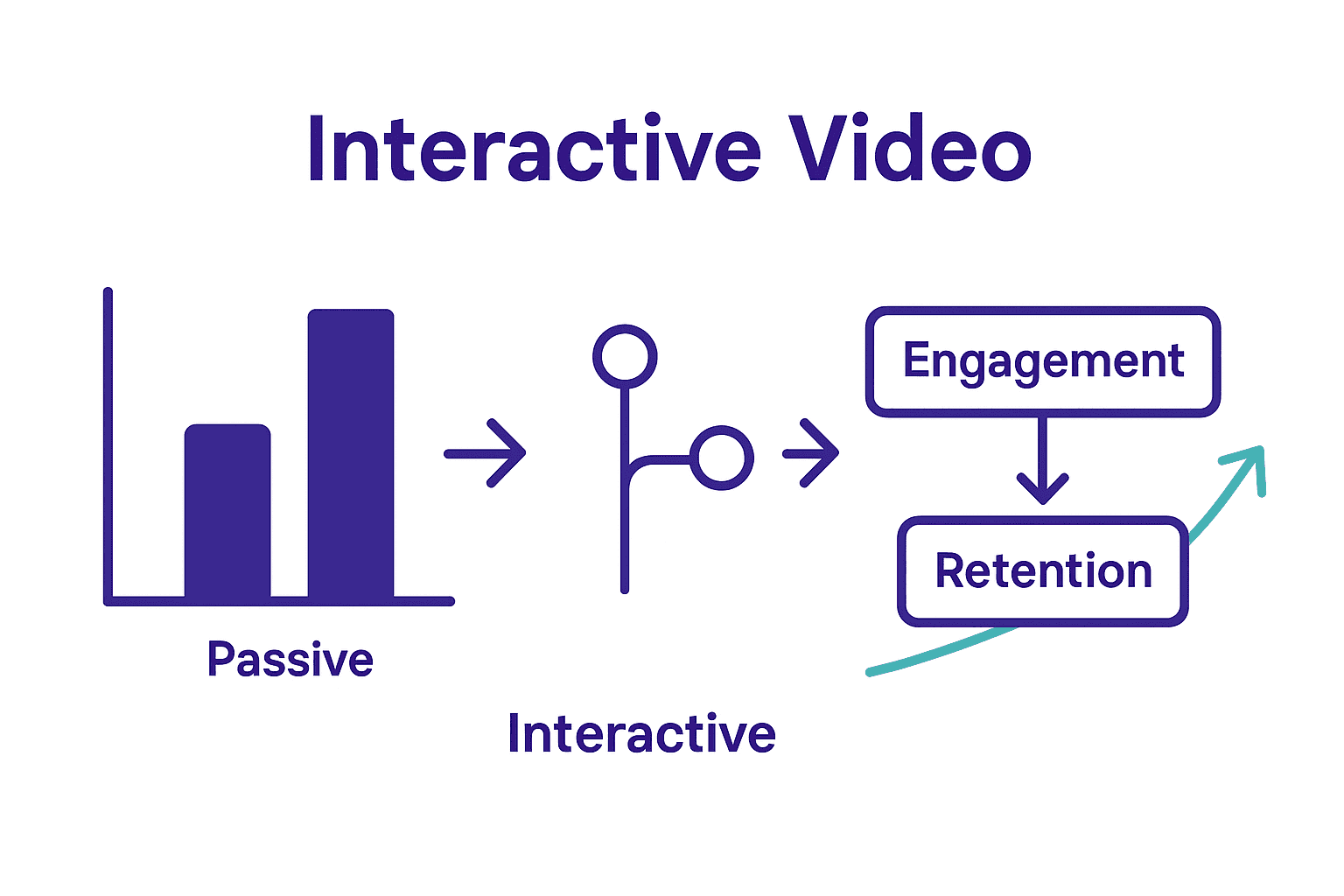
Interactive video represents a cutting-edge multimedia experience that transforms passive viewers into active participants. Unlike traditional linear videos, these digital experiences invite viewers to engage directly with content by making choices, answering questions, or manipulating the narrative flow. Interactive videos fundamentally change how audiences consume media by introducing elements of interactivity and personal agency.
According to Penn State University Showcase, interactive videos engage viewers by requiring active participation, which can lead to improved learning and retention compared to passive viewing. This means that instead of simply watching content unfold, users become co-creators of their viewing experience. The engagement potential is significant across multiple domains:
- Educational platforms using interactive learning modules
- Marketing campaigns seeking deeper audience connection
- Training programs requiring active skill demonstration
- Entertainment experiences with branching narratives
Many misconceptions surround interactive video technology. One prevalent myth is that creating such content is prohibitively expensive or technically complex. In reality, modern no-code interactive ad tools have democratized content creation, making sophisticated interactive experiences accessible to creators with minimal technical expertise.
Another common misunderstanding is that interactive videos are merely a novelty without substantial practical application. On the contrary, these dynamic media formats offer measurable benefits in engagement, information retention, and user experience across industries. By allowing viewers to control their content journey, interactive videos transform traditional one-way communication into a collaborative, personalized interaction.

Types of Interactive Video Experiences
Interactive video technology offers a diverse range of experiences that transform traditional media consumption into dynamic, participatory journeys. These innovative formats go far beyond simple passive viewing, enabling audiences to actively engage with content in meaningful and personalized ways.
According to OREED, interactive video experiences encompass multiple formats including explainer videos, case studies, simulations, webinars, and virtual presentations. Each type is strategically designed to engage learners through active participation and immersive real-world scenarios.
Key types of interactive video experiences include:
- Branching Narrative Videos: Viewers make choices that alter the storyline
- Shoppable Videos: Direct product interaction and purchasing within the video
- Educational Simulations: Interactive learning modules with decision-based outcomes
- Training and Onboarding Videos: Scenario-based learning with interactive elements
Research from the Boston Institute of Analytics highlights that interactive videos can incorporate innovative elements like clickable calls-to-action, choose-your-adventure formats, and interactive ad experiences that dramatically enhance user engagement and drive conversions.
These diverse interactive video formats demonstrate the technology’s versatility across industries, from marketing and education to entertainment and corporate training. By transforming viewers from passive observers to active participants, interactive videos create more memorable, impactful, and personalized content experiences.
How Interactive Videos Work Technically
Interactive videos operate through sophisticated technological frameworks that transform traditional linear video content into dynamic, responsive experiences. At their core, these technologies enable real-time user interaction by integrating programming logic, multimedia elements, and user input mechanisms that adapt content based on viewer choices.
According to Distance Education, tools like H5P have revolutionized interactive video creation by allowing creators to add various interactive elements such as multiple-choice questions and pop-up texts, enhancing online learning experiences. These technical capabilities typically involve several key components:
- Branching Logic: Programming that determines video progression based on user interactions
- Trigger Points: Specific moments in the video that activate interactive elements
- Input Mechanisms: Clickable areas, buttons, or overlays that capture user responses
- State Management: Tracking user choices and maintaining context throughout the experience
The technical architecture of interactive videos relies on advanced web technologies like HTML5, JavaScript, and adaptive streaming protocols. These technologies enable smooth transitions between video segments, real-time rendering of interactive elements, and seamless user experience across different devices and platforms. Playable ad experiences demonstrate how these technical frameworks can be leveraged to create engaging, interactive content that goes beyond traditional video formats.
Under the hood, interactive videos use complex algorithms to process user interactions, dynamically load relevant video segments, and create personalized viewing experiences. This technical sophistication allows content creators to design immersive narratives that respond directly to viewer input, transforming passive media consumption into an active, participatory engagement.
Use Cases in Mobile Gaming Marketing
Interactive videos have emerged as a game-changing strategy in mobile gaming marketing, offering unprecedented ways to engage potential users and showcase game mechanics in dynamic, immersive formats. These innovative marketing tools go beyond traditional advertising by creating experiences that are as compelling as the games themselves.
According to the Boston Institute of Analytics, interactive videos in mobile gaming marketing can include gamified campaigns with augmented reality filters and interactive stories, offering immersive experiences that captivate users and promote engagement. These marketing approaches transform passive advertisement consumption into active user experiences.
Key use cases for interactive videos in mobile gaming marketing include:
- Gameplay Previews: Allowing users to experience game mechanics directly within the ad
- Character Interaction: Demonstrating game characters and storylines through interactive narratives
- Skill Challenge Ads: Creating mini-game experiences that showcase game difficulty and excitement
- Personalized User Journeys: Tailoring ad experiences based on user interactions and preferences
As TCEA Blog highlights, incorporating interactive videos enables self-paced learning and engagement, allowing users to interact with content at their convenience. Mobile game user acquisition strategies have increasingly recognized the power of these immersive marketing techniques to not just attract attention, but to genuinely demonstrate the value and excitement of a mobile game.
By providing potential players with a taste of gameplay, interactive video marketing bridges the gap between advertisement and experience, transforming user acquisition from a passive viewing process to an engaging, interactive journey that can dramatically improve conversion rates and user interest.
Benefits and Pitfalls for Advertisers
Interactive videos represent a powerful yet complex marketing tool that offers advertisers unprecedented opportunities to engage audiences while simultaneously presenting unique challenges. The landscape of digital advertising is rapidly evolving, and understanding the nuanced benefits and potential drawbacks becomes crucial for strategic decision-making.
According to TCEA Blog, interactive videos can significantly boost user engagement and independence, allowing viewers to learn at their own pace and interact with content actively, which can lead to higher retention and conversion rates for advertisers. These dynamic experiences transform traditional passive advertising into an immersive, participatory journey.
Key benefits for advertisers include:
- Enhanced User Engagement: Keeping viewers actively involved with the content
- Improved Conversion Rates: Providing interactive experiences that demonstrate product value
- Detailed User Insights: Capturing granular data about user preferences and behaviors
- Memorable Brand Experiences: Creating lasting impressions through unique interactions
However, the Boston Institute of Analytics highlights critical challenges, noting that while interactive videos offer unique, immersive experiences, they may require significant resources to produce and might not be compatible with all platforms. Mobile ad best practices suggest carefully weighing these considerations before implementation.
Successful advertisers will approach interactive video strategies with a balanced perspective, recognizing that the potential for deeper user connection must be weighed against production complexity and technical constraints. The most effective campaigns leverage interactive video’s strengths while mitigating its inherent challenges through strategic planning and creative execution.
Unlock the Power of Interactive Video with PlayableMaker
Interactive videos offer an incredible way to transform viewers into active participants but creating them often feels complex and costly. This article highlights common challenges like technical barriers and high production costs that can hold back your marketing or training campaigns. If you want to harness branching narratives, clickable calls-to-action, or engaging playable ads without draining resources, a no-code solution is your key. Interactive video should not be a luxury only accessible to developers.
Experience how PlayableMaker makes interactive ad creation fast, easy and budget-friendly for everyone. Whether you are diving into Publishing Archives for best practices or need practical tips from Help Archives, our platform offers the tools and guidance to bring your vision to life. Don’t let technical complexity stop you from captivating your audience—start building engaging interactive videos today and turn passive viewers into loyal customers.
Frequently Asked Questions
What is interactive video?
Interactive video is a multimedia experience that engages viewers by allowing them to actively participate in content through choices, questions, or narrative manipulation, transforming them from passive viewers into active participants.
How do interactive videos enhance learning and retention?
Interactive videos require active participation, which improves viewing engagement, learning, and retention compared to traditional passive video experiences.
What are some common types of interactive video experiences?
Common types of interactive video experiences include branching narrative videos, shoppable videos, educational simulations, and training and onboarding videos, each designed to engage viewers in unique ways.
What are the key benefits of using interactive videos in advertising?
Interactive videos can enhance user engagement, improve conversion rates, provide detailed user insights, and create memorable brand experiences by allowing audiences to interact with content in immersive ways.
Recommended
- What is Interactive Content? Understanding Its Impact – playablemaker.com What is Interactive Content? Understanding Its Impact
- What is an Interactive Ad? Understanding Its Impact – playablemaker.com What is an Interactive Ad? Understanding Its Impact
- From Clicks to Conversions: The Science of Interactivity in Ads – playablemaker.com From Clicks to Conversions: The Science of Interactivity in Ads
- How Playable Maker Shapes the Future of Interactive Ads – playablemaker.com How Playable Maker Shapes the Future of Interactive Ads