
Everyone talks about capturing customer attention, but most overlook the subtle science of the marketing funnel. Most believe it is a simple path from first glance to last click. Yet over 60 percent of mobile game users drop off before ever reaching the checkout stage, proving the journey is anything but straightforward. The real surprise is how this structured approach can unlock patterns in user behaviour that typical marketing never even spots.
Table of Contents
- Defining The Marketing Funnel: Key Concepts Explained
- The Importance Of The Marketing Funnel In User Acquisition
- Stages Of The Marketing Funnel: Journey From Awareness To Conversion
- Real-World Applications Of Marketing Funnels In Mobile Gaming
- Measuring The Effectiveness Of Your Marketing Funnel
Quick Summary
| Takeaway | Explanation |
|---|---|
| Understand the marketing funnel’s stages | The funnel includes Awareness, Interest, Consideration, Decision, and Retention phases, guiding customer behaviour. |
| Recognise non-linear customer journeys | Customers may skip stages or revisit them; adapt strategies for varied paths to purchase. |
| Utilise data-driven insights for strategy | Continuous analysis of user interactions optimises marketing efforts and enhances customer engagement. |
| Focus on targeted messaging for each stage | Tailor communication to effectively connect with potential customers at every funnel phase. |
| Measure funnel performance with key metrics | Track Conversion Rate, Acquisition Cost, Retention Rate, and Drop-off Rate to improve funnel effectiveness. |
Defining the Marketing Funnel: Key Concepts Explained
A marketing funnel represents the strategic journey potential customers undertake from initial brand awareness to final purchase and post-purchase engagement. Newcastle University’s Business School describes this model as a systematic framework illustrating how consumers progress through distinct stages of interaction with a brand.
The Foundational Structure of Marketing Funnels
The marketing funnel conceptualizes customer acquisition as a multi-stage process, typically structured across several interconnected phases. These stages generally include:
- Awareness: The initial point where potential customers first encounter your brand
- Interest: Where consumers demonstrate curiosity about your product or service
- Consideration: The stage where prospects actively evaluate your offering
- Decision: The critical moment when a potential customer decides to make a purchase
- Retention: Post-purchase engagement that encourages long-term customer loyalty
Understanding Customer Progression
Customer movement through the marketing funnel is not strictly linear. Rivier University’s analysis highlights that modern digital marketing recognizes non-traditional customer journeys. Potential buyers might skip stages, revisit previous phases, or interact with brands through multiple touchpoints simultaneously.
The primary objective of a marketing funnel is to systematically guide potential customers towards conversion while providing tailored experiences at each stage. This approach allows businesses to develop targeted strategies that address specific customer needs, motivations, and potential barriers to purchase.
Successful marketing funnels require continuous optimization. Marketers must track customer interactions, analyse conversion rates, and adapt their approach based on real-world performance data. By understanding how individuals progress through different stages, businesses can create more effective, personalised marketing strategies that resonate with their target audience.
The table below summarises the main stages of the marketing funnel and explains the role each stage plays in guiding customers towards conversion.
| Funnel Stage | Purpose |
|---|---|
| Awareness | Customers first encounter the brand and become aware of its offering. |
| Interest | Potential customers express curiosity and seek further information. |
| Consideration | Prospects actively compare and evaluate the product or service. |
| Decision | The customer chooses to make a purchase or take the desired action. |
| Retention | Efforts to engage customers post-purchase and encourage loyalty. |
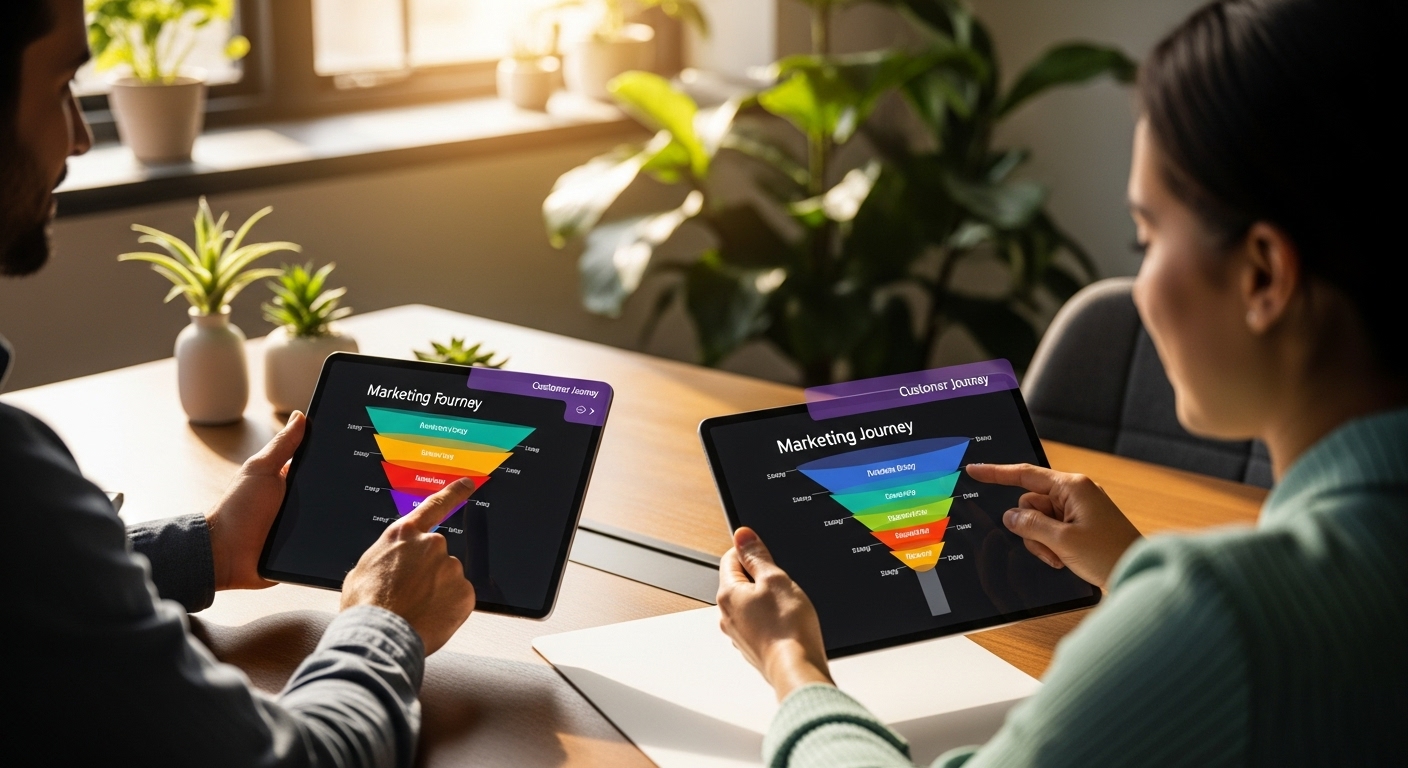
The Importance of the Marketing Funnel in User Acquisition
Marketing funnels play a crucial role in user acquisition strategies, providing businesses with a structured approach to understanding and guiding potential customers through their journey. PubMed research emphasizes that data-driven marketing funnels are essential for mapping user interactions and optimizing acquisition efficiency.
Strategic Value in Mobile Gaming User Acquisition
In mobile gaming, marketing funnels become particularly critical. They help developers and marketers understand how potential players discover, engage with, and ultimately commit to a game. The funnel provides insights into:
- Conversion Points: Identifying the specific moments when users transition from interested prospects to active players
- Dropout Stages: Recognizing where potential users might lose interest
- User Behavior Patterns: Understanding the psychological triggers that drive game installation and continued engagement
Optimizing User Acquisition Through Funnel Analysis
Effective marketing funnels go beyond simple tracking. They enable precise targeting and personalization. By understanding user acquisition strategies, game developers can create more compelling entry points and reduce user acquisition costs.
The true power of a marketing funnel lies in its ability to transform raw user data into actionable insights. Each stage of the funnel represents an opportunity to refine messaging, adjust targeting, and improve overall user experience. Marketers can use funnel analytics to predict user behavior, anticipate potential barriers, and develop more nuanced strategies for attracting and retaining players.
Ultimately, a well-designed marketing funnel is not just a tracking mechanism but a strategic tool for sustainable growth. It allows mobile game developers to move beyond generic marketing approaches and create targeted, efficient user acquisition strategies that resonate with specific audience segments.
Stages of the Marketing Funnel: Journey from Awareness to Conversion
The marketing funnel represents a systematic progression through which potential customers move from initial brand discovery to final purchase. University of Southern California highlights five critical stages that define this transformative journey.
Understanding the Core Stages
Each stage of the marketing funnel serves a unique purpose in guiding potential customers towards conversion. The fundamental stages include:
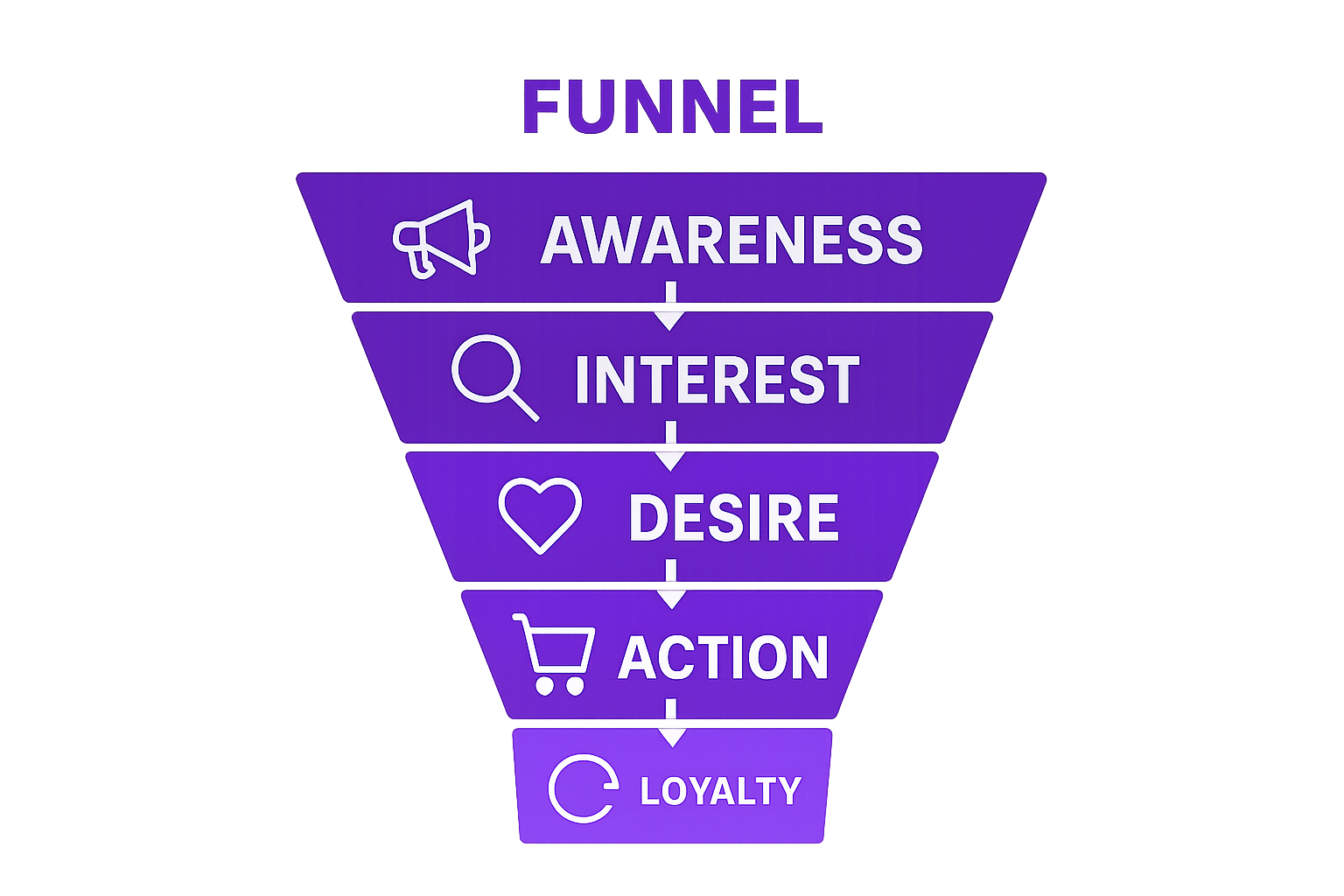
- Awareness: Initial introduction to the brand or product
- Interest: Generating curiosity and initial engagement
- Desire: Creating emotional connection and perceived value
- Action: Motivating the customer to make a purchase
- Loyalty: Encouraging repeat interactions and long-term relationship
Strategic Navigation Through the Funnel
Successful marketing requires tailored strategies for each funnel stage. User acquisition strategies become critical in moving potential customers seamlessly from one stage to another.
At the awareness stage, marketing efforts focus on visibility and reaching potential customers through diverse channels. As users progress, messaging becomes more targeted and personalised, addressing specific pain points and demonstrating unique value propositions.
The transition between funnel stages is not always linear. Modern marketing acknowledges that customers might skip stages, revisit previous phases, or interact through multiple touchpoints. This complexity demands adaptive, data-driven approaches that can respond to individual user behaviors and preferences.
Marketers must continuously analyse and optimize each stage, tracking key performance indicators and adjusting strategies to improve conversion rates. By understanding the nuanced journey of potential customers, businesses can create more effective, engaging marketing experiences that resonate with their target audience.
Real-World Applications of Marketing Funnels in Mobile Gaming
Marketing funnels in mobile gaming transform how developers attract, engage, and retain players through strategic, data-driven approaches. Research investigating mobile online game marketing reveals the critical importance of understanding consumer behavior and designing targeted acquisition strategies.
Strategic Player Acquisition Techniques
In mobile gaming, marketing funnels provide a structured framework for player acquisition and engagement. Key strategic applications include:
- Targeted Advertising: Creating precise audience segments based on player demographics and interests
- Personalised Onboarding: Designing customized entry points that reduce initial friction
- Engagement Tracking: Monitoring player interactions to optimize retention strategies
- Conversion Optimization: Identifying and addressing potential dropout points in the player journey
Implementing Funnel Strategies in Game Development
Effective marketing funnels require a holistic approach to game design and promotion. Mobile game user acquisition strategies play a crucial role in transforming potential players into active, engaged community members.
Game developers must consider each funnel stage carefully. During the awareness phase, developers leverage influencer marketing, social media campaigns, and targeted advertising to generate initial interest. As players move through subsequent stages, the focus shifts to creating compelling in-game experiences that encourage continued engagement and eventual monetization.
The complexity of modern mobile gaming demands sophisticated, adaptive marketing approaches. By continuously analysing player behavior, developers can refine their funnel strategies, creating more personalized and compelling experiences that resonate with their target audience. Understanding the nuanced journey from initial discovery to long-term player loyalty becomes a critical competitive advantage in the increasingly crowded mobile gaming marketplace.
Measuring the Effectiveness of Your Marketing Funnel
Research from public health digital marketing studies underscores the importance of systematic metrics in evaluating marketing funnel performance. Measuring effectiveness requires a comprehensive approach that goes beyond simple conversion tracking.
Key Performance Indicators in Marketing Funnel Analysis
To truly understand marketing funnel performance, businesses must track multiple critical metrics across different stages:
- Conversion Rate: Percentage of users progressing between funnel stages
- Customer Acquisition Cost: Total expense required to acquire a new customer
- Retention Rate: Proportion of customers who continue engaging after initial conversion
- Drop-off Rate: Percentage of users leaving the funnel at specific stages
Advanced Analytical Strategies
Comprehensive funnel measurement demands sophisticated analytical techniques. Ad performance metrics provide crucial insights into how potential customers interact with marketing touchpoints.
Effective measurement involves longitudinal tracking that captures nuanced user behaviors. This means not just quantifying raw numbers, but understanding the qualitative journey users experience. Sophisticated marketers employ advanced analytics tools that provide granular insights into user interactions, allowing for precise optimization of each funnel stage.
The ultimate goal of marketing funnel measurement is continuous improvement. By establishing baseline metrics, businesses can experiment with different strategies, track their impact, and iteratively refine their approach. This data-driven methodology transforms marketing from a guesswork exercise into a precision-engineered process of systematic user acquisition and retention.
The following table lists key performance indicators (KPIs) for measuring the effectiveness of your marketing funnel, along with a brief description of each metric.
| KPI | Description |
|---|---|
| Conversion Rate | Percentage of users moving from one funnel stage to the next. |
| Customer Acquisition Cost | The total cost required to acquire a new customer. |
| Retention Rate | Proportion of users who continue to engage after their first conversion. |
| Drop-off Rate | Percentage of users leaving the funnel at specific stages. |
| Engagement Metrics | Data on how users interact with marketing content and ads throughout the funnel. |
Transform Your Marketing Funnel Performance with No-Code Playable Ads
If you are struggling with slow funnels, high development costs or seeing too many users dropping out before conversion, there is a better way forward. The article highlighted the importance of seamless movement through each funnel stage — but building effective, engaging ad experiences usually demands a huge investment of time and technical resources. That blocks you from quick experimentation and personalisation, both of which are critical to user acquisition and scalable growth.
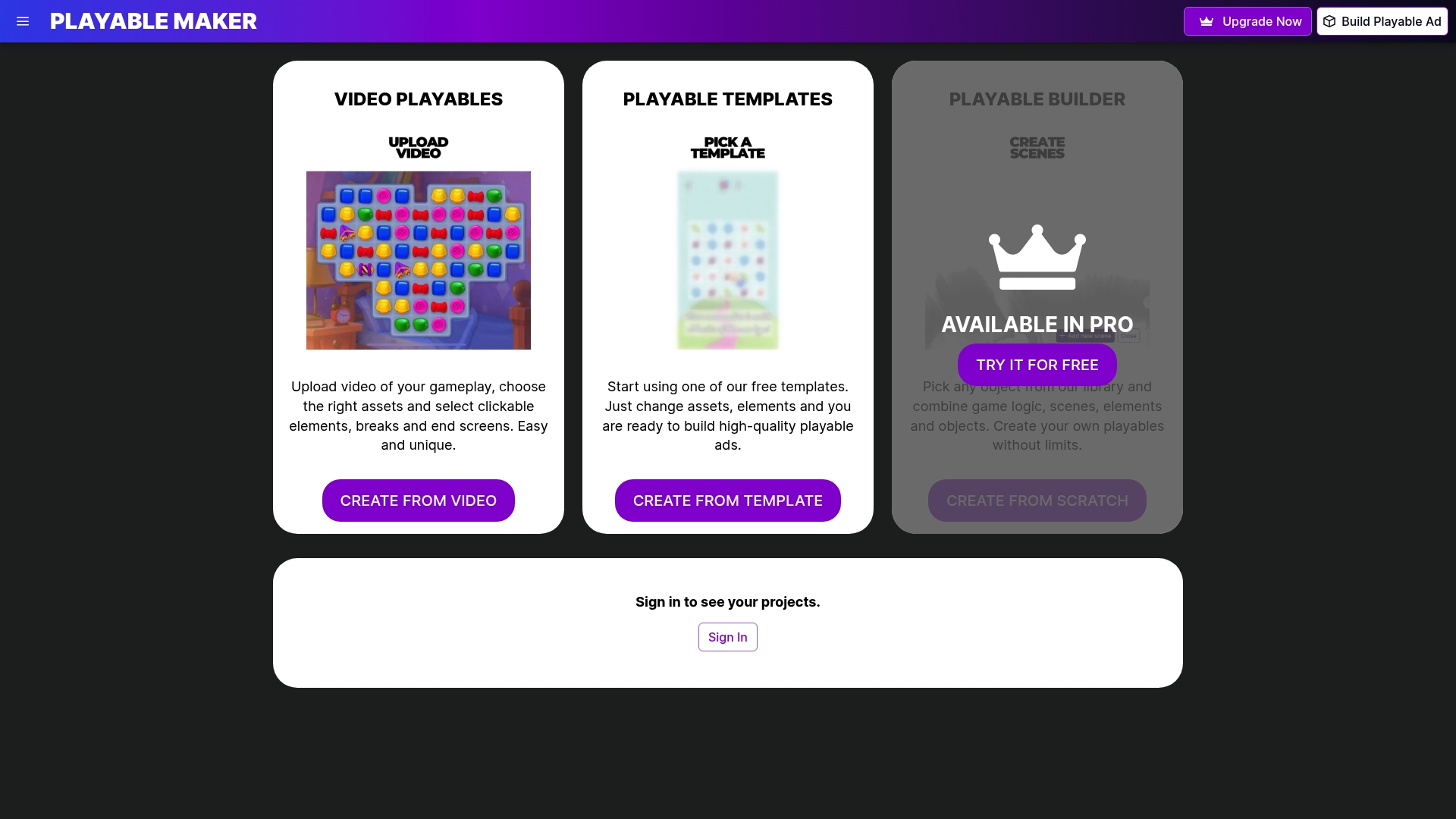
Give your user journey the frictionless boost it deserves. With PlayableMaker, you can create interactive ads without writing code or draining your budget. Build playable ads fast to capture interest at the very top of your funnel and convert more users at every stage. Ready to speed up your funnel and reduce your acquisition costs? Start building for free now at PlayableMaker.
Frequently Asked Questions
What is a marketing funnel?
A marketing funnel is a strategic model that illustrates the journey potential customers take from becoming aware of a brand to making a purchase and beyond. It outlines key stages that guide customers through their interactions with a business.
What are the key stages of the marketing funnel?
The key stages of a marketing funnel typically include Awareness, Interest, Consideration, Decision, and Retention. Each stage represents a distinct phase in the customer journey where different marketing strategies are applied to engage potential customers.
How does a marketing funnel benefit user acquisition?
A marketing funnel provides a structured approach to understanding and guiding potential customers throughout their journey. It helps businesses identify conversion points, understand dropout stages, and optimise their strategies to effectively attract and retain users.
Why is it important to measure the effectiveness of a marketing funnel?
Measuring the effectiveness of a marketing funnel is crucial to identify performance issues and areas for improvement. By analysing key performance indicators such as conversion rates and drop-off rates, businesses can refine their marketing strategies and enhance customer experience.
Recommended
- Mastering Creative Approval Workflow for Mobile Marketing – playablemaker.com Mastering Creative Approval Workflow for Mobile Marketing
- What is Mobile Attribution? Understanding Its Importance – playablemaker.com What is Mobile Attribution? Understanding Its Importance
- 8 Key Ad Performance Metrics for Mobile Gaming Success – playablemaker.com 8 Key Ad Performance Metrics for Mobile Gaming Success
- Understanding What is Ad Frequency in Mobile Marketing – playablemaker.com Understanding What is Ad Frequency in Mobile Marketing
- What is a Marketing Funnel: Understanding Its Importance – Zoo Digital
- Understanding the Digital Marketing Funnel Explained – Digital PR Expert | Digital Marketing & Search Leaders