
More than 60 percent of british mobile game marketers report confusion when choosing the right attribution model. In an industry where every click and install can shape a game’s success, understanding Google Ads Attribution is essential. The right approach helps uncover which ads truly drive results, giving developers a competitive edge in the crowded mobile gaming landscape. This overview breaks down the strategies and challenges that matter most for anyone aiming to measure and improve campaign performance.
Table of Contents
- Defining Google Ads Attribution in Mobile Gaming
- Attribution Models and Their Key Differences
- How Attribution Works in Playable Ads
- Challenges and Limitations of Attribution
- Best Practices for Accurate Attribution
Key Takeaways
| Point | Details |
|---|---|
| Importance of Attribution Models | Different attribution models, such as last-click and first-click, provide insights into user acquisition strategies for mobile gaming. Understanding each model’s strengths helps marketers optimise their campaigns. |
| Challenges in Attribution Tracking | Mobile gaming marketers face difficulties such as click fraud and cross-platform tracking complications, impacting the accuracy of user acquisition measurements. Implementing advanced verification processes is essential. |
| Leveraging Advanced Technologies | Utilising machine learning algorithms enhances tracking accuracy and helps in measuring user interactions effectively, leading to better marketing performance. |
| Best Practices for Accuracy | Adopting a multi-touch attribution approach and ensuring data validation are critical for maintaining attribution accuracy and improving marketing strategies in mobile gaming. |
Defining Google Ads Attribution in Mobile Gaming
Google Ads Attribution represents a sophisticated tracking mechanism designed to understand how different marketing touchpoints contribute to user acquisition and conversion within mobile gaming environments. By measuring user interactions across various advertising channels, developers can gain critical insights into their marketing performance.
At its core, Google Ads Attribution tracks and analyses the multiple interactions a potential player experiences before installing or engaging with a mobile game. These interactions might include initial ad impressions, click-throughs, website visits, and eventual game downloads. The attribution model helps gaming marketers understand which specific ad campaigns, channels, or creative assets are most effective in driving user acquisition.
The process involves sophisticated tracking technologies that assign credit to different marketing touchpoints based on predefined attribution models. Mobile gaming professionals can choose from various models such as last-click, first-click, linear, time decay, and position-based attribution, each offering unique perspectives on understanding user journey and marketing effectiveness. Ad performance metrics play a crucial role in determining the most suitable attribution approach for specific mobile gaming marketing strategies.
Understanding Google Ads Attribution requires a nuanced approach. While the technology provides powerful insights, successful implementation demands continuous learning, testing, and refinement of marketing strategies. By leveraging these attribution capabilities, mobile game developers and marketers can optimise their advertising spend, improve user acquisition strategies, and ultimately drive more meaningful player engagement.
Attribution Models and Their Key Differences
In mobile gaming marketing, attribution models serve as sophisticated frameworks for understanding and crediting various touchpoints in a player’s journey. Advanced research into multi-touch attribution demonstrates the complexity of tracking user interactions across different marketing channels, revealing nuanced approaches to understanding player acquisition strategies.
The primary attribution models in mobile gaming can be categorised into several distinct types, each offering unique insights into user behaviour:
- Last-Click Attribution: Credits 100% conversion value to the final touchpoint before game installation
- First-Click Attribution: Assigns full credit to the initial interaction that introduced the player to the game
- Linear Attribution: Distributes conversion credit equally across all touchpoints
- Time Decay Attribution: Provides more credit to touchpoints closer to the conversion event
- Position-Based Attribution: Allocates varying percentages of credit based on interaction proximity to conversion
Innovative machine learning techniques are increasingly being deployed to enhance these traditional attribution models. These advanced approaches utilise recurrent neural networks to develop more precise understanding of user interaction sequences, helping mobile game marketers move beyond simplistic tracking methods.

Understanding the strengths and limitations of each attribution model is crucial for mobile gaming marketing professionals. While no single model provides a perfect representation of user journey, combining insights from multiple approaches can help developers create more nuanced and effective user acquisition strategies. By carefully selecting and implementing appropriate attribution models, mobile game marketers can optimise their advertising efforts and gain deeper insights into player behaviour and conversion pathways.
How Attribution Works in Playable Ads
Playable ads represent a revolutionary approach to mobile game advertising, offering interactive experiences that transform traditional ad engagement. Innovative ad strategies have dramatically changed how mobile game marketers track user interactions and measure campaign effectiveness.
The attribution process for playable ads involves several critical tracking mechanisms:
- Initial Interaction Tracking: Capturing the moment a user first engages with the playable ad
- Interaction Duration Monitoring: Measuring how long users interact with the mini-game experience
- Conversion Path Analysis: Tracking the user’s journey from ad interaction to game installation
- Engagement Depth Measurement: Assessing the quality of user interaction beyond simple clicks
High-quality ad experiences have demonstrated significant potential in transforming user acquisition strategies. The attribution model for playable ads goes beyond traditional click-based tracking, providing nuanced insights into user behaviour and engagement levels.
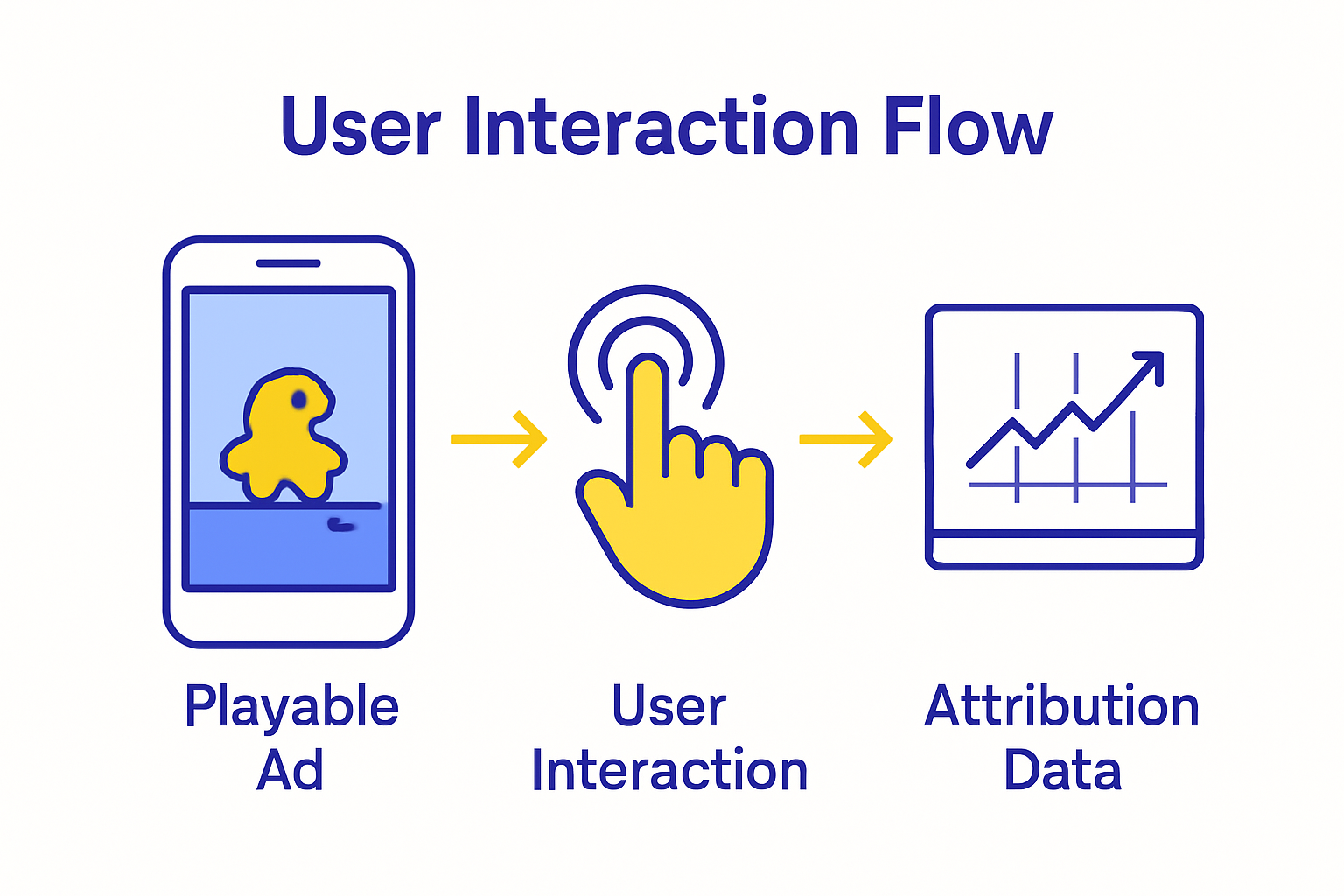
Understanding the intricate attribution mechanisms requires a holistic approach. Mobile game marketers must analyse multiple touchpoints, from initial ad exposure to game installation and subsequent user retention. By leveraging sophisticated tracking technologies, developers can gain deeper insights into the effectiveness of their playable ad campaigns, ultimately optimising user acquisition strategies and improving overall marketing performance.
Challenges and Limitations of Attribution
Attribution tracking in mobile gaming advertising presents a complex landscape fraught with sophisticated challenges that can significantly impact marketing performance. Digital ecosystem vulnerabilities reveal multiple intricate mechanisms that can potentially distort accurate user acquisition measurements.
The primary challenges in attribution tracking include:
- Click Fraud: Artificial interactions designed to generate false conversion credits
- Metadata Inconsistencies: Unreliable or manipulated tracking information
- Cross-Platform Tracking Difficulties: Complications in tracking user journeys across multiple devices
- Privacy Regulation Constraints: Increasing limitations on user data collection
- Technical Tracking Limitations: Gaps in tracking technologies and user identification
Software attribution challenges demonstrate the complexity of accurately mapping user interactions. Mobile game marketers must navigate intricate technical landscapes where tracking mechanisms can be compromised by sophisticated fraudulent techniques that generate misleading conversion signals.
Overcoming these attribution limitations requires a multifaceted approach. Successful strategies involve implementing robust verification mechanisms, leveraging advanced machine learning algorithms, and maintaining continuous monitoring of tracking data. By developing sophisticated verification protocols and maintaining a critical perspective on attribution data, mobile game marketers can mitigate risks and develop more accurate understanding of their user acquisition performance.
Best Practices for Accurate Attribution
Attribution accuracy represents a critical challenge for mobile gaming marketers seeking to understand their user acquisition strategies. Advanced tracking technologies enable sophisticated approaches to measuring marketing performance with greater precision and insight.
Key best practices for maintaining attribution accuracy include:
- Implement Multi-Touch Attribution: Capture interactions across multiple touchpoints
- Use Machine Learning Algorithms: Develop intelligent tracking mechanisms
- Regular Data Validation: Continuously verify and cross-reference tracking information
- Privacy Compliance: Ensure adherence to data protection regulations
- Sophisticated Fraud Detection: Integrate advanced anti-fraud technologies
Lifetime value measurement provides critical insights into user acquisition strategies. Mobile game marketers can leverage sophisticated tracking mechanisms to identify the most valuable user segments and optimise their marketing investments.
Understanding the nuanced relationship between paid and organic user acquisition is crucial. Research demonstrates that paid advertising can significantly amplify organic install rates, suggesting that strategic marketing investments can create compounding user acquisition benefits. By adopting a comprehensive, data-driven approach to attribution, mobile game developers can unlock more sophisticated understanding of their marketing performance and user engagement strategies.
Simplify Your Google Ads Attribution with Effortless Playable Ads
Understanding the complexities of Google Ads attribution can be overwhelming especially when trying to measure every touchpoint and optimise your marketing spend effectively. The challenge of tracking user engagement through sophisticated models and combating issues like click fraud requires reliable and efficient advertising solutions. Mobile gaming developers need ways to create compelling playable ads swiftly without draining valuable resources or budgets all while enhancing attribution accuracy and user acquisition.
At PlayableMaker we provide a no-code platform designed to help you build interactive ads fast and budget-friendly so you can focus on performance rather than development hurdles. By leveraging our solution you can create high-quality playable ads that integrate seamlessly within your campaigns boosting engagement data quality and improving attribution insights. Ready to transform your ad strategy explore our Publishing Archives for helpful marketing tips then start building your winning playable ad today at PlayableMaker. Need support with attribution best practices visit our Help Archives and take control of your mobile gaming growth right now.
Frequently Asked Questions
What is Google Ads Attribution in mobile gaming?
Google Ads Attribution is a tracking mechanism that analyses how various marketing touchpoints contribute to user acquisition and conversion in mobile gaming. It measures interactions such as ad impressions and clicks to understand the effectiveness of ad campaigns.
What are the different attribution models available for mobile gaming?
The main attribution models in mobile gaming include Last-Click Attribution, First-Click Attribution, Linear Attribution, Time Decay Attribution, and Position-Based Attribution. Each model offers unique insights into user behaviour and conversion paths.
How do playable ads enhance attribution tracking in mobile gaming?
Playable ads provide an interactive experience, allowing marketers to track user interactions more effectively. These ads capture initial engagement, interaction duration, conversion paths, and engagement depth, going beyond traditional click-based measurements.
What challenges do marketers face with attribution tracking?
Attribution tracking in mobile gaming is challenged by factors such as click fraud, metadata inconsistencies, difficulties in cross-platform tracking, privacy regulation constraints, and limitations in technical tracking capabilities.
Recommended
- What is Mobile Attribution? Understanding Its Importance – playablemaker.com What is Mobile Attribution? Understanding Its Importance
- Facebook Ad Performance: Complete Guide for Mobile Gaming – playablemaker.com Facebook Ad Performance: Complete Guide for Mobile Gaming
- 8 Key Ad Performance Metrics for Mobile Gaming Success – playablemaker.com 8 Key Ad Performance Metrics for Mobile Gaming Success
- What Is an Ad Network? Understanding Ad Networks in Mobile Gaming – playablemaker.com What Is an Ad Network? Understanding Ad Networks in Mobile Gaming