
Every creative project starts with big ambitions and even bigger potential, but only a fraction ever hit the right mark. Precision at the idea stage determines the entire trajectory of your project. You might think talent alone drives success, but skipping clear objectives, structured timelines, or thorough feedback can sabotage even the best teams long before the finish line.
Table of Contents
- Step 1: Define Your Creative Objectives Clearly
- Step 2: Gather and Prepare Necessary Resources
- Step 3: Establish a Review Timeline and Milestones
- Step 4: Implement the Core Approval Process
- Step 5: Solicit Feedback and Iterate on Creative Concepts
- Step 6: Verify and Finalise Approved Creative Assets
Quick Summary
| Key Point | Explanation |
|---|---|
| 1. Define clear creative objectives | Establish specific, measurable targets that align with business goals to guide the project’s direction. |
| 2. Prepare necessary resources thoroughly | Conduct a capability audit to ensure the team has the skills and tools needed for successful execution. |
| 3. Establish a structured review timeline | Create milestones with clear entry and exit criteria to facilitate progress tracking and maintain quality. |
| 4. Implement a clear approval process | Define roles and a transparent evaluation matrix to streamline decision-making and feedback. |
| 5. Iteratively solicit and incorporate feedback | Foster a collaborative environment for feedback that enhances concepts while preserving the creative vision. |
Step 1: Define Your Creative Objectives Clearly
Defining creative objectives represents the critical foundation of any successful creative approval process. Without crystal clear objectives, your team risks producing work that misses the mark, wastes resources, and fails to deliver meaningful results. Precision at this initial stage determines the entire trajectory of your creative project.
To establish robust creative objectives, start by mapping out your core business goals and translating them into specific, measurable creative outcomes. This means moving beyond vague statements like “we want a good ad” and articulating precise targets such as “increase user acquisition by 25% through a playable ad that demonstrates core game mechanics within the first 10 seconds”.
Understand that objectives must be simultaneously strategic and granular. Your creative team needs both the high level vision and the tactical execution blueprint. Consider breaking down objectives across multiple dimensions: performance metrics, audience engagement, brand positioning, and technical specifications. Learn more about defining creative management strategies to gain deeper insights into this critical process.
Key elements to include when defining creative objectives should encompass:
- Specific performance targets (conversion rates, engagement metrics)
- Target audience characteristics and psychological triggers
- Unique value proposition communication requirements
- Technical constraints and platform specifications
- Budget and resource allocation parameters
Successful objective definition requires collaborative input.
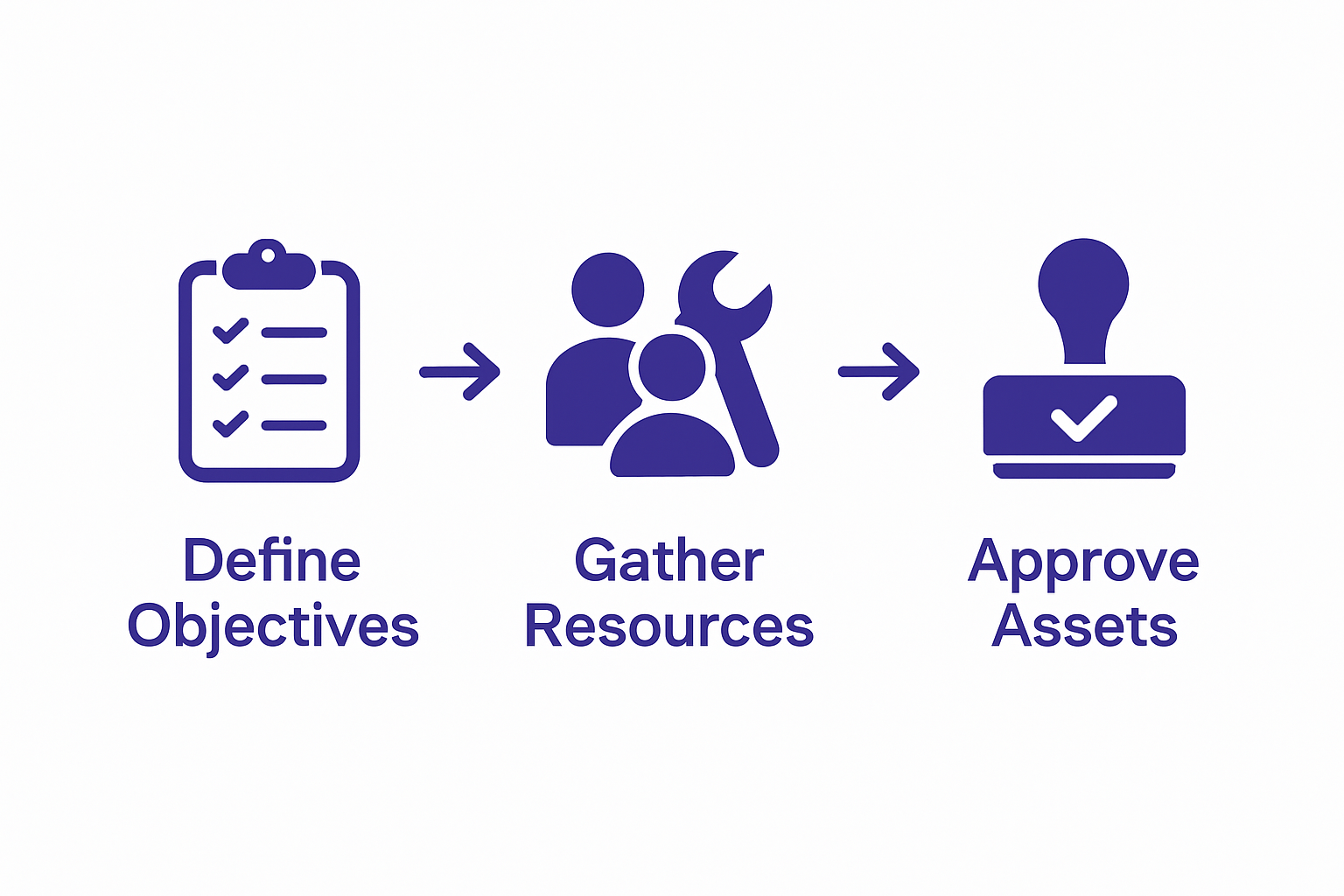 Engage stakeholders from marketing, design, product, and analytics teams to ensure a comprehensive perspective. Each department brings unique insights that can refine and sharpen your creative objectives.
The hallmark of well defined creative objectives is their actionability. Your team should be able to read the objectives and immediately understand not just what needs to be achieved, but how they might approach achieving those goals. This clarity eliminates ambiguity and sets the stage for focused, purposeful creative development.
Step 2: Gather and Prepare Necessary Resources
Resource preparation stands as the critical bridge between creative objectives and successful execution. This step transforms your strategic vision into a tangible action plan by systematically assembling the human, technical, and creative assets required to bring your project to life. Comprehensive resource gathering prevents last minute scrambles and potential project derailments.
Begin by conducting a comprehensive talent and capability audit within your team. This means mapping out the specific skills required to execute your creative objectives and comparing them against your current team’s capabilities. Identify potential skill gaps early and determine whether these will be filled through upskilling existing team members, recruiting new talent, or engaging external contractors. Explore our guide on understanding creative management roles to help clarify team responsibilities and potential resource needs.
Technical resource preparation demands equally meticulous attention. Evaluate your existing technological infrastructure and determine whether your current tools can support the creative objectives defined in the previous step. This includes assessing software platforms, design tools, collaborative environments, and performance tracking systems. Look beyond immediate needs and consider scalability potential for future projects.
Essential resources to inventory and prepare include:
- Creative talent with specific skill sets
- Design and production software licenses
- Performance tracking and analytics tools
- Budget allocations for potential external support
- Collaborative communication platforms
Budget considerations represent another critical aspect of resource preparation. Create a detailed financial breakdown that accounts for potential variations and unexpected expenses. Build in a contingency buffer of approximately 15-20% to manage unforeseen challenges without compromising project momentum.
Verification of resource readiness involves a comprehensive checklist. Confirm that every team member understands their role, required tools are operational, financial resources are secured, and potential backup plans exist for critical path activities. Successful resource preparation eliminates uncertainty and provides your creative team with the confidence to execute boldly and efficiently.
The table below summarises essential resources required for effective creative project execution, helping teams systematically audit their preparedness at the start of the process.
| Resource Type | Example/Specification | Purpose or Consideration |
|---|---|---|
| Creative Talent | Copywriters, designers, animators | Address core creative objectives and execution |
| Technical Tools | Design software, performance analytics platforms | Support production and measure project outcomes |
| Communication Platforms | Slack, Teams, email | Enable team collaboration and timely updates |
| Budget/Financial Resources | Allocated spend, contingency buffer (15-20%) | Cover all costs and unforeseen challenges |
| External Support | Freelancers, agencies, contractors | Fill skill gaps or provide specialised expertise |
| Backup/Contingency Plans | Alternative suppliers or platforms | Manage resource risks without project disruption |
Step 3: Establish a Review Timeline and Milestones
Establishing a strategic review timeline transforms your creative project from a conceptual plan into an executable roadmap.
 Effective milestone planning creates accountability, manages expectations, and provides a structured framework for creative development. This step is about creating a dynamic yet disciplined approach to tracking progress and ensuring consistent quality throughout the creative approval process.
Begin by working backwards from your final delivery date, breaking down the entire creative process into discrete, manageable phases. Each phase should have clear entry and exit criteria, allowing team members to understand exactly what needs to be accomplished before moving to the next stage. Explore our insights on creative management strategies to refine your timeline development approach.
Your timeline should incorporate multiple review checkpoints that balance comprehensive evaluation with momentum. Avoid creating a process so rigid that it stifles creativity, but ensure enough structure to maintain project discipline. This means designing review stages that allow for meaningful feedback and iterative improvements without endless cycles of revision.
Critical milestones to include in your review timeline:
- Initial concept presentation and preliminary feedback
- First draft review and substantial revision period
- Technical feasibility and performance potential assessment
- Final creative asset refinement
- Comprehensive stakeholder approval checkpoint
Communication protocols represent a fundamental aspect of timeline management. Establish clear expectations about how and when feedback will be collected, processed, and implemented. Define specific roles for each team member during review stages, clarifying who has decision making authority and who provides input.
Building flexibility into your timeline is crucial. While maintaining a structured approach, create buffer periods that account for unexpected challenges or breakthrough creative insights. These flexible zones prevent minor delays from cascading into major project disruptions. Successful timeline establishment means creating a living document that guides your team while remaining adaptable to the creative process’s inherent unpredictability.
Step 4: Implement the Core Approval Process
Implementing the core approval process transforms your carefully planned strategy into actionable workflow. This critical stage determines whether your creative project will succeed or falter based on systematic evaluation and decision making. The implementation requires a delicate balance between structured review and creative flexibility.
Begin by establishing a clear hierarchical review structure that defines precise roles and decision making authority. This means creating a transparent framework where each stakeholder understands their specific responsibilities during the approval process. Some team members will provide input, while others will have final decision making power. Learn more about creative management roles to refine your understanding of team dynamics.
Design a comprehensive evaluation matrix that allows objective assessment of creative work. This matrix should include specific criteria aligned with your original creative objectives, ensuring that every review remains focused and purposeful. Criteria might encompass technical performance, brand alignment, audience engagement potential, and innovative approach.
Key components of an effective approval process include:
- Standardized feedback collection mechanisms
- Clear decision making thresholds
- Transparent scoring or evaluation systems
- Documented rationale for acceptance or rejection
- Structured revision request protocols
Communication becomes paramount during implementation. Develop a robust communication plan that ensures all stakeholders receive timely updates, understand review outcomes, and know exactly what actions are required next. This prevents bottlenecks and maintains project momentum.
Incorporate multiple review layers that progressively increase in complexity and scrutiny. Initial reviews might focus on broad conceptual alignment, while later stages drill down into granular technical and creative details. Each review stage should provide constructive feedback that moves the project closer to its ultimate objectives, transforming critique into a collaborative improvement process.
Step 5: Solicit Feedback and Iterate on Creative Concepts
Soliciting feedback and iterating on creative concepts represents the crucible where raw ideas transform into refined, high performance creative assets. This stage is not about passive critique, but active collaborative refinement that elevates the entire creative concept. Successful iteration requires a strategic approach that balances constructive input with creative vision.
Initiate the feedback process by creating multiple channels for input that capture diverse perspectives. This means designing a feedback mechanism that goes beyond traditional hierarchical review and incorporates insights from various team members, potential users, and subject matter experts. Explore our insights on AI-driven creative ideation to enhance your feedback collection strategies.
Develop a structured feedback framework that provides clear guidelines for input. Vague comments like “this doesn’t feel right” are replaced with specific, actionable observations. Encourage feedback that identifies specific strengths, potential improvements, and alignment with original creative objectives. This approach transforms critique from a potentially demoralizing experience into a constructive collaborative process.
Critical elements of an effective iteration strategy include:
- Establishing a time boxed feedback collection period
- Creating a standardized feedback submission template
- Implementing a transparent evaluation process for suggested changes
- Maintaining a clear audit trail of iterations and decisions
- Protecting the core creative vision while remaining open to meaningful improvements
Manage the iteration process as a balanced negotiation between creative integrity and strategic improvement. Not every piece of feedback requires implementation. Develop the skill of discerning which suggestions genuinely enhance the creative concept and which might dilute its core strength. This requires a nuanced approach that respects both the original creative vision and the potential for meaningful evolution through collaborative input.
Step 6: Verify and Finalise Approved Creative Assets
Verifying and finalising approved creative assets represents the critical culmination of your entire creative approval process. This stage transforms iterative concepts into production ready deliverables that meet both creative vision and technical specifications. Precision during finalisation prevents potential downstream complications and ensures your creative work achieves its intended impact.
Commence the verification process by conducting a comprehensive technical and creative audit. This means meticulously reviewing each creative asset against the original objectives, ensuring that every element aligns perfectly with your initial strategic vision. Explore our guide on image and video generation tools to enhance your verification capabilities and understand optimal asset preparation techniques.
Establish a rigorous verification protocol that examines creative assets across multiple dimensions. Technical verification should include comprehensive checks for file formats, resolution, compatibility across different platforms, and adherence to performance specifications. Creative verification focuses on maintaining the core emotional and strategic narrative while ensuring pixel perfect execution.
Critical verification checkpoints include:
- Pixel perfect visual asset review
- Performance specification compliance
- Cross platform compatibility testing
- Brand guideline alignment
- Legal and compliance verification
Document every verification step with meticulous detail. Create a comprehensive sign off document that captures each stakeholder’s approval, technical specifications, and any final notes or recommended modifications. This documentation serves as both a quality assurance record and a potential reference for future creative iterations.
Finalisation is not merely about technical perfection but about preserving the creative essence that made the concept compelling in the first place. Approach this stage with a balanced perspective that respects both technical precision and creative integrity. Your goal is to deliver creative assets that are not just approved, but genuinely exceptional.
Use the following table as a reference checklist to ensure thorough verification and finalisation of all creative assets before release.
| Verification Step | Area Focused | Key Outcome |
|---|---|---|
| Pixel perfect visual asset review | Creative/Design | Ensures visual accuracy |
| Performance specification compliance | Technical | Confirms asset meets requirements |
| Cross platform compatibility testing | Technical | Checks asset functions everywhere |
| Brand guideline alignment | Brand/Marketing | Maintains brand consistency |
| Legal and compliance verification | Legal | Confirms regulatory adherence |
| Final stakeholder sign-off | Project Management | Formal approval and documentation |
Transform Your Creative Approval Process for 2025 and Beyond
Still spending too much time refining creative briefs and juggling endless review rounds? Frustrated by delays, unclear objectives, and wasted resources in your ad creation workflow? You are not alone. This article highlighted the importance of crystal clear creative objectives, structured review timelines, and collaborative iteration. If traditional processes have left you drained or your team blocked by technical bottlenecks, it is time to change the way you handle creative approvals. For more tips on navigating challenges, visit our help centre.

Let PlayableMaker remove the headaches. Our no-code platform lets you quickly build interactive ads without technical friction or excessive cost. By centralising asset management and speeding up approval cycles, you will see better results in less time. Want to master creative workflows in 2025? Experience PlayableMaker and future-proof your campaigns by starting today at PlayableMaker. See how we help publishers streamline approvals on our publishing hub. Stop waiting for the perfect asset and take control of your creative projects now.
Frequently Asked Questions
What are the key steps to mastering the creative approval process?
The key steps include defining creative objectives, gathering necessary resources, establishing a review timeline and milestones, implementing the core approval process, soliciting feedback and iterating on creative concepts, and verifying and finalising approved creative assets.
How can I define effective creative objectives?
Effective creative objectives should be specific, measurable, and aligned with core business goals. Include performance targets, audience characteristics, communication requirements, technical constraints, and budget parameters while ensuring collaboration with stakeholders for comprehensive input.
What should I consider when preparing resources for a creative project?
Consider conducting a talent and capability audit to identify skill gaps, evaluating technical infrastructure for compatibility with project requirements, and ensuring financial resources are secured including a contingency budget for unexpected expenses.
Why is feedback important in the creative approval process?
Feedback is vital as it facilitates collaborative refinement of concepts, enhances alignment with original objectives, and helps produce high-performance creative assets. Structured feedback mechanisms ensure actionable input that drives improvements while preserving the original creative vision.
Recommended
- What is a Creative Manager? Understanding Their Role
- Understanding the Role of Creative Director in Gaming
- The Science and Foundation of Playable Ad Creativity
- Image and Video generation tools to use for playable ads
- Master Creating a Content Calendar for 2025 Success
- Using Projector for Art